CHINA> Reactions

|
CHINA> Reactions
|
|
Tough, uncertain days ahead
By Zhu Zhe and Cui Xiaohuo (China Daily)
Updated: 2008-10-15 07:44
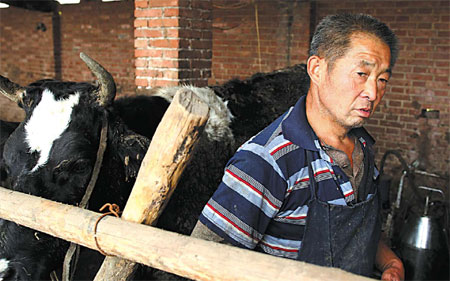
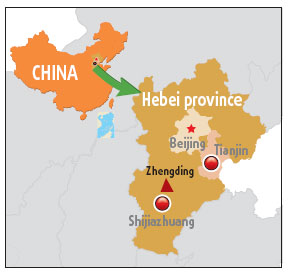
ZHENGDING, Hebei: Dairy farmer Xing Lingqun should have been thrilled last week when one of his cows gave birth to a calf and began to produce milk. But he was not. "No one wants our milk now. The more milk we produce, the more losses we suffer," said the 61-year-old dairy farmer, who raises 11 cows in nearby Xingjiazhuang village, where 80 percent of the residents are surnamed Xing. "We're desperate." Since the baby formula produced by the Shijiazhuang-based Sanlu Group was found tainted with melamine, an industrial chemical, about four weeks ago, the milking station in Xing's village has stopped accepting any raw milk. Melamine-laced baby formula has caused the deaths of four infants and kidney stones in 53,000 others. The chemical has been found in nearly every kind of dairy product in the country. As a result, sales of milk have plunged since mid September. Sales of dairy products have started to recover nationwide, except in Hebei, where the melamine contamination of dairy products was the worst. Besides the youngest victims of the contamination, dairy farmers such as Xing have become the latest hit by the scandal. Xing said he is now selling his raw milk for 1 to 1.5 yuan (15 to 22 cents) per kg to local villagers, less than half of what the milking station paid. "Even so, we still have to dump out the milk sometimes," he added.
Xing now earns a bit more than 100 yuan ($15) a day. He is losing money because the feed alone costs 200 yuan ($30) a day, he said. To stem his losses, another dairy farmer in the village recently sold his cow to the slaughterhouse for about 6,000 yuan ($878), Xing said. "I'm not willing to sell my cows yet. They are good cows and some can produce 60 to 70 kg of milk a day," he said. "I'll wait for a bit longer, but if things don't improve soon, I may have no other choice but to sell my cows." The plight of dairy farmers have become so serious that authorities now fear that if they are forced to slaughter their cows, it will trigger a collapse of the mainland dairy industry. Official figures from Hebei show that from Sept 14 to 16, about 5,900 tons of raw milk were dumped because major dairy companies stopped buying fresh supplies. Similar cases have been reported in all the major milk-producing regions in the country. Last Thursday, the central government set aside 300 million yuan ($43.9 million) in subsidies for dairy farmers. According to the Ministry of Health, the subsidies will mainly go to dairy farmers who suffered the greatest financial losses in the five major dairy-producing provinces of Hebei, Liaoning, Shanxi, Shandong and Henan, as well as the Inner Mongolia autonomous region. The ministry has also asked local governments to increase their subsidies to dairy farmers and to urge dairy companies to continue buying milk as long as supplies meet quality standards.
Some farmers may not be able to wait until these policies take effect. "The only subsidy I've gotten so far is 200 yuan for a cow," said another dairy farmer, Xing Zhanchun. The 57-year-old said he is now willing to sell his cows and three female calves to cut his losses. He also needs money quickly for his only son's wedding. "Other than selling them, the only way to cut my losses is to feed them less in order to reduce the amount of milk they produce," Xing Zhanchun said. "We even make our steamed buns with the fresh milk now." After the baby formula scandal broke, Sanlu blamed dairy farmers, accusing them of mixing melamine into the raw milk. Farmers insist that they have never used the chemical and say regulatory loopholes are part of the problem. "I've never heard of melamine before the scandal," Xing Lingqun said. "We took our cows directly to the milking station, where they were milked by machine. There's no way for us to mix anything into the milk." "I believe the real culprits are milking station operators," he added. Xing Zhanchun said he thought quality control officers should be held accountable as well. Hebei police have detained 31 people suspected of producing or mixing melamine into raw milk. Another six have been arrested on similar charges. The majority worked at milking stations. Government figures show that 72 milking stations in Hebei have been shut down for failing to meet quality control standards. The Ministry of Agriculture has ordered a nationwide inspection of such stations and has required all milking stations to register with local supervisory authorities. In an effort to help dairy farmers, Hebei's provincial government is encouraging individual farmers to send their cows to large dairy farms, which can feed them and sell their milk. "We've received about 60 cows from individual farmers," said Jin Lidong, manager of the Jinhe dairy farm in Zhengding county of Shijiazhuang. "It's easier for us to sell the milk as we have contracts with the big dairy companies." By last weekend, 24,000 of 97,000 cows raised by individual farmers in Hebei have been sent to such farms, according to government figures, but officials have yet to decide what to do in the long term. Even the large dairy farms have had to dump some their milk as dairy companies have tightened their standards. Jin's farm lost two batches of milk on Sept 30 and Oct 1, which milk giant Mengniu refused when a certain amount of antibiotics was found in the fresh milk. A notice on the wall of the milking station at Jinhe warned staff to monitor the source of all milk closely, since "Mengniu's new standards are extremely strict, and we've suffered great losses". Most experts believe that the solution to the problem of quality of dairy products is to operate large modern dairy farms. "The industry's present structure is to blame for the melamine scandal, because it's hard for dairy companies to monitor the quality of raw milk," said Wang Dingmian, a China Dairy Association official. The bottom rung of the domestic dairy industry is now made up of a large number of individual dairy farmers who raise just a few cows in their backyards. Above them is a chain of middlemen, including dairy agents and milking stations. At the top are the dairy companies, Wang said. "An underlying factor is the gap between insufficient supply and the enormous market demand for milk," Wang added. In the first half of the year, 19 million tons of dairy products were produced, according to the association. The milk for those products was provided by 2 million farmers, who raise about 14.3 million cows across the country. Chen Junshi, a senior researcher at the National Institute for Nutrition and Food Safety, has also criticized small family dairy farms and poor technical know-how among individual farmers as the fundamental reasons behind the lack of quality. "The only way out is to develop large-scale modern farms," he said. However, to dairy farmers like Xing Lingqun, giving up their cows is a difficult and painful choice. "I've been raising cows for about 20 years. I don't know what to do if I sell my cows," he said. He is not even willing to place his cows temporarily in a large dairy farm. "I went to see the farm. There are so many cows there, it's easy to spread illness. What if my cows get sick there?" (China Daily 10/15/2008 page6) |
主站蜘蛛池模板: 精品国产一区二区亚洲人| 漂亮的人妻不敢呻吟被中出| 最新精品国偷自产在线| 国产第一区二区三区精品| a级国产乱理伦片在线观看al | 99在线视频免费观看| 成人精品区| 国产精品99一区二区三区| 亚洲AV永久天堂在线观看| 日韩精品视频一二三四区| 挺进朋友人妻雪白的身体韩国电影 | 成人国产乱对白在线观看| 久久五十路丰满熟女中出| 亚洲区精品区日韩区综合区| 国产中文字幕精品在线| 久久久免费精品国产色夜| 久久国产精品伊人青青草| 国产亚洲欧洲三级片A级| 日韩精品一二三黄色一级| 国产精品亚洲а∨天堂2021| 亚洲av日韩av一区久久| 国产黄色三级三级看三级| 天美传媒xxxxhd videos3| 国产精品普通话国语对白露脸| 少妇乳大丰满在线播放| 蜜臀久久精品亚洲一区| 亚洲午夜福利在线观看| 日韩精品一区二区三区激情| 亚洲精品麻豆一二三区| 色av专区无码影音先锋| 野花在线观看免费观看高清| 国产在线观看免费观看不卡| 狠狠五月深爱婷婷网| 精品久久久久久无码不卡| 国产精品亚洲一区二区三区喷水| 四虎影视成人永久免费观看视频| 亚洲精品成人福利网站| 伊人色合天天久久综合网| 久久久久免费看成人影片| 国内精品久久久久影院网站| 亚洲国产成人资源在线|