Mobile 3G abounds with competitors
Updated: 2007-11-04 10:55
While China's homegrown third generation (3G) wireless standard TD-SCDMA is starting to gain ground at home, its prospects might be overshadowed by the emergence of a new competitor.
On October 19, WiMAX was approved as a 3G standard by the International Telecommunication Union, a United Nations agency that allocates radio frequencies for commercial use among its member countries.
3G technologies enable wireless broadband data services on mobile phones, such as video calls and Web browsing. Other standards include the European WCDMA, and US-backed CDMA 2000.
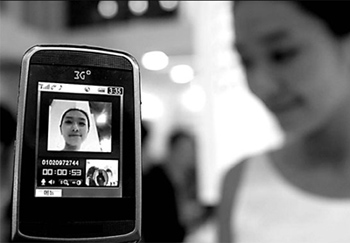
Unlike WCDMA and CDMA 2000, TD-SCDMA has yet to see commercial deployment anywhere in the world. The less mature technology has been playing catch-up with foreign rivals, but is now gaining momentum largely due to backing from the Chinese government and domestic telecom operators.
The approval of WiMAX as a new 3G species is sure to heat up the competition among existing standards, but it poses a greater challenge to TD-SCDMA, which is using the same spectrum as WiMAX.
"WiMAX will become a serious obstacle for TD-SCDMA to expand into overseas markets," says industry observer Xiang Ligang. "Spectrum is an important resource for a wireless business. Once a certain spectrum is occupied by a standard in a nation, it would hardly be possible for others to use the same frequency."
TD-SCDMA backers have estimated the Chinese standard could grab one-third of the domestic market and hope to export it overseas.
The National Development and Reform Commission is partnering with SK Telecom to build a TD-SCDMA trial network in South Korea. And some Hong Kong operators have said they would consider using the TD-SCDMA standard in the future.
WiMAX technology has already been commercially deployed while the TD-SCDMA is still being tested. China Mobile has built TD-SCDMA trial networks in several Chinese cities. The testing was scheduled to be completed this month, which would facilitate the 3G licensing process in China. But now industry observers say the trials could last longer than expected.
And the approval of WiMAX as a 3G technology and its increasing favor from operators could jeopardize the survival of TD-SCDMA in overseas markets.
WiMAX is a medium-range sibling of the popular Wi-Fi technology, which can be beamed over kilometers rather than meters. It was widely expected to be used for laptops alone. Now that it is a 3G mobile phone technology, popularity with operators could grow as fewer base stations would be required to create a network compared to other 3G standards.
US operator Sprint said earlier it would launch its commercial WiMAX broadband service in the second quarter of 2008 in its home country.
Earlier this month, Japanese mobile carrier NTT DoCoMo, Softbank and KDDI Corp and their partners applied for WiMAX licences. They are bidding for two 2.5 GHz band frequencies allowing WiMAX connections.
Italy on October 11 launched the auction of WiMAX licences and last week Taiwan pledged to invest $664 million in the coming years on WiMAX networks, partnering with the major manufacturers Motorola, Alcatel-Lucent, Sprint Nextel, Starent Networks and Nokia Siemens Networks.
Intel, the world's largest computer chip maker, has said it would build the technology into its chipsets in 2008, and committed $1 billion to develop related products based on the WiMAX standard.
"WiMAX technology currently has the potential to reach 2.7 billion people," said Ron Resnick, president of the WiMAX Forum in a statement released on October 19, adding the technology could reach "a significantly larger global population" with the backing of more industry giants. The WiMAX Forum is an industry organization with 470 members ranging from wireless carriers to equipment makers.
In stark contrast, TD-SCDMA has lacked industry-wide support. Although some industry alliances have been formed, most members are domestic companies. And industry observers say foreign companies have either been reluctant or have yet to give substantial support. The world's top cellphone maker Nokia has long been reluctant to develop TD-SCDMA phones. But the Finnish firm has said it planned to launch WiMAX phones early next year.
"Compared with the progress on the network, (maturity and availability of) TD SCDMA handsets is now the major problem," says David Ho, chairman of Nokia Siemens Networks Greater China.
Making it even worse, the growing momentum and wider support WiMAX has gained is putting pressure on TD-SCDMA development.
Last week the world's networking leader Cisco Systems announced it would acquire mobile WiMAX equipment maker Navini for $330 million shortly after it was approved as a 3G standard.
Suraj Shetty, senior director of service provider marketing for Cisco, says the company is buying Navini to provide wireless broadband in the developing world, including in China.
Guo Fei, an analyst with Beijing-based research house Analysys International, says the development of WiMAX could affect TD-SCDMA "but the impact could be limited".
"After all, a standard needs to demonstrate its potential of commercial success, which takes a lot more that just spectrum," he says.
TD-SCDMA backers are now trying to shrug off the threat. "The overall development of TD-SCDMA is two years ahead of WiMAX," says Chen Shanzhi, chief engineer of Datang Group, a key supporter of TD-SCDMA. "And China could roll out 3G services based on TD-SCDMA before the 2008 Olympics."
But the stakes are still high. China has promised 3G mobile phone services will be available during the Olympics. Yet the home-grown standard's slow development as well as disputed plans to consolidate operators have repeatedly delayed its licensing .
|
|
|
||
|
||
|
|
|
|