Comments
  Print
Print  Mail
Mail  Large Medium Small
In many countries, patent laws provide a research exemption or "safe harbor" exemption as an exception to the exclusive rights conferred by patents, which is especially relevant to drugs.
According to this exemption, despite the patent rights, performing research and tests for regulatory approval, for instance, does not constitute infringement before the end of the patent term.
In the United States, this exemption, known as the Hatch-Waxman exemption, is codified in 35 USC 271(e)(1).
China's patent law does not expressly exempt activities related to regulatory review from patent infringement. Such an exemption currently exists as a judicial interpretation of the broad experimental use exception provided in the patent law.
The Beijing Intermediate People's Court also recognized such on exemption in its non-infringement findings.
A new amendment to China's patent law codifies the judicial interpretation and practice by stating that it is not an act of infringement if a patented drug or medical apparatus is manufactured, used or imported solely for the purposes of obtaining and providing information for administrative approval.
While the amendment, which was approved this year, formalizes the exemption for activities related to regulatory review (the so-called "naked" Bolar exemption), it does not provide any provision for patent linkage with marketing approval.
In addition, China does not afford patent term extension or patent term restoration to compensate for regulatory delays in obtaining State Food and Drug Administration (FDA) approval of drugs.
Although some form of patent linkage has already been prescribed in the Pharmaceutical Registration Regulation, and the Chinese FDA has a set of procedures for implementing such patent linkage, it is essentially a toothless linkage plan.
This is because under this procedure, it is not an act of infringement to seek marketing approval. As such, it is of limited value.
Patent exhaustion
The current patent law in Article 63 provides for domestic patent exhaustion, which applies to a product sold by the patentee in China.
However, the language of Article 63 is not clear with respect to the importation into China of a product sold by the patentee outside China.
The amendment clearly provides for both domestic and international exhaustion of patent rights.
Under the amendment, it is not patent infringement when "anyone uses, offers to sell, sells or imports a patented product or a product directly obtained from a patented process, which has been sold by the patentee or by an entity or individual authorized by the patentee".
The addition of "imports" makes it clear that the parallel importation of patented products is not considered patent infringement in China.
The language of the amended statute does not make a distinction between restricted sales and unrestricted sales.
Therefore, it is not clear whether international patent exhaustion can be prevented by contractual restrictions on the products sold.
Moreover, international exhaustion, contractual restrictions and antitrust issues interact in complex ways, and companies need to carefully structure their relationships in different jurisdictions to best achieve their business and commercial goals.
Preliminary injunctions
Article 61 of the current patent law authorizes courts to issue injunctions before filing an infringement suit, which might be translated as China's efforts to implement its obligations to provide preliminary injunctive relief in patent infringement cases. In China, this is referred to as "pre-suit injunction".
Judicial Interpretations on "Application of Laws in Trials of Patent Related Lawsuits" issued in 2001 by the Chinese Supreme People's Court provides some procedural guidelines.
Upon receiving a request for a preliminary injunction, a court must make a ruling within 48 hours if it finds that all procedural requirements have been properly met.
The 48-hour time limit can be extended in special circumstances. Once issued, the injunction is immediately enforceable.
The patentee must then initiate an infringement action in the courts within 15 days of issuance of the injunction, or the injunction will be lifted automatically.
Either party can request the issuing court to reconsider its decision, which is an administrative procedure within the court.
However, the injunction will remain enforceable during reconsideration and any subsequent proceedings until final judgment.
The new amendment incorporates the above procedures and further clarifies that the posting of a bond for a preliminary injunction motion is required. If no bond is posted, the motion will be denied.
Moreover, the petitioner is responsible for any loss sustained by the respondent if the petitioner makes a mistake in the motion for preliminary injunction.
Notwithstanding the codification of preliminary injunction, obtaining a preliminary injunction in most patent infringement cases in China has always been and is becoming increasingly more difficult.
Both infringement and irreparable harm must be clearly proven-a burden that is not easy to meet in China, given the country's stringent evidentiary requirements and the lack of traditional discovery procedures.
Moreover, the Supreme People's Court a few years ago tempered any early enthusiasm for the issuance of such injunctions by issuing an instruction to the lower courts urging caution in issuing preliminary injunctions. The court noted that preliminary injunctions should not be issued in cases involving non-literal infringement or complicated technologies.
Statistically, most plaintiffs in patent infringement cases do not seek a preliminary injunction for these reasons.
For those who do request a preliminary injunction, the success rate is relatively high (i.e., greater than 50 percent). It is yet to be seen if the statistics will change after the effective date of the amendment.
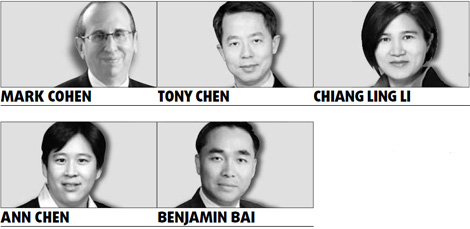
The authors are lawyers for the US law firm Jones Day. The opinions expressed are their own
Editor's note: The IPR Special is sponsored by the State Intellectual Property Office and published by China Business Weekly. To contact the Intellectual Property Office, the IPR Special hotlines are 8610-64995419 or 8610-64995826, and the e-mail address is ipr@chinadaily.com.cn.
(China Daily 12/05/2009 page9)

 Night views of Harbin through the lens
 Tibetans take train home after pilgrimage or travelling
 World's largest shaftless Ferris wheel built in China
 Ancient cities to be connected by Xi'an-Chengdu high-speed railway
 Snow turns Harbin into winter wonderland
 Reed Catkin Festival held in Wuhan
 Is it a building or a bookshelf?
 First flight
 Polar icebreaker Snow Dragon arrives in Antarctic
 Xi's vision on shared future for humanity
 UN's top environmental honors go to three in China
 German trains collide near Duesseldorf, several people injured
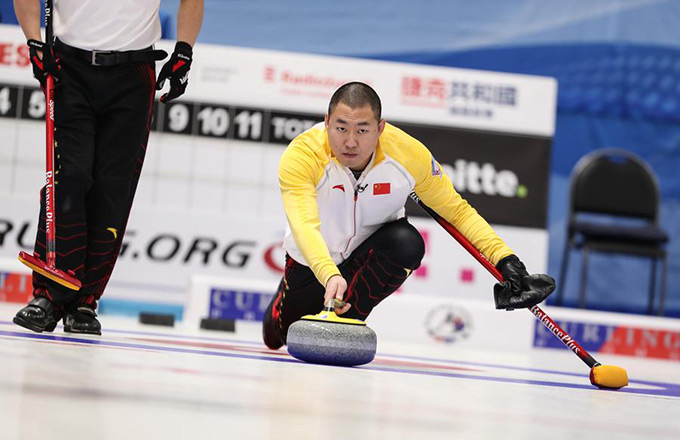 China beats Germany 7-4 in men's curling Olympic qualification
 Bayern beat Paris Saint-Germain 3-1 in UEFA Champions League


Copyright 1995 - . All rights reserved. The content (including but not limited to text, photo, multimedia information, etc) published in this site belongs to China Daily Information Co (CDIC). Without written authorization from CDIC, such content shall not be republished or used in any form. Note: Browsers with 1024*768 or higher resolution are suggested for this site.
License for publishing multimedia online 0108263 Registration Number: 20100000002731