Comments
  Print
Print  Mail
Mail  Large Medium Small
Editor's Note: Rising protectionism against free international trade and foreign investment could prolong the current economic crisis, and China's role in global economic recovery is not fully understood, economic expert Frank J. Richter said in a recent interview with China Business Weekly reporter Hou Qingyang.
Frank J. Richter is president of Horasis: the Global Vision Community. Prior to founding Horasis, Richter was director of the World Economic Forum. He has developed extensive experience and knowledge about the world's economic, business and political scene as one of its key players.
Q: The US government launched an investigation that could lead to new duties of nearly 100 percent or more on imports of steel pipes from China, and already has slapped a 35 percent duty on tires made in China.
The European Union also decided to impose anti-dumping tariffs on Chinese-made seamless steel pipes. What do you think are the consequences of rising protectionism?
A: Unfortunately, we have seen a new wave of protectionism in the wake of the financial turmoil. We are on the road of not too much trade, but lots of trade barriers.

A lesson to learn from history is the consequences of protectionism in the 1920s. The United States, Europe and many other countries stopped the import of goods, which resulted in a very prolonged economic crisis for some 10 years.
The Smoot-Hawley Tariff Act of 1930, signed into law in June 1930, raised US tariffs on more than 20,000 imported goods to record levels. The ensuing retaliatory tariffs by US trading partners reduced American exports and imports by more than half.
We must help the world move back on the track of free trade again, to the Doha round of WTO (World Trade Organization) multilateral trade talks. And, of course, we need to involve China. China is much more important than people think because China can help other countries get out of the crisis.
Q: In addition to trade barriers, many recent proposals by Chinese companies to buy foreign assets were blocked. Why are these Chinese companies not welcome?
A: In the US there have been huge discussions about the tires from China, because they believe Chinese products are too cheap. In Europe, there are also lots of protectionist moves.
Beijing Automobile Works' proposal to buy Opel also stoked debates that Chinese companies should not acquire Opel, and that Opel should remain within Europe.
It is more like a cultural barrier. Many Europeans and Americans just don't understand China enough, not knowing how dynamic China is. We need to better understand China's strength.
China is playing a benign role in the world, and it helps the world economy recover. The Ministry of Commerce sent out several purchase delegations to Europe to buy goods in the wake of the global financial crisis. The Chinese shoppers went to the United Kingdom to buy Rolls Royce, and they went to Germany to buy environmental protection technologies.
Changes always start from practical things like business. If some Chinese company starts to invest in Europe, it will make a change. A European company doing business in China also helps. Such change will spread to the next stage, for example, the political leaders or local communities.
Q: Could you give some suggestions to Chinese entrepreneurs?
A: Yes. Some Chinese entrepreneurs who want to buy foreign companies just go forward to make a proposal. But buying a foreign company requires lots of lobbying, which is a relatively new concept in China.
They need to do more presentations and talk more to politicians, (labor) unions and communities. Chinese companies should improve their corporate advocacy.
In critical sectors like resources, they must understand that many Europeans and Americans might have pre-made decision that they should not sell resources to China because they need to keep the resources themselves. Such judgments are not only directed at China, but particularly to China, because people are used to criticizing China.
China's investment in Africa is also very controversial because it is widely believed that you should attach some conditions with financial assistance.
China is doing it differently, more from a business perspective. They go to Africa to build schools, hospitals and stadiums. I think maybe for Africa, it is the right approach. Even if you attach conditions, they will not actually change.
However, foreign investment, Chinese investment, will eventually help improve the livelihoods and effect changes. Therefore, Chinese investment is very healthy in Africa. I hope such practical thinking can also be passed to the Europeans.
Each country is different. Most acquisitions failed because of cultural issues, regulations, language problems and above all, a lack of understanding of local conditions. Adequate diligence research is vital to the success of any deal.
Maybe the investor can start with smaller steps. A number of small acquisitions can avoid the failure of a big transaction. By small, I mean taking control of a smaller company or non-controlling share of a big company.
More than half of the merger and acquisition deals have failed in history. Integration is key.
Chinese homegrown automaker Geely wants to buy Volvo, which is a good deal because Volvo has an established brand name. In the end, the success of the deal all depends on integration, keeping Volvo as a Swedish company but including it into Geely, and making technological innovations in China.
In order to integrate an acquired company or brand smoothly, on the one hand, the new boss should try to keep the local management in key positions and, on the other hand, include some strategic Chinese managers with global vision and local understanding.
The last thing you will need to do is to cut costs from the first day. But if you do that, the union will stand up against you immediately. A careful method should include the union from the very beginning. I think they will understand. Do things in a socially acceptable way.
(China Daily 11/23/2009 page2)

 Night views of Harbin through the lens
 Tibetans take train home after pilgrimage or travelling
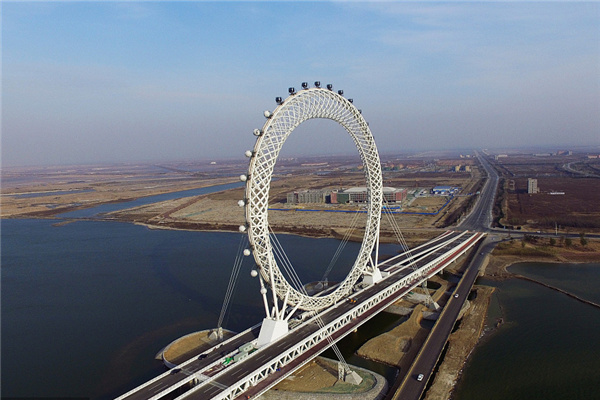 World's largest shaftless Ferris wheel built in China
 Ancient cities to be connected by Xi'an-Chengdu high-speed railway
 Snow turns Harbin into winter wonderland
 Reed Catkin Festival held in Wuhan
 Is it a building or a bookshelf?
 First flight
 Polar icebreaker Snow Dragon arrives in Antarctic
 Xi's vision on shared future for humanity
 UN's top environmental honors go to three in China
 German trains collide near Duesseldorf, several people injured
 China beats Germany 7-4 in men's curling Olympic qualification
 Bayern beat Paris Saint-Germain 3-1 in UEFA Champions League


Copyright 1995 - . All rights reserved. The content (including but not limited to text, photo, multimedia information, etc) published in this site belongs to China Daily Information Co (CDIC). Without written authorization from CDIC, such content shall not be republished or used in any form. Note: Browsers with 1024*768 or higher resolution are suggested for this site.
License for publishing multimedia online 0108263 Registration Number: 20100000002731