Comments
  Print
Print  Mail
Mail  Large Medium Small

The last decade was characterized by impressive growth of outward foreign direct investments carried out by companies from emerging countries, including those of China and Russia, which has led to visible changes in global investment flows. Chinese and Russian companies were given ample opportunities for international expansion in the beginning of this century.
The key role in this process belonged to the changes in policies of both countries and to the public support given by their governments to investment abroad.
Russian international expansion has been carried out mainly by private companies, whereas, in China, under the government's auspices, most large-scale activity has been shown by State-owned enterprises.
Europe has become the main target region of investment for the Russian companies, while the Chinese companies have concentrated on Asia-Pacific. At the same time, the US market has been equally attractive for Russia and China.
Growth of Russian and Chinese companies' foreign investments started from roughly similar levels; however, the number of Chinese running projects has been growing considerably faster.
2008 became a record year for Chinese companies-investors. According to different estimates, in 2008, Chinese multinationals (MNCs) spent abroad $35 billion to $46 billion on company mergers, whereas for the Russian MNCs it was around 12 billion ($17.45 billion).
The impact of the crisis on the expansion of Russian and Chinese companies differed depending not only on the sector, but also on the strategic model of expansion.
The entrance of Russian extractive companies (such as Norilsk Nickel and Rusal) to foreign markets was carried out, primarily, to increase the scale of activity. These companies in particular have been the most severely affected by the crisis.
At the same time, a number of large Russian mining and energy corporations (such as Lukoil, Gazprom and others) have been implementing a strategy combining entrance to new markets with vertical integration toward the clients.
A tendency for creation of value-added products and services has to some extent reduced their dependence on volatile raw materials prices. Thus, as regards investment capability, they are in a better position, which is confirmed by the deals carried through the last half-year.
Most of the largest Chinese multinationals also belong to resource sectors such as oil and mining. However, unlike other Russian multinationals from extractive industries, they are mainly importers, rather than exporters. And most of their outward investment is directed toward securing access to strategic natural resources and, as a result, national safety.
Apart from the extractive companies, government-controlled companies, which implement large infrastructure projects, also take an active part in international activity.
Due to China's solid financial standing and its aspiration to invest abroad, virtually all of these resource and infrastructure concerns are in a better position to withstand the crisis and actively continue to seek attractive objects for investment all over the globe - all the more so as prices have decreased.
Emerging markets
Market-seeking expansion into emerging countries is typical for leading Russian companies working on consumer markets such as telecommunications, retail, food products and entertainment.
This process has somewhat slowed due to hindered access to financial resources, but it certainly has not stopped. Chinese manufacturing companies, which have been using their advantages in cost and price for conquering the developed markets for several years now, currently are starting to pay more attention to the emerging markets.
A distinct group of investors is comprised of Russian and Chinese manufacturing companies, which hold on to the "product-line import" strategy.
This involves purchasing relatively smaller, but technologically more advanced manufacturers in developed countries and localizing the production of their main lines in Russia and China.
Such projects were actively carried on in 2008. However, presently, in conditions of the weakened market, they seem much less profitable and are curtailed in many instances.
It is apparent that, owing to international investing, both Chinese and Russian companies acquire knowledge and new skills, expand their managerial capabilities, create global brands and enhance their competitive advantages on the global market.
The overwhelming majority of Chinese and Russian companies, which had led the foreign expansion in the previous decade, were able to preserve their organizational integrity and position on the key markets under the conditions of the global crisis.
Currently, there is an opportunity to acquire potentially interesting foreign assets because prices are considerably lower than before.
But whether Russian and Chinese companies will be able to continue their active investing and to take advantage of the emerging opportunities depends on their ability to solve their primary domestic issues exacerbated by the current economic situation.
Seung Ho Park is president of the SKOLKOVO Institute for Emerging Market Studies (SIEMS), a think tank that focuses on emerging markets with offices in Beijing, Moscow and India. Dong Chen is visiting researcher with SIEMS. The views expressed here are their own.
(China Daily 09/21/2009 page2)

 Night views of Harbin through the lens
 Tibetans take train home after pilgrimage or travelling
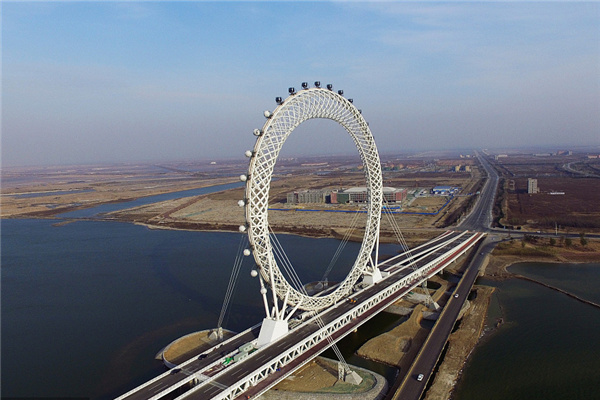 World's largest shaftless Ferris wheel built in China
 Ancient cities to be connected by Xi'an-Chengdu high-speed railway
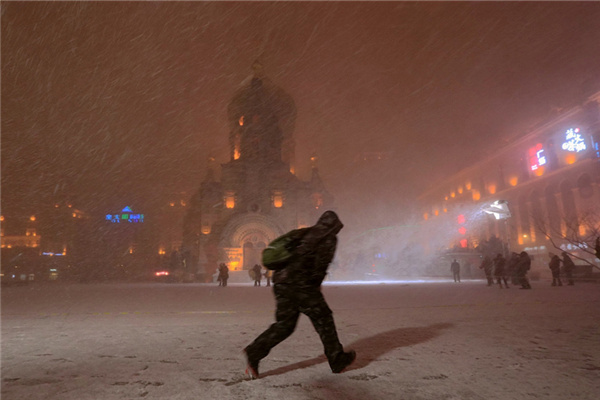 Snow turns Harbin into winter wonderland
 Reed Catkin Festival held in Wuhan
 Is it a building or a bookshelf?
 First flight
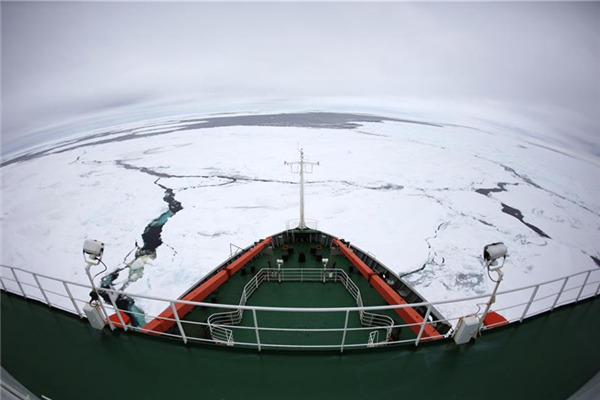 Polar icebreaker Snow Dragon arrives in Antarctic
 Xi's vision on shared future for humanity
 UN's top environmental honors go to three in China
 German trains collide near Duesseldorf, several people injured
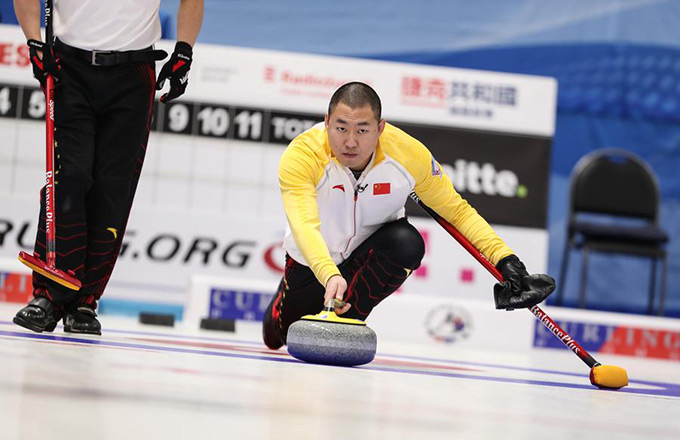 China beats Germany 7-4 in men's curling Olympic qualification
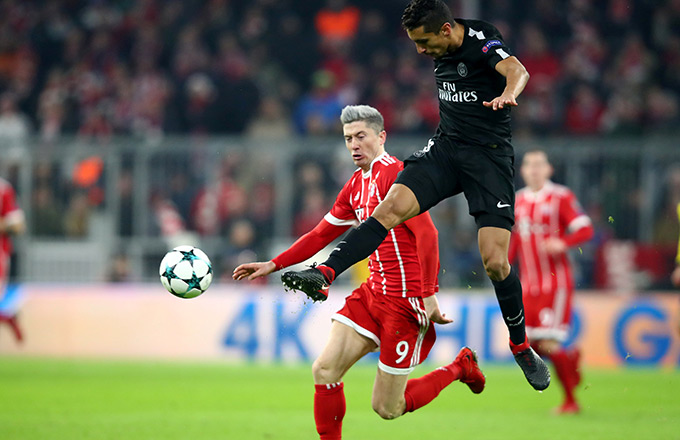 Bayern beat Paris Saint-Germain 3-1 in UEFA Champions League


Copyright 1995 - . All rights reserved. The content (including but not limited to text, photo, multimedia information, etc) published in this site belongs to China Daily Information Co (CDIC). Without written authorization from CDIC, such content shall not be republished or used in any form. Note: Browsers with 1024*768 or higher resolution are suggested for this site.
License for publishing multimedia online 0108263 Registration Number: 20100000002731