Comments
  Print
Print  Mail
Mail  Large Medium Small
FLORIDA: After recently losing its spot as the second-largest fast-food chain in the US to Subway, Burger King is banking on an increasingly Westernized China to help boost the company's revenues.
Burger King's goal is to open 250 to 300 restaurants across China by 2015. As of the end of June, the company opened 16 company-owned outlets, and seven franchises in six Chinese cities. The company has only operated 20 restaurants in China since it first entered the market in June 2005.
"It could be in the next three years or even faster that we may hit the over-100-restaurants mark," said Jonathan Shih, general manager of Burger King China.
New Burger King outlets are under construction this year in Nanjing, Shanghai and Hangzhou. Over the next three years, more will be added to the existing markets of Beijing, Shanghai, Guangzhou and Shenzhen.
Company-owned restaurants will be set up in Shanghai and Jiangsu province and near other major cities, which often have Western standards of living and high consumption power, Shih said. Outlets farther away from the larger cities will be locally owned, he added.
|
Burger King plans to open 250 to 300 restaurants in China by 2015. CFP |
"If we look at the gap in the share of the total units under Western quick service restaurants and strong demand from the consumers in China," Shih said, "Burger King has great potential to grow."
According to a report called "China Fast Food Analysis" from MarketsMonitor, the fast-food industry in China is expected to see a compounded annual growth rate of 25 percent until at least 2011.
Direct imports of french fries to China from the US has increased tenfold from a decade ago, and has tripled in volume for China shipments coming through Hong Kong, according to the US Department of Agriculture's Foreign Agricultural Services' trade office in Guangzhou.
The US recession is hitting Burger King particularly hard because so many of its restaurants are concentrated in the States, causing sales projections to trend downward, according to a recent report by JPMorgan analyst John Ivankoe.
"A lack of sufficient global infrastructure is a risk for (Burger King)," Ivankoe wrote.
Although its international and Chinese expansion plans will help Burger King improve the geographical diversification of its restaurants, it currently lags well behind its competitors in this regard.
According to Gregory Badishkanian of Citi Investment Research, two-thirds of Burger King's 2008 revenues came from US and Canada sales, while McDonald's derives just 37 percent of total revenue from the US. Another competitor, YUM! Brands, which owns KFC, Pizza Hut and Taco Bell, gets 46 percent of its total revenue from the US.
Burger King also has a lot of catching up to do in China, as its competitors there easily outrank the company in terms of units and sales, Badishkanian said. Its Asia/Pacific presence comes in last behind its other regional operations, he added.
The payoff for rapid expansion into China could have a higher yield for Burger King, said Keith Siegner, a research analyst for Credit Suisse.
"Burger King still has significant earnings power, given its international growth story and the fact that it has been under-earning the industry on both the restaurant and corporate level for years," Siegner said. "We still feel very comfortable buying the longer-term story at these levels."
Of the new franchises being opened in China, 10 percent will be locally owned, Shih said. Burger King may benefit, but also run risks from having an overwhelming increase in locally run restaurants compared to company-owned ones, Badishkanian said.
"A highly franchised business model can drive steady cash flows and increasing returns and margins," Badishkanian explained. "Another potential risk that could negatively affect brand image is reluctance on the part of franchisees to re-invest due to factors such as tight credit conditions or a rising cost of doing business."
In order to draw Chinese customers, Burger King is looking to maintain its standards of quality, while adding to its menu local flavors such as Asian sauces, egg burgers, wraps, wings and salad cups, Shih said.
"It is important to make sure that global and local suppliers are delivering the same world-class standard to China," Shih said of the new operations. "As a global company, US and regional support centers bring good business practices and new concepts from the US, for any aspect that we may adapt and adopt to the Chinese environment."
(China Daily 08/31/2009 page6)

 Night views of Harbin through the lens
 Tibetans take train home after pilgrimage or travelling
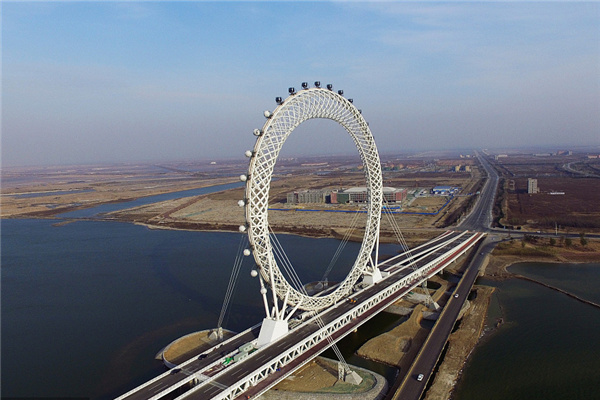 World's largest shaftless Ferris wheel built in China
 Ancient cities to be connected by Xi'an-Chengdu high-speed railway
 Snow turns Harbin into winter wonderland
 Reed Catkin Festival held in Wuhan
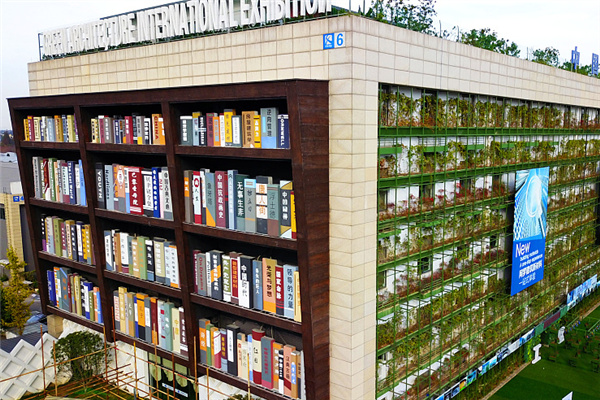 Is it a building or a bookshelf?
 First flight
 Polar icebreaker Snow Dragon arrives in Antarctic
 Xi's vision on shared future for humanity
 UN's top environmental honors go to three in China
 German trains collide near Duesseldorf, several people injured
 China beats Germany 7-4 in men's curling Olympic qualification
 Bayern beat Paris Saint-Germain 3-1 in UEFA Champions League


Copyright 1995 - . All rights reserved. The content (including but not limited to text, photo, multimedia information, etc) published in this site belongs to China Daily Information Co (CDIC). Without written authorization from CDIC, such content shall not be republished or used in any form. Note: Browsers with 1024*768 or higher resolution are suggested for this site.
License for publishing multimedia online 0108263 Registration Number: 20100000002731