Comments
  Print
Print  Mail
Mail  Large Medium Small

The sports marketing industry in China stands at a crossroads.
China needs a competitive sports marketing industry to enable its major sports to realize their full potential.
While great strides have been made, there is much more to be done.
China has at least 300 million sports fans. Eighty percent of the Chinese population watches sports on television.
The country has a huge new middle class of more than 150 million, with vast spending power and a great interest in international and domestic brands. Put those facts together, and the equation is clear.
The potential for sponsorship as a cost-effective marketing platform is simply enormous.
Basketball and football, the most popular sports, can reach across China's regions and cultures. For far-sighted sponsors, the rewards could be great.
"There has not been a tradition of sports sponsorships or fees for TV rights in the People's Republic, but the Olympics has dramatically changed the approach to sponsorship," said an expert from multinational consulting firm PricewaterhouseCoopers (PwC).
The commercialization of sports signals a shift away from government control to private management of popular sports.
Interest in sports is significant. The sports viewership of China's national sports channel CCTV5 equates to 50 percent of the national total. More than 50 percent of sports-related TV advertising goes through this channel.
The sports industry is also relatively insulated from financial crises, with major sporting events already secured. These include the 2009 Harbin Winter Universiade, the 2010 Asian Games in Guangzhou and the 2011 Summer Universiade in Shenzhen. There is also a possible bid for the 2018 Winter Olympics from Harbin, a city of 5 million people in the northeastern province of Heilongjiang.
China's relatively weak sports infrastructure is being rapidly improved by the investments brought about by recent and future international events. In the buildup to the Beijing Olympic Games, China's sports marketing industry grew rapidly.
International sports marketing agencies opened offices and worked with Chinese sports federations to usher in a new level of professionalism in sponsorships. Related revenues jumped nearly 70 percent in 2008, according to PwC. The downside is a predicted drop of some 30 percent in the sports market in 2009.
The most important Olympics legacy could turn out to be enhanced awareness, not infrastructure reform.
The Olympics made Chinese brands and sports bodies more aware of the benefits of sponsorship. It galvanized the sports marketing industry into action and made the powers-that-be appreciate that State-administered sports marketing has its limitations.
Sponsorship investment in the framework of a more professional, competitive sports marketing industry is much needed. Educated sponsors reach out to the broad base of sports and communicate with the grassroots -- tomorrow's consumers.
The realization that sponsors can enhance the organization, presentation and impact of a sport, as well as help fund it, is important.
What the industry needs now is more focus on the development of the tools of the trade.
All the practices and tools that have made sponsorship such a powerful marketing weapon in markets like Europe and the United States - proper contracting, sponsor servicing, activation, event presentation, consistency, good television coverage - must be made available in China.
The many complexities of this task are new to China, and a lot of heavy lifting is still to be done.
A sports marketing agency that wants to succeed in China - and provide international brands with the level of service they expect - has to play a much greater supporting role than might be the case in other marketing areas.
There are two options for international and domestic brands wanting a sports platform in China. Both work, but the second option offers credibility to those truly committed to the Chinese market.
The first option is sponsoring imported sports. America's National Basketball Association (NBA), the National Football League (NFL), Formula 1 motor racing, ATP tennis and various European football clubs have already made inroads into the market. The NBA is well-established in China, and its stars are household names.
The second option entails sponsoring China's domestic sports leagues and teams. China needs to build its national teams in sports like basketball and football. They command the highest number of television viewers among those watching Chinese teams and also involve the largest number of participants.
National team sports
|
Sports is big business in Beijing. CFP |
As far as sports that are ready for investment, basketball is a primary example.
"The tremendous success of the Chinese Basketball Association's (CBA) recently completed season is clearly reflected by the media," according to research firm CSM Media Research.
"Ninety-nine percent of articles published about the CBA league were positive or, at worst, neutral," CSM Media Research wrote.
The CBA is well-run and forward-looking. Its decision to appoint an international sports marketing agency to help it realize its objectives seems to be paying off. The joint venture partners have shared objectives and a mutual will to succeed. The CBA league supplies players to the national team, so its success is important. Over the past four years, huge strides have been made.
Today, the CBA league is the most popular domestic sports program on Chinese television. Its ratings outstrip all other indigenous sports programs, including football.
There is now more for spectators to enjoy, too, thanks to a policy of enhancing the fan experience through innovations such as cheerleaders, opening the cheerleader training sessions to public viewing and an annual All-Star game.
The number of sponsors for the CBA and the All-Star game has more than tripled from five to 17 sponsors in just a few years. Sponsors include international brands like Nike, UPS and Tissot, as well as Chinese companies like China Mobile, Anta and TCL.
Why is the CBA league proving to be so enticing to sponsors? It's a positive news story about growth and potential.
China is now Tissot's No 1 market worldwide, with a 15 percent business share. Tissot wanted a sports platform to appeal to the young, upwardly mobile middle class Chinese consumer. This demographic has consumption levels five to six times greater than the national average.
Optimistic, fashion-oriented and brand-conscious, they are the present and future of basketball in China. Here, basketball is "cool", and its heroes embody the values that young people want to emulate.
Tissot became an official sponsor of the CBA league starting with the 2007-2008 season. It has a five-year agreement that spans all CBA league games, including the play-offs and the hugely successful annual CBA All-Star Game.
The league is now a professionally organized entity, serving its sponsors and providing more scope for activation with each successive year.
Early figures show strong potential for good returns on this investment, and Tissot's sponsorship expenditure on the CBA league is justified both by high media value results and initial revenues generated through watch deals.
Recent market research information from Tissot's Chinese office shows that Tissot is one of the stronger watch brands in the Chinese market.
Marketing-led development is where the Chinese sports marketing industry needs to go. International brands can make a huge contribution by setting the pace. Chinese sports bodies and sports associations are beginning to understand that they need to do more to attract financial support at international levels.
With a little luck, a lot of hard work and a rapidly growing middle class with more leisure time on its hands, China's sports industry has massive potential for sustainable growth.
Philippe Blatter is president and CEO of Infront Sports & Media. Ma Guoli is managing director and CEO of Infront Sports & Media (China). The views expressed here are their own.
(China Daily 08/24/2009 page2)

 Night views of Harbin through the lens
 Tibetans take train home after pilgrimage or travelling
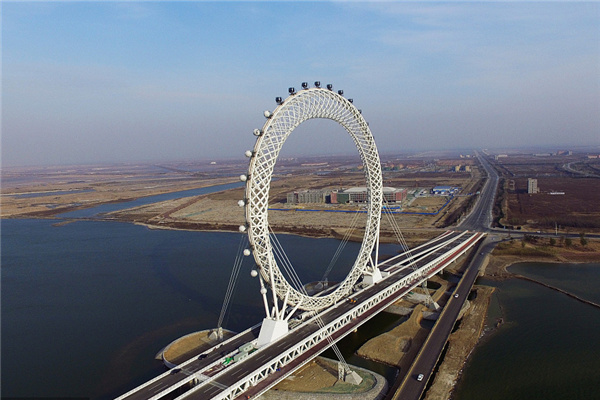 World's largest shaftless Ferris wheel built in China
 Ancient cities to be connected by Xi'an-Chengdu high-speed railway
 Snow turns Harbin into winter wonderland
 Reed Catkin Festival held in Wuhan
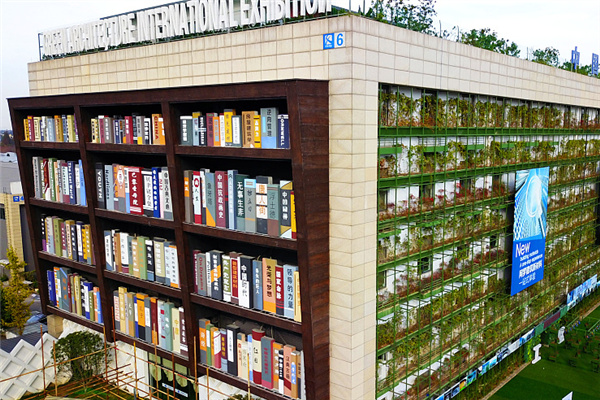 Is it a building or a bookshelf?
 First flight
 Polar icebreaker Snow Dragon arrives in Antarctic
 Xi's vision on shared future for humanity
 UN's top environmental honors go to three in China
 German trains collide near Duesseldorf, several people injured
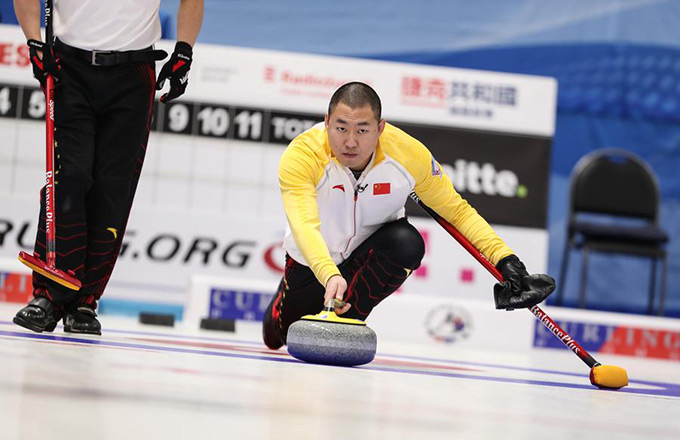 China beats Germany 7-4 in men's curling Olympic qualification
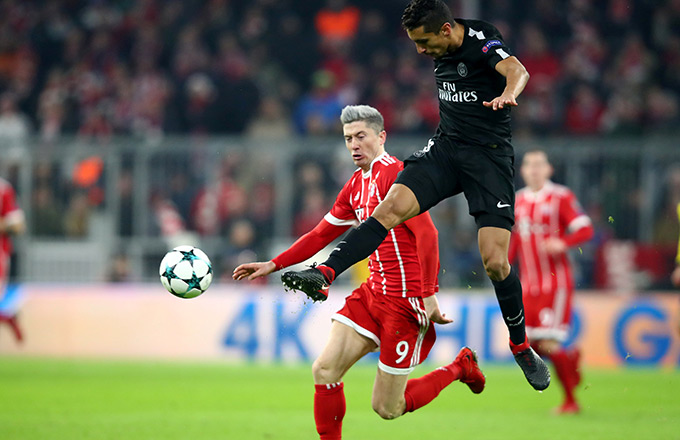 Bayern beat Paris Saint-Germain 3-1 in UEFA Champions League


Copyright 1995 - . All rights reserved. The content (including but not limited to text, photo, multimedia information, etc) published in this site belongs to China Daily Information Co (CDIC). Without written authorization from CDIC, such content shall not be republished or used in any form. Note: Browsers with 1024*768 or higher resolution are suggested for this site.
License for publishing multimedia online 0108263 Registration Number: 20100000002731