Comments
  Print
Print  Mail
Mail  Large Medium Small
In 2008 global foreign direct investment (FDI) fell by around 20 percent, while outward FDI from China nearly doubled.

This disparity is likely to continue in 2009 and 2010 as China invests even more overseas. What is driving this continuing surge in China 's outward FDI?
China's FDI outflows took off as a result of the government's adoption and promotion of a "go global" policy aimed at establishing the country's investors as international players.
Having averaged only $453 million a year in the 1982-1989 period and $2.3 billion in 1990-1999, the numbers rose to $5.5 billion in 2004, $12.3 billion in 2005, $17.6 billion in 2006 and $24.8 billion in 2007.
Preliminary figures for 2008 show a rise to $40.7 billion. If financial FDI (not counted before 2006) is included, the 2008 total was $52.2 billion - nearly double the $26.5 billion in 2007.
Anecdotal evidence suggests that China's outward FDI growth continued to accelerate in early 2009.
China 's direct investments in Australia alone reportedly increased from $1.4 billion in the first quarter of 2008 to $13 billion in the same period this year.
If that trend continues, China's FDI just in Australia in 2009 will equal its global outward FDI in 2008.
Acceleration
Five key drivers of China 's outward FDI explain this acceleration.
First, one of the most reported motivations in the international media and in some academic writing is China's need to secure natural resources to fuel rapid growth.
Second, while most of China 's exports are from foreign-owned enterprises, large domestic firms also export large volumes and need services like shipping and insurance.
Third, China 's major enterprises are also acquiring global brands, like Lenovo's acquisition of IBM's personal computer business or the SAIC and Nanjing purchase of MG Rover.
Fourth, Large State-owned enterprises (SOEs) that are losing their monopoly position at home are diversifying internationally.
And fifth, some enterprises - despite China's ample labor supply - seek to move their labor-intensive operations to cheaper overseas locations such as Vietnam and Africa.
Accumulated FDI
The relative strengths of these motivations are reflected in the per-sector and geographical distribution of China 's accumulated FDI.
The latest figures published by China 's Ministry of Commerce in February show outward FDI totaled $118 billion at the end of 2007.
The tertiary sector predominated, with over 70 percent of the total.
Manufacturing remained modest at 8 percent, and construction even lower at 1.4 percent. So, with other items, the secondary sector contributed around 16 percent of outward FDI.
The remaining 14 percent is accounted for by mining, quarrying and oil production (13 percent) and agriculture, forestry and fisheries (1 percent).
While the per-sector composition tends to fluctuate with "lumpy" green field projects or M&A deals, the end-of-2007 figures give a fair representation.
Manufacturing outward FDI is small, although it might grow faster with the rise of domestic production costs.
Media reports focus on China's investments in Africa, but the continent that continues to absorb most of China's capital exports is Asia, which accounted for 67 percent of cumulated Chinese outward FDI at the end of 2007.
For that period, Latin America received 21 percent, Europe 4 percent, Africa 4 percent, North America 3 percent and Oceania 2 percent.
These figures are distorted by the use of tax havens, which obscures actual destinations.
China's investment in Latin America, for example, is mainly the 14 percent of China's outward FDI registered as going to the Cayman Islands and the 6 percent going to the British Virgin Islands.
Hong Kong
The bulk of China's FDI in Asia goes to Hong Kong, which accounted for 58 percent of outward FDI stock up to the end of 2007.
Even if the actual figures are higher because of routing via tax havens, China's FDI in the developed world, especially Europe and North America, is disproportionately small considering the high proportion of China's trade with these regions.
This probably results more from a lack of readiness to compete with global giants on their home territory than from protectionist pressures, although these have discouraged some large acquisitions.
An unknown proportion of investment in Hong Kong, Chinese mainland and the tax havens consists of "round-tripping" investments to take advantage of tax concessions in China.
But this must now be falling since such incentives were abolished at the beginning of 2008, and Hong Kong is therefore unlikely to retain its dominant position.
Genuinely outward FDI is therefore likely to be growing even faster than shown by official statistics.
The coastal provinces and municipalities, heavily engaged in international trade, are the main sources of China's outward FDI.
Guangdong -the largest recipient of FDI - provided 20 percent of total outward FDI in 2008.
The second largest source was Zhejiang, with 8 percent of outward FDI. Shandong followed in third place with 8 percent.
How is the crisis affecting China's outward FDI?
As an open economy, China cannot escape the effects of the global financial crisis of 2008.
The government is countering the downturn with a fiscal stimulus that will limit GDP deceleration, and credit has actually expanded.
The Organization for Economic Cooperation and Development (OECD) forecasts 6.3 percent GDP growth in 2009 and 8.5 percent in 2010.
China's resource needs will continue to increase, so it is seeking to secure reliable supplies by doing deals with producers.
Such deals made in the first quarter of 2009 already reportedly exceed China's record FDI outflow in 2008.
With $1.9 trillion in foreign-exchange reserves, a current-account surplus forecast by the OECD to rise to 11.7 percent of GDP in 2009 and no credit crunch, China can afford large investments overseas.
Challenges
Chinese multinationals can snap up companies on the cheap to acquire market share and brands in the developed world. Unsurprisingly, China is campaigning vociferously against investment protectionism.
China's worries are not unfounded. While there are those who welcome Chinese investment, for example in African countries happy to receive accompanying unconditional aid, there are also widespread suspicions about China's intentions.
The predominance of SOEs in China's outward FDI has raised fears that such investment might not be governed by normal commercial considerations and might even be an arm of the country's foreign and defense policies.
Other challenges for China's outward FDI include raising the efficiency of natural resource exploitation and abandoning the preference for vertical integration of industrial production.
China's outward FDI accounts for not much more than 1 percent of the global total, which is far below the country's share of world trade.
However, this total is rising fast, and the country will eventually become a major source of global FDI.
The author is an economist and head of global relations in the investment division of the Paris-based Organization for Economic Cooperation and Development (OECD). The views expressed here are his own.
(China Daily 08/03/2009 page2)

 Night views of Harbin through the lens
 Tibetans take train home after pilgrimage or travelling
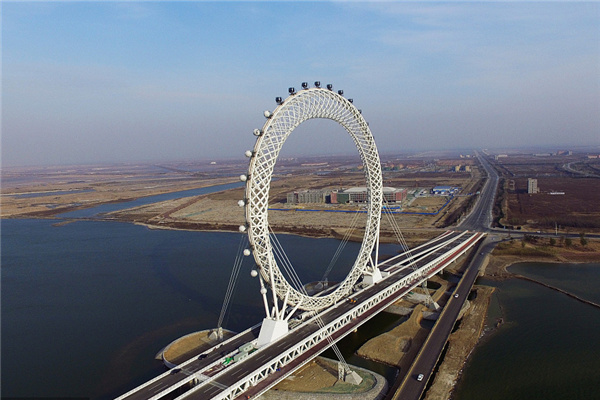 World's largest shaftless Ferris wheel built in China
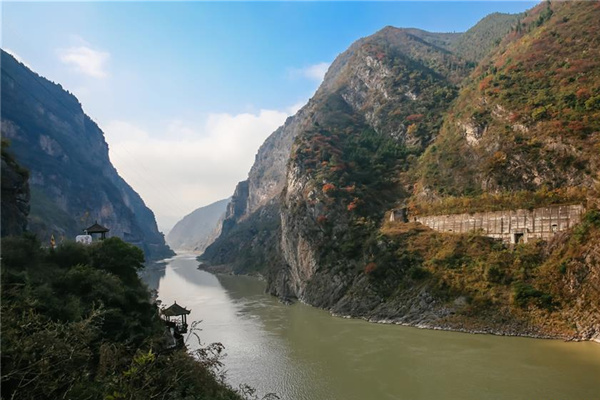 Ancient cities to be connected by Xi'an-Chengdu high-speed railway
 Snow turns Harbin into winter wonderland
 Reed Catkin Festival held in Wuhan
 Is it a building or a bookshelf?
 First flight
 Polar icebreaker Snow Dragon arrives in Antarctic
 Xi's vision on shared future for humanity
 UN's top environmental honors go to three in China
 German trains collide near Duesseldorf, several people injured
 China beats Germany 7-4 in men's curling Olympic qualification
 Bayern beat Paris Saint-Germain 3-1 in UEFA Champions League


Copyright 1995 - . All rights reserved. The content (including but not limited to text, photo, multimedia information, etc) published in this site belongs to China Daily Information Co (CDIC). Without written authorization from CDIC, such content shall not be republished or used in any form. Note: Browsers with 1024*768 or higher resolution are suggested for this site.
License for publishing multimedia online 0108263 Registration Number: 20100000002731