Comments
  Print
Print  Mail
Mail  Large Medium Small
When some in Beijing or Shanghai voluntarily park their cars for a day or two each week and take subways or buses, or even walk to work to reduce their carbon footprint, they label themselves "green commuters".
Some then show a sort of moral superiority because they have made such a "sacrifice".

I always support green campaigns, no matter what motivates participants. Results are what's most important - finally they are consuming less.
But the label "green commuter" naturally makes me think of even greener examples. I recently paid a visit to a school in mountainous Pingwu county of Sichuan province. With their daily lives surrounded by primeval forest and high mountains, I found the kids there, mostly from poor families, are real green commuters.
Ten-year-old Wang Xin commutes between her boarding school and home on Friday afternoons and Sundays. Mountains between the school and her family means it usually takes five hours for her and her schoolmates to hike the route. For them, taking a bus to visit a county or city is still a luxury.
The headmaster of Wang Xin's school told me nearly all its students commute on foot. Of course, their parents do the same in their daily lives, usually with fertilizer, grain and necessities on their backs, despite the fact some have already seen the "bright lights, big city" when working as migrant laborers.
The headmaster said Wang Xin's grandparents' generation walked everywhere their whole lives, though a few rode horses. In the 1980s or 1990s, villagers would still hurry to have a look if they heard a car or coach passing by.
Those three generations well illustrate my notion of "carbon emission inequality" in China. Wang Xin and her villagers are real green commuters: they not only burn far less fossil fuel in their daily lives, but also help reduce carbon dioxide by planting trees and protecting the forests around them.
Emission inequality comes hand-in-hand with development imbalance. If measured by UN human development standards, China's Shanghai is roughly equivalent to the level of Portugal, while rural regions in western and central China still rank the same as African countries.
A European thinker impressed me by saying China today is Europe plus Africa. This is a very clear landscape of imbalance in development and carbon emissions.
At the global level, emission inequality is also at issue. Computer models show cumulative per capita carbon emissions in China will be 194 tons from the years 1850 to 2030, while the US will have generated 800 tons and Europe 1,100 tons from 1850 to 2005.
If that scenario turns into reality, China will discharge far less greenhouse gas in pursuit of economic prosperity on par with developed economies.
In fact, China took measures to emit less in the 1970s when it launched its family planning program. If not for that policy, China today would be straining to feed, clothe, transport and accommodate an estimated extra 300 million to 400 million people - more than the entire population of Western Europe or the US.
During my interview with UN Intergovernmental Panel on Climate Change Chairman Rajendra Pachauri in 2008, he acknowledged China has contributed to the earth's welfare by curbing its population growth and consumption of energy and resources.
Last week Pachauri told CNN that it is "pragmatic" that the US will not require China to set a national emission cap at this stage.
I applaud Pachauri for his attitude.
On the road to Copenhagen, I urge the negotiators to face up to emission inequality. As well, please design more meaningful incentives to help Beijing and Shanghai people get greener.
And help find a way to get 10-year-old Wang Xin and her fellow villagers out of poverty without burning more fossil fuel.
(China Daily 06/22/2009 page2)

 Night views of Harbin through the lens
 Tibetans take train home after pilgrimage or travelling
 World's largest shaftless Ferris wheel built in China
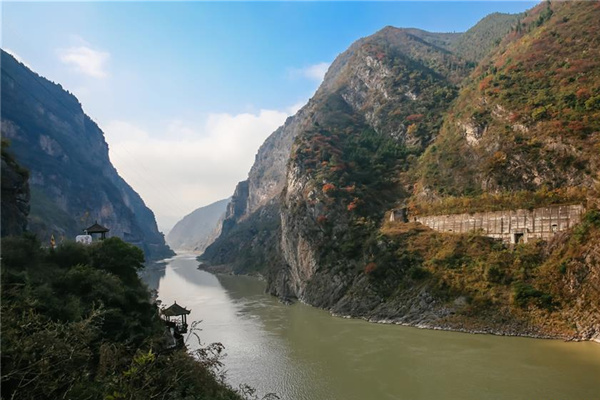 Ancient cities to be connected by Xi'an-Chengdu high-speed railway
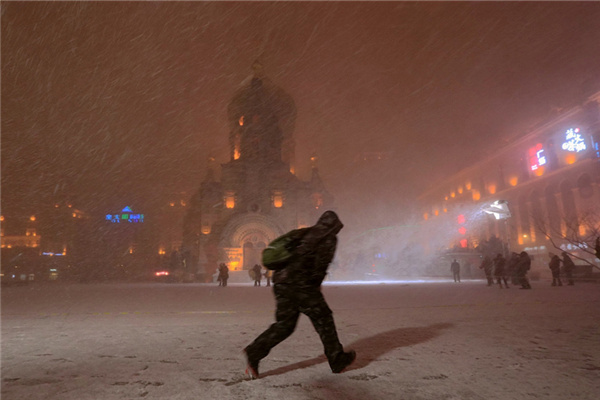 Snow turns Harbin into winter wonderland
 Reed Catkin Festival held in Wuhan
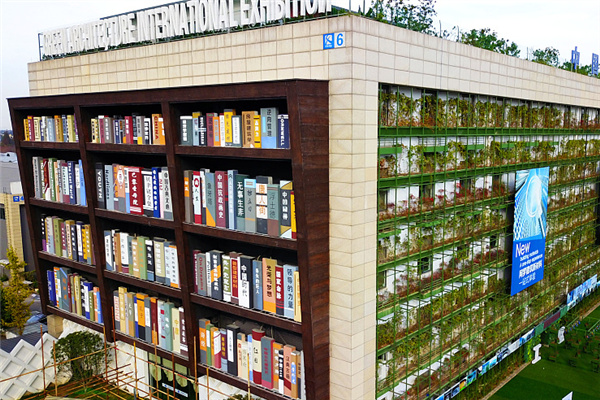 Is it a building or a bookshelf?
 First flight
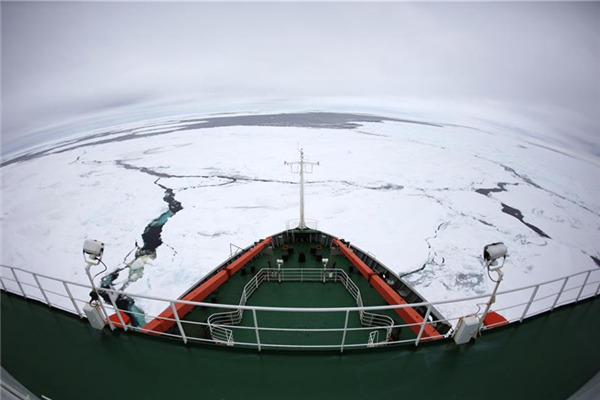 Polar icebreaker Snow Dragon arrives in Antarctic
 Xi's vision on shared future for humanity
 UN's top environmental honors go to three in China
 German trains collide near Duesseldorf, several people injured
 China beats Germany 7-4 in men's curling Olympic qualification
 Bayern beat Paris Saint-Germain 3-1 in UEFA Champions League


Copyright 1995 - . All rights reserved. The content (including but not limited to text, photo, multimedia information, etc) published in this site belongs to China Daily Information Co (CDIC). Without written authorization from CDIC, such content shall not be republished or used in any form. Note: Browsers with 1024*768 or higher resolution are suggested for this site.
License for publishing multimedia online 0108263 Registration Number: 20100000002731