Comments
  Print
Print  Mail
Mail  Large Medium Small
US Treasury Secretary Timothy Geithner made the most of his first Beijing visit to lobby China to continue expanding its forex reserve portfolio in US treasury bonds, securities widely regarded to be low risk and highly liquid. Rating agencies Moody's and Standard & Poor's class them as AAA, the highest possible.
Geithner is the first US treasury secretary to make a trip to sell treasuries in the history of Sino-US diplomatic relations and a rare event in world financial history. Geithner's Beijing visit itself provides a hint about real concerns - so-called risk-free treasuries are no longer immune from risk.
Government bonds are securities issued by a nation and backed by the country's fiscal revenues and sovereign credit. As with a company, a government could be in a situation where the value of all its possessions does not equal its total debts. Examples include a funding crisis in Great Britain before development of the North Sea Oilfield and fiscal emergencies in Southeast Asia during the 1997 financial crisis.
Current bankruptcy moves by century-old automaker General Motors, once a symbol of US economic prowess, signals how the US financial crisis has escalated into a wider economic crisis.
Ongoing economic woes no doubt enlarge the bankruptcy risk at the US government itself. Is the US treasury still a safe security?
It is a question for China itself.
Americans, including Moody's and Standard and Poor's, are not the right ones to answer the question. When borrowing money, most people make sweet promises. That also applies to Geithner.
His Beijing visit provides more evidence that the issue is not solely about the economy. It has been enlarged to a political issue and connects other national interests of China. Structural problems in China's forex reserve system mean that it can only concede on this issue to negotiate with the US for gains on other national interests.
The original purpose of parking China's reserves in US treasuries was due to their high liquidity. About $700 billion of China's nearly $2 trillion in reserves has been invested in US treasury securities.
If China decided to sell off its treasuries holdings, it will scarcely be able to dump it in large blocks. A partial sell off will surely lead to a slump in the treasury market, eroding the remaining value of China's portfolio.
China has no other way but sustained depletion of forex reserves in small amounts. It is estimated that it will be hard for China to sell off its current treasuries holdings for at least the next two years.
The issue is currently an intertwined cycle: the Chinese government is keeping enormous amounts of US treasuries, so the risk to its foreign reserve liquidity increases while the US issues new treasuries making the liquidity risk is worse.
It might be similar to lending money to a rich man to whom one has to keep lending due to worries about him returning previous debts. In such a situation, lenders should strive for more tangible assets as collateral.
The way out of the issue is for the US government to extricate itself from the economic crisis, raise its governmental credit and enable appreciation of its treasury securities so the Chinese government can cash in its holdings.
To maintain a liquid forex reserve, China's government should eliminate its misunderstanding of US treasuries as the only form to coordinate Sino-US bilateral interests. An alternative has been demonstrated by the Canadian government taking a stake in GM. Stake injection could see China moderately adjust the structure of its forex reserves, yet could also be an alternative way to help the US economy.
The Chinese government could consider taking a stake in a US financial firm at a relatively low price - such as China Investment Corp injecting capital that is convertible into a stake of investment bank Morgan Stanley. History shows that a high quality stake in financial firms might be best acquired at times of crisis.
The author is a partner at Winwings Consulting Ltd and a former forex trader with Bank of China and manager at Pricewaterhousecoopers. The views expressed are his own
(China Daily 06/08/2009 page4)

 Night views of Harbin through the lens
 Tibetans take train home after pilgrimage or travelling
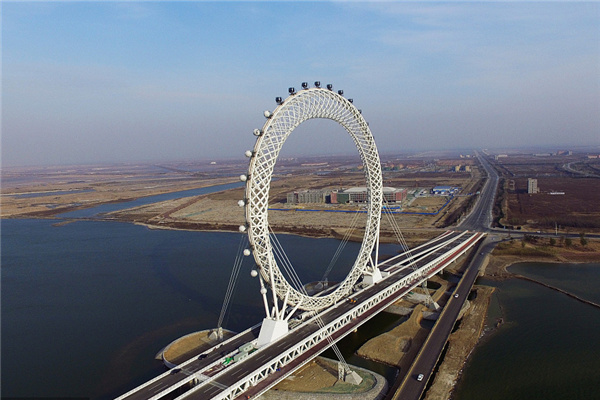 World's largest shaftless Ferris wheel built in China
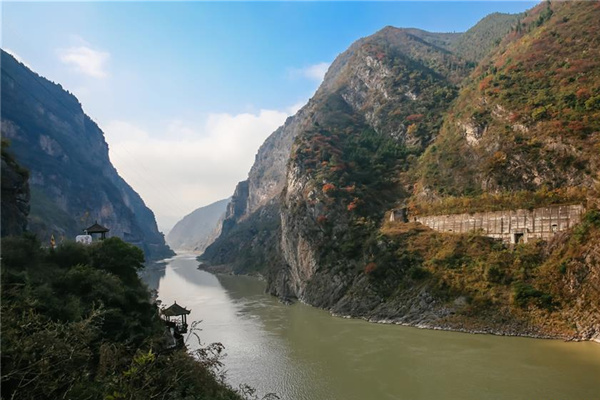 Ancient cities to be connected by Xi'an-Chengdu high-speed railway
 Snow turns Harbin into winter wonderland
 Reed Catkin Festival held in Wuhan
 Is it a building or a bookshelf?
 First flight
 Polar icebreaker Snow Dragon arrives in Antarctic
 Xi's vision on shared future for humanity
 UN's top environmental honors go to three in China
 German trains collide near Duesseldorf, several people injured
 China beats Germany 7-4 in men's curling Olympic qualification
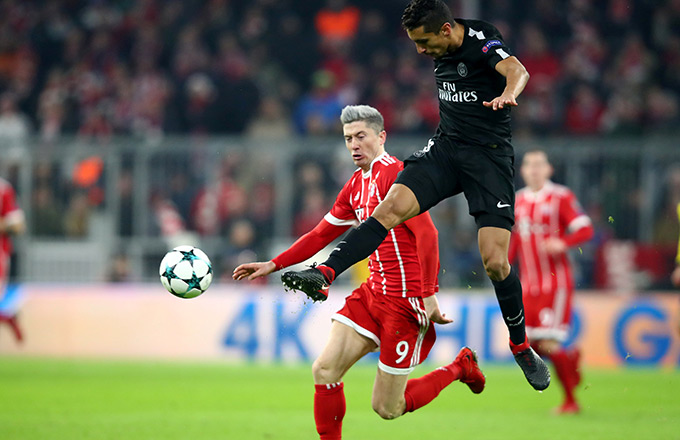 Bayern beat Paris Saint-Germain 3-1 in UEFA Champions League


Copyright 1995 - . All rights reserved. The content (including but not limited to text, photo, multimedia information, etc) published in this site belongs to China Daily Information Co (CDIC). Without written authorization from CDIC, such content shall not be republished or used in any form. Note: Browsers with 1024*768 or higher resolution are suggested for this site.
License for publishing multimedia online 0108263 Registration Number: 20100000002731