Comments
  Print
Print  Mail
Mail  Large Medium Small
When Chen Yaoqing and her husband go shopping for light bulbs, they get the most energy-efficient ones they can find.
"The considerable amount of energy you can save just by changing the bulbs in your home tends to be neglected, largely because people don't think it's a big deal, or they are not willing to pay a little bit more for what is already a cheap product," said Chen, a telecommunications worker in Shanghai.
But Chen says she is making a difference to both the family's energy bill and the city's air quality by looking for out for more than just the cheapest price.
"The energy consumption of energy-efficient bulbs is much less than traditional incandescent lamps. I'll certainly gain ground on my energy bill in the long run," she said.
Chen is among a rising number of Chinese whose energy awareness and changing tastes are having a significant impact. A growing emphasis on functionality rather than cost and appearance is changing the fortune of low-energy bulbs in the world's most populous nation.
According to Liu Shengping, vice president of China Association of Lighting Industry (CALI), the number of incandescent lamps in use in China was 4.3 billion at the end of last year, but is noticeably on the decrease. Energy-efficient bulbs, on the other hand, are rapidly closing in, with more than three billion in use over the same period.
Liu attributed the progress to growing environmental awareness in China, as well as the government's latest efforts to promote more efficient lamps by offering subsidies of up to 50 percent on retail sales.
The massive subsidy program, which came into effect last April, aims to usher in 150 million energy-saving bulbs by the end of this year.
About 62 million had already been sold by January this year, saving 3.2 billion kWh of electricity and cutting carbon dioxide emissions by 3.2 million tons and sulfur dioxide emissions by 32,000 tons, according to official figures.
China's current bid to stimulate domestic consumption to cushion the negative impact of the ongoing global economic slowdown could also create more opportunities for the sector to grow, as energy efficiency is high on the government's agenda, Liu said.
China's rapid urbanization also helps its potential for energy-efficient lighting, said Lin Liangqi, Greater China CEO of Philips Lighting. "One of the important advantages of China is we have a lot of new buildings which could switch directly to more efficient forms of lighting, as opposed to Europe and North America, where the focus is very much on accelerating renovation and replacement," he said.
"The opportunities for efficient lighting are huge," he said.
China's cities add 15 million new urban citizens a year, and half of the world's construction will take place in China by 2015, according to econet-china, an open network of German companies coordinated by the German Industry and Commerce to promote Sino-German cooperation for sustainability.
Energy consumption, in turn, is expected to rise significantly. A McKinsey Global Institute study reports that by 2025, urban China will account for 20 percent of global energy consumption.
Lighting is responsible for up to 35 percent of the energy bill of a typical building in China, according to the national statistics bureau.
China's lighting industry has already changed, said Lin.
Philips' sales revenue from energy efficient lighting in China was 1.4 billion yuan last year, which is more than half of total product sales, he said.
Lin said the trend will continue and Phillips is now becoming more aggressive in the consumer luminaries market, where a growing number of middle class Chinese are pushing demand for value-added efficient lighting products.
He said the company has opened five consumer luminaries brand stores in Shanghai, in which 90 percent of products on the shelves are energy-saving devices.
It is also working actively on expanding its presence in second and third tier cites, with the goal of doubling its sales of consumer luminaries each year and opening more than 1,000 brand stores over the next five years.
Lighting will undergo an "absolute revolution," over the next 10 years, just like the ones seen in the consumer electronics or information technology industries, according to Rudy Provoost, Executive Vice-President and CEO of Philips Lighting.
"I can see in lighting, over the next 5 to 10 years, there will be some dramatic shifts, where complete categories could shift from incandescent lamps to energy-efficient lighting sources and from traditional technologies to solid state, or LED (light-emitting diode) lighting," said Provoost.
LEDs have lower energy consumption, a longer lifetime, are more robust, are smaller and are easier to switch than traditional size, although they cost ten times more.
Positioning LED as the next stage of the company's lighting business, Provoost said he expects there will be more examples of "a mix of technology" in which LED is used.
He also underscored the importance of government support in the bid to reduce energy consumption in general by raising green standards.
"It means not only setting aggressive standards that all the market players must live up to, but also that the authorities reward or penalize companies who do not live up to these standards," he said.
"It really needs concerted efforts, and the government has an important role to play," he added.
(China Daily 05/18/2009 page6)

 Night views of Harbin through the lens
 Tibetans take train home after pilgrimage or travelling
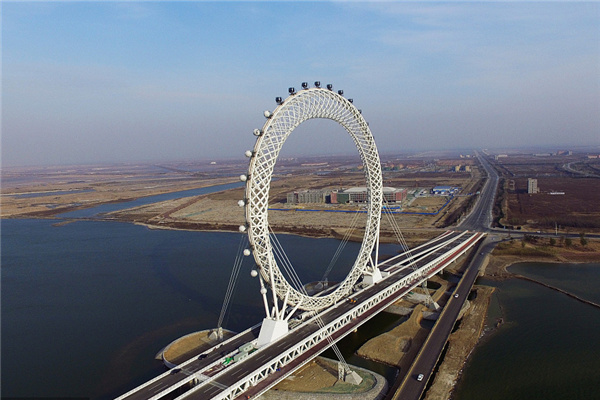 World's largest shaftless Ferris wheel built in China
 Ancient cities to be connected by Xi'an-Chengdu high-speed railway
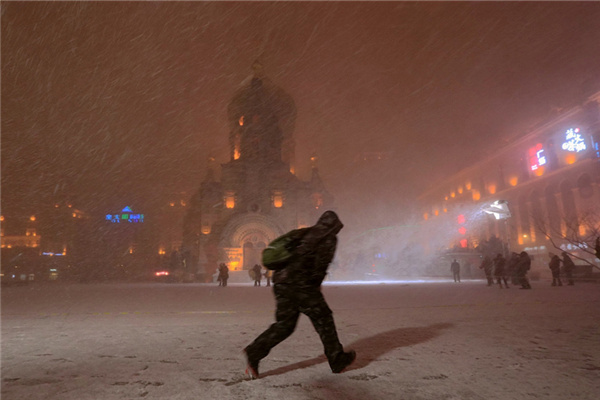 Snow turns Harbin into winter wonderland
 Reed Catkin Festival held in Wuhan
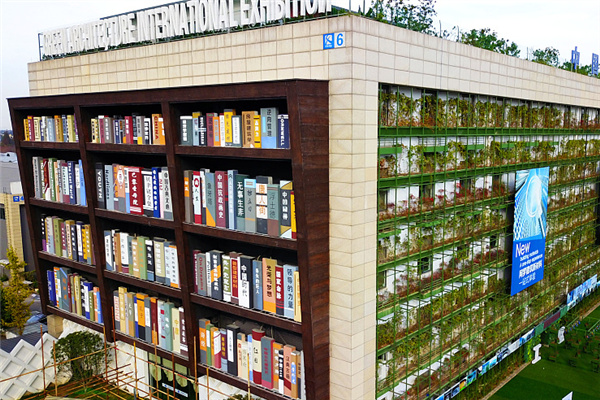 Is it a building or a bookshelf?
 First flight
 Polar icebreaker Snow Dragon arrives in Antarctic
 Xi's vision on shared future for humanity
 UN's top environmental honors go to three in China
 German trains collide near Duesseldorf, several people injured
 China beats Germany 7-4 in men's curling Olympic qualification
 Bayern beat Paris Saint-Germain 3-1 in UEFA Champions League


Copyright 1995 - . All rights reserved. The content (including but not limited to text, photo, multimedia information, etc) published in this site belongs to China Daily Information Co (CDIC). Without written authorization from CDIC, such content shall not be republished or used in any form. Note: Browsers with 1024*768 or higher resolution are suggested for this site.
License for publishing multimedia online 0108263 Registration Number: 20100000002731