Comments
  Print
Print  Mail
Mail  Large Medium Small
Qingdao, the seaside city in Shandong province, is already famous for its Tsingtao beer and more recently as the host city for the 2008 Olympic sailing competition and for its use of environmentally friendly energy and technologies.
Now, it is taking the lead in another green campaign by developing a circular economy out of its old dirty heavy industries.
Circular economy refers to a new model for economic growth, which requires that resources be used with higher efficiency and reused and recycled when possible.
China's Circular Economy Promotion Law took effect on January 1, 2009. It stipulates that governments at all levels should make plans to develop a circular economy, and establish systems to control energy use and pollutant emissions.
But Qingdao's initiatives on developing its circular economy started much earlier.
In the northern part of the city where Qingdao's heavy industries were clustered, was once known for its nasty environment and a stark contrast with the city's modern and prosperous southern part.
So the city government began pilot projects on developing a circular economy in 2003 by exploring new models for economic development to upgrade its industrial structure and reduce the north-south gap.
Years of research and policy guidance have yielded substantial achievements since then.
Cleaning up chromic slag
Chromic slag, industrial waste from Qingdao Redstar Chemical Group Co, was a big headache for the city government for years.
Solid waste formed in the manufacture of chromic salts, chromic slag is toxic and poses a threat to people's health. For a long time there were no proper methods available for its safe disposal.
As a result since the 1970s, 210,000 tons of chromic slag from Redstar Chemical was heaped at Loushan River, near Jiaozhou Bay, without proper treatment.
"The huge chromic slag mountain also threatened the safety of the underground water," a spokesperson for the Qingdao environmental protection bureau said. "When it rained, the rainwater could soak hazardous substances into the underground water system, creating hidden dangers for Qingdao citizens."
Safe disposal and recycling of chromic slag, as well as other industrial solid wastes, was listed in China's 11th Five-Year Plan of environmental protection, showing the central government's serious concern about the issue.
Qingdao started researching chromic slag treatment in 2005 and the Qingdao Iron and Steel Group Co developed a method of using chromic slag as a replacement for dolomite in the sintering process of iron making.
After three years' treatment, not only has the chromic slag been removed but the practice also saved 40 million yuan on dolomite for Qingdao Iron and Steel Group.
Recycling e-waste
A large amount of electronic waste is also generated in China. The National Development and Reform Commission (NDRC) has predicted that about 4 million refrigerators, 5 million washing machines and as many TVs will be discarded nationwide in the next few years.
The Circular Economy Promotion Law encourages recycling and the centralized treatment of electronic waste. The recycling practices are supported by a special fund set up by the NDRC and Ministry of Finance.
The law also stipulates the responsibilities of manufacturers, retailers, repair and customer service providers and recycling companies regarding the collection and treatment of electronic waste.
Qingdao, as one of the four cities designated by the NDRC to carry out pilot recycling projects in China, started exploring techniques and mechanisms for the safe and clean disposal of the e-waste.
Based on its own technical research, the city has developed four dissembling lines for refrigerators, washing machines, TV sets and air conditioners, which have been in operation since March 2005.
Qingdao also set up a collecting network for the households e-waste in 2007.
Under Qingdao's influence, the network is being expanded to the whole of Shandong province, which will have 127 collecting centers for e-waste by May 2009.
Clean energy
The regatta venue at the Olympic Sailing Center uses clean energy sources such as solar and wind.
Forty-one street lamps along the center's main seawall are powered by wind energy, saving 6,570 kwh of electricity annually.
Solar systems are installed at the service center, which generates 900,000 kwh of electricity every year to provide hot tap water and adjust the water temperature of the swimming pool.
Seawater is another major energy source since its temperature is more stable than air. A seawater air-conditioning system controls the temperature for an area of 8,100 sq m at the venue's media center .
These examples have been extended to other parts of the city after the Olympics.
Currently, the combined capacity of both installed and to-be-installed wind power facilities in Qingdao is 140,000 kw. And seawater air conditioners are also being installed in several residential communities outside the Olympic venue.
Renewable energy sources have also been introduced in the rural areas of Qingdao. A total of 40,465 rural households have installed methane-generating facilities so the residents can cook using methane gas.
(China Daily 01/12/2009 page10)

 Night views of Harbin through the lens
 Tibetans take train home after pilgrimage or travelling
 World's largest shaftless Ferris wheel built in China
 Ancient cities to be connected by Xi'an-Chengdu high-speed railway
 Snow turns Harbin into winter wonderland
 Reed Catkin Festival held in Wuhan
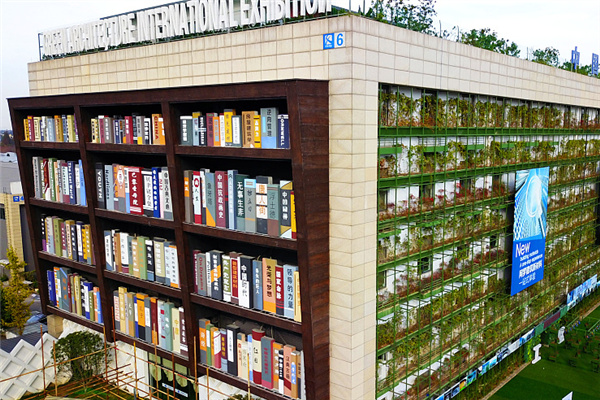 Is it a building or a bookshelf?
 First flight
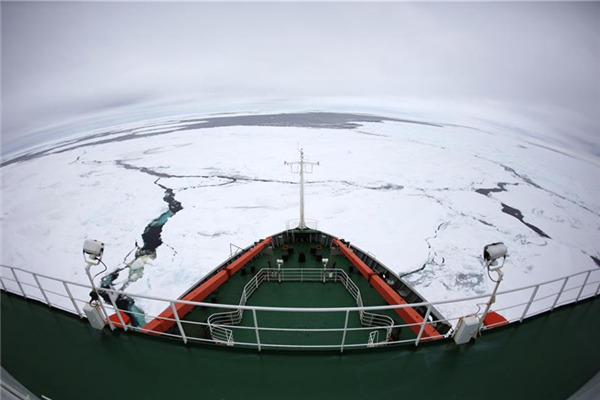 Polar icebreaker Snow Dragon arrives in Antarctic
 Xi's vision on shared future for humanity
 UN's top environmental honors go to three in China
 German trains collide near Duesseldorf, several people injured
 China beats Germany 7-4 in men's curling Olympic qualification
 Bayern beat Paris Saint-Germain 3-1 in UEFA Champions League


Copyright 1995 - . All rights reserved. The content (including but not limited to text, photo, multimedia information, etc) published in this site belongs to China Daily Information Co (CDIC). Without written authorization from CDIC, such content shall not be republished or used in any form. Note: Browsers with 1024*768 or higher resolution are suggested for this site.
License for publishing multimedia online 0108263 Registration Number: 20100000002731