Comments
  Print
Print  Mail
Mail  Large Medium Small
The passage of the Patent Reform Act of 2007 in the US House of Representatives has drawn worldwide attention. It is believed that the bill will mean great changes to the US patent system if it is issued. However, the bill is not without argument. The bill's main - and most controversial - changes are those dealing with damages, post-grant review procedures and interlocutory appeals and venue.
Damages
The change to the patent infringement damage calculation method is one of the main areas of reform. Because the damage calculation will affect both the patentees and the infringers greatly, it is an issue facing intense scrutiny.
The current law requires that the claimant should be awarded adequate compensation for an infringement, which should not be lower than a reasonable royalty. A "reasonable royalty" is generally an amount that a person desiring to make, use or sell the patented invention would have been reasonably willing to pay, and the infringer reasonably would have been willing to accept, as a royalty at the time the infringement first began, assuming the patent to be valid, enforceable and but for the license, infringed.
To determine this hypothetical royalty, courts look at several factors, including those set out in the case of Georgia Pacific vs US Plywood Corp. This flexible approach to determining reasonable royalty damages is a sound approach given the fact-dependent nature of patent litigation.
The bill significantly changes the current, flexible approach to calculating damages by requiring a new, untested method of prior art subtraction. Specifically, the bill changes the damages under the 284 US Patent Law greatly, limiting the interest of the patentee to "the economic value proper attributable to the patent's specific contribution over the prior art".
However, the additional value added by the invention over the prior art is difficult, if not impossible, to calculate in practice, especially when it comes to combination inventions (almost all inventions are to some extent made up of a combination of old features and new ones).
In addition to the prior art subtraction methodology, the bill also requires an additional subtraction of the value of "other features or improvements, whether or not themselves patented, that contribute economic value to the infringing product or process", which not only excludes the contribution made by the infringers, but also the contribution made by others, even by the patentees.
Post-grant review
The bill creates a new administrative procedure, called the post-grant review procedure, to be put before the US Patent and Trademark Office (USPTO). According to this procedure, a request to review the validity of the patent by a third party could be filed up to 12 months after its issue before the USPTO. Currently there are two ways to cancel a patent, either by litigation or re-examination. The newly created post-grant review procedure is believed to provide an economic and fast way to challenge a patent. However, it would also easily make legitimate patents subject to consecutive challenges, creating much expense and uncertainty for the patent holder and those investing in the patent holder's business.
These procedures might be abused by competitors and result in damages to patent owners. The burden of proof under the post-grant review procedure is different from that in litigation and the new procedure lowers the burden of proof from a 'clear and convincing' to 'preponderance of evidence' standard.
With the post-grant review, it is much easier and cheaper for the third party to challenge the granted patents. This will also create serious side-effects. What is more, according to the bill, 'presumption of validity' is not applicable under post-grant review, which will increase the burden on the patentee further by requiring the patentee to prove the validity of the patent. If this provision is used by the competitors, it will surely increase the time and cost for the patentees greatly, as well as increase uncertainty, and delay the exploitation of the patent.
Interlocutory appeal
The bill contains a provision creating a right to interlocutory appeal of trial court decisions in patent cases on "determining construction of claims" and mandating that the action in the trial court be stayed. This provision is made to change the high appellate reversal rate of claim rulings and the resulted uncertainty. However, the problem for interlocutory appeal and mandatory stay is that it will not only increase the Federal Circuit's workload, but also lengthen the cases. Prolonging a suit will mean patentees will not be able to obtain the remedy in time and the cost for litigation will be greatly increased.
The bill revises the current venue provisions that apply to patent infringement suits. The bill prevents a plaintiff from the manufacture venue, as well as other limitations on defendant venue and infringement act venue. The new provisions limit the patent litigation into a limited exercise before special courts, which are obliviously friendlier to large corporate defendants and will exert unfair prejudice on patent holders seeking to enforce their patents.
Other changes
There are some other changes that could bring the law closer to conforming with other countries, such as changing the US patent system from the "first to invent" rule to the "first to file" rule; the effort to make it easier for the assignees to apply for a patent when the inventors do not cooperate; and the elimination of the best mode as the basis for an invalidity action in either litigation or as part of a post-grant opposition procedure.
In order to increase the quality of granted patents, several provisions are proposed in the bill, such as allowing a third party to submit relevant prior art within six months from publication, and requiring patent applicants to submit a search report and other information relevant to patentability. The proposed mandatory search reports may help reduce the burden of examiners and improve the quality to comfort the complaints in the US about the low quality of the granted patents. However, this requirement will also dramatically increase applicants' expenses.
Chen Meizhang is a professor at Peking University and a patent agent. Li Xiaolei is a post-graduate at the Beijing Academy of Social Sciences.
(China Daily 12/01/2007 page9)

 Night views of Harbin through the lens
 Tibetans take train home after pilgrimage or travelling
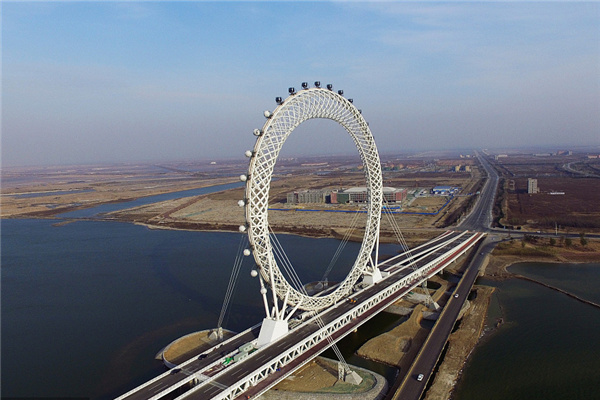 World's largest shaftless Ferris wheel built in China
 Ancient cities to be connected by Xi'an-Chengdu high-speed railway
 Snow turns Harbin into winter wonderland
 Reed Catkin Festival held in Wuhan
 Is it a building or a bookshelf?
 First flight
 Polar icebreaker Snow Dragon arrives in Antarctic
 Xi's vision on shared future for humanity
 UN's top environmental honors go to three in China
 German trains collide near Duesseldorf, several people injured
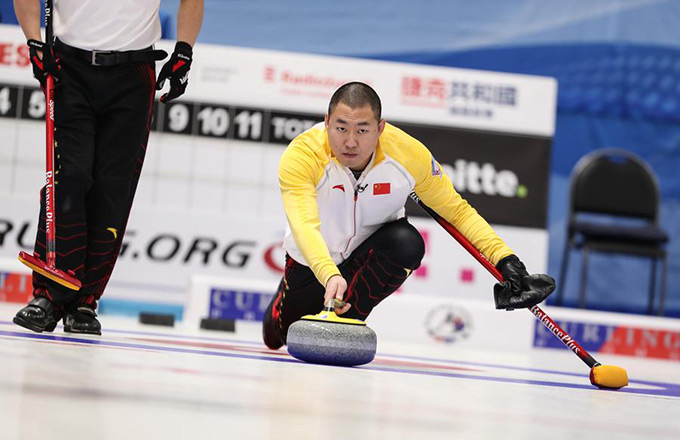 China beats Germany 7-4 in men's curling Olympic qualification
 Bayern beat Paris Saint-Germain 3-1 in UEFA Champions League


Copyright 1995 - . All rights reserved. The content (including but not limited to text, photo, multimedia information, etc) published in this site belongs to China Daily Information Co (CDIC). Without written authorization from CDIC, such content shall not be republished or used in any form. Note: Browsers with 1024*768 or higher resolution are suggested for this site.
License for publishing multimedia online 0108263 Registration Number: 20100000002731