 |
|
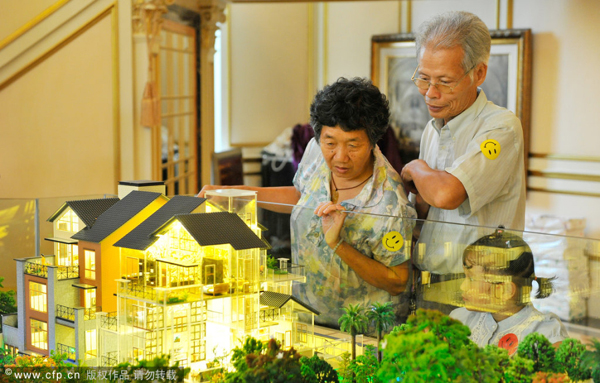
Citizens look at the residential building models in Zhongshan city, South China's Guangdong province, Aug 1, 2014. [Photo/CFP] |
China's property market is warming up again in first-tier cities.
The Beijing market is not as steamy as in Shenzhen, where prices jumped overnight after a rise in panic purchases.
But sales in both have been rising for a fourth straight month, and prices too have been edging higher.
The latest monthly gain might seem mild at first sight-but given the gigantic absolute numbers involved, a 1 percent month-on-month price rise translates into an extra 20,000 yuan ($3,222) to 30,000 yuan onto the total cost of even a modest property.
As a real-estate reporter, what really intrigues me, though, is the purchase power still driving China's residential market, one which has increased nearly tenfold in price terms over the past decade, but still appears to have the momentum to keep growing.
Prices in Beijing and Shanghai, now at around 30,000 yuan to 50,000 yuan per square meter, mean an 80 sq m apartment costs between 2.4 million yuan and 4 million yuan, and would take a typical earner between 24 and 40 years to pay off.
But even these stark figures are deterring few of those I know in Beijing from taking the property plunge.
People borrow to buy in most cases, and of course newly married couples can share the expense. A typical mortgage rate means hefty monthly repayments, costing around 6,000 yuan per month.
On a monthly salary of 8,000 yuan, a borrower might be faced with having to spend the lion's share of his or her pay on a mortgage payment.
Taking on such a mortgage, buyers can forget about considering other life options, such as quitting their job for a break, or for further education, or even starting out on their own as an entrepreneur.
Neither can they afford to get ill, or financially support aging parents who might get ill. And what if they lose their job? Or if the dream home they buy starts falling in price in a downturn?
Take all these issues into consideration, and you might be left wondering whether it makes sense for an ordinary-income person to buy a home in Beijing.
I asked some people around me for their opinions, and the answers were revealing.
One typical response was that renting will never give anyone the kind of security and fulfillment associated with owning his own home, particularly in a huge city.
Renters routinely complain about the short and volatile contracts they have to sign with landlords, an experience that can intensify their feeling of insecurity and alienation.
Another was if they don't buy, they deny themselves certain perks.
For example, many Chinese parents have saved up large sums of money for their sons' wedding and their "wedding house".
If a young couple decides to buy a home, they can get a huge subsidy from the husband's parents, or both sets of parents, which can greatly ease their payment pressures.
The nation also has the Housing Provident Fund scheme that offers low-interest loans to first-time buyers. If you find yourself paying 1,000 yuan a month to the fund, it would seem a shame not to use it. And by the way, it is a real hassle to withdraw from the fund for rent.
The third most common answer was that despite occasional volatility, most Chinese still believe the value of their home is going to rise, especially in first-tier cities.
Any investment that combines self-living and asset appreciation is not a bad choice.
With the channels widening for personal investment in housing, the days of double-digit price rises largely gone, and speculative demand also fading, the prospect of modest appreciation is still tempting for many.
All that said, others were becoming less enthusiastic about owning their own home.
One 33-year-old office worker told me her monthly mortgage payment (6,000 yuan) was considerably higher than her rent (3,000 to 4,000 yuan). The annual returns on a home were also now much lower than yields offered on other investment products. And the only prospective homes she could afford in downtown Beijing near her workplace were dilapidated, while the nicer new ones she liked and could afford, were too far away. "Buying a home has become high-interest-rate consumption," she said.
Both camps have their rationalities. The long-term prospects of China's property market will depend on which way of thinking becomes dominant.


Copyright 1995 - . All rights reserved. The content (including but not limited to text, photo, multimedia information, etc) published in this site belongs to China Daily Information Co (CDIC). Without written authorization from CDIC, such content shall not be republished or used in any form. Note: Browsers with 1024*768 or higher resolution are suggested for this site.
License for publishing multimedia online 0108263 Registration Number: 130349