Xiongan part of China's changing industrial landscape


XIONGAN NEW AREA, Hebei — There are two types of factories at life lamps company: the hot, noisy and cumbersome, and the clean, quiet and automated.
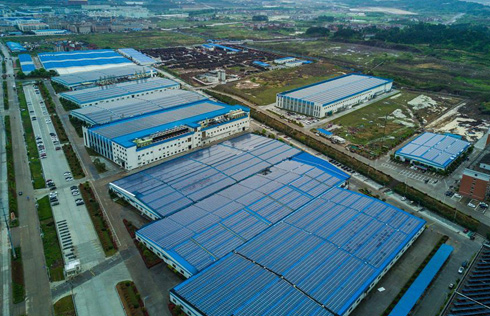
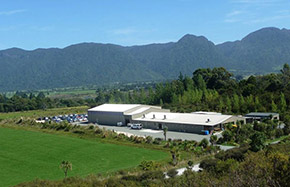
Baoding Life Automotive Lighting Group is located in suburban Rongcheng county in Hebei province. Rongcheng is one of the three counties in what is set to become China's latest new economic zone -- Xiongan. The other two counties are Xiongxian and Anxin. Currently, thee total population is about 1.1 million.
Contrasting production lines of the car lamp maker signal a transition many companies in the area have to make in the future: shifting from low-level manufacturing to smart technologies and increased productivity.
At an older workshop, where incandescent lamps are made, metal molds shuffle up and down, spewing fire to shape glass bulbs. Workers have to take a break every few hours to escape the noise. One of the machines suddenly stops, and workers scramble to unravel the entangled wires.
The LED lamp production lines, however, look post-industrial. Young workers wearing white robes like those of doctors, type procedures into computers and wait for machines to finish an electric circuit on its own.
"We have over 30 production lines, about one-third are LED bulbs, but their value is 60 percent of the total," said Li Zhanjun, vice general manager of the company.
LED lamps are smaller, more stable and save electricity. The automotive lamp maker developed from a public-owned factory established in 1970. Its location in the county lowered costs but failed to attract aspiring graduates.
"When they knew our factory was in the county, they would not come," Li said.
Lack of engineers who understand sophisticated LED circuits has forced the company to outsource designing to companies in Guangdong.
The company said it makes about one-fifth of the car lamps in China.
"We do not supply for expensive vehicles like BMW or Mercedez-Benz. In terms of technological power we are weaker than strong competitors, such as Osram, Philips and GE," Li said.
"Xiongan is the best news for us. We look closely at policies. It will definitely become easier for us to hire more smart engineers and eventually become an industry leader," he said.
Low-end industries
According to the central government circular, the area's current level of development is low. Cable and plastic industries in Xiongxian, shoe-making and down feathers in Anxin, and men's garments in Rogncheng -- these industries started to take root in the 1980s, supplying jobs for local residents.
Over 450 million sports suits, jackets, windbreakers and pants were made in Rongcheng last year. The total value was 25.6 billion yuan, which means one garment makes 56 yuan (about eight dollars).
Like most small Chinese counties, Xiongxian, Anxin and Rongcheng need to transform from their role as factories of the nation, and even the world. Rising labor costs have made it difficult for factory owners to recruit workers. The environment can no longer be sacrificed for economic growth.
An Xiaoming, 45, hires five dozen workers at his down feather factory in Anxin county, on the banks of the Baiyangdian, a large lake. He needs a large amount of water to wash the feathers before drying, grinding and packing them into jackets and selling to retailers. He sells 1,400 metric tons of feather every year.
"The new area will not be a place for companies like mine, which use lots of water and pollute the environment. I've seen it coming, even if there were not Xiongan, as environment pollution in our industry is a big problem," An said.
"But I want to continue to do this, maybe somewhere else in an industrial park, and in a more environment-friendly way," he said.
Several garment makers at Xiaoli township in Rongcheng county closed their shops when they heard about the relocation. There are about 300 garment makers in Xiaoli.
"Unlike women's clothing, men's fashion changes little. One pattern fits all, and is easy to make," said Li Jiqiu, Party secretary of the township. "We wanted to build resplendent malls with designer clothes, but there was not enough land, so private home-factories last to this day," he said.
A worker makes less than five yuan sewing up a pair of cheap pants. "The volume is big, thousands of pants. A home-factory owner makes about 300,000 yuan a year, so that is why people hope the compensation will be ok," Li Jiqiu said.
Going high-tech
The central government circular said Xiongan would be a strategy to build a top-class metropolitan area in Beijing-Tianjin-Hebei, drawing experience from successes in the economic zones of Pudong and Shenzhen, which have driven economic and social development in the Yangtze River Delta and Pearl River Delta.
Many experts say Xiongan must harness technology to become a new growth pole like Shenzhen, which gathers China's most competitive companies such as Huawei and drone maker DJI Technologies.
"First and foremost is to move certain industries, such as technological companies from Zhongguncun, to Xiongan," said Xu Kuangdi, former mayor of Shanghai, and director of an expert panel for the coordinated development of Beijing-Tianjin-Hebei. Xu oversaw the development of Pudong in the 1990s.
"Beijing and Tianjin are too fat, with a very serious big-city malaise. Compared with the two cities, Hebei is in freefall, way behind in economic and social development," Xu said.
Re-balancing resources among the three places is needed urgently. Xu said industry policies for Xiongan should be made "according to local situations."
"Existing industries shall be consolidated and upgraded. Employment for the people must be safeguarded," he said.