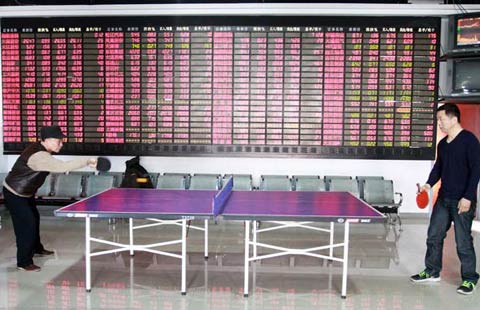
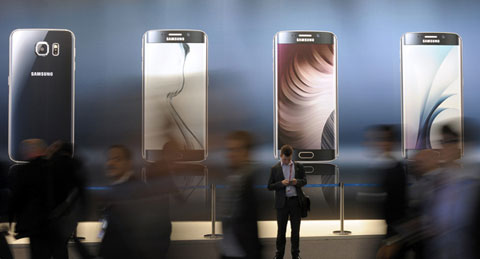
Fan Jianping, chief economist at the State Information Center, pointed to the changes in the industrial sector as evidence for the transformation in the Chinese economy.
While industrial output grew 6.4 percent year on year in the January-March period, down from 8.7 percent growth a year ago, the industrial structure continued to improve.
The industrial value added of the high-tech sector and equipment manufacturing jumped by 11.4 percent and 7.7 percent respectively in the first quarter, outpacing overall growth.
In 2014, the country's spending on research and development (R&D) accounted for 2.1 percent of GDP, a record high. The proportion in some regions such as Shanghai reached up to 3.6 percent.
A focus on innovation has made some Chinese companies, such as telecommunications giant Huawei, climb up the value chain.
The Shenzhen-based company, which was on a shoestring budget at the time of its founding in 1987, reported a 32.7 percent increase in profits in 2014 to 27.9 billion yuan. Its revenue grew to 288 billion yuan, up 20.6 percent.
A close look at the company's track record reveals its main driver of growth is its attention to innovation and R&D. In 2014, 40.8 billion yuan went toward R&D, 29.4 percent more than in 2013 and 14 percent of the company's revenue.
In the past decade, Huawei has spent more than 190 billion yuan on R&D. Of its 150,000 employees, more than 45 percent are in innovation, research and development positions.
There is still a lot more potential and room for China's manufacturing sector and companies to upgrade themselves, and this will be where the future of the Chinese economy lies, J.P. Morgan China chief economist Zhu Haibin told Xinhua in an interview.
While overcapacity is cut in energy-intensive sectors such as steel and cement, the output of which slumped 3.6 percent and 20.5 percent respectively, growth of emerging sectors will accelerate and play a key role in the long-term development of the economy, Zhu said.
In addition to innovation, the "Internet Plus" action plan unveiled by Premier Li Keqiang during the parliamentary sessions in March will serve as another new engine for future sustainable growth, Zhu added.
The plan aims to integrate mobile Internet, cloud computing, big data and the Internet of Things with modern manufacturing. It will also encourage the healthy development of e-commerce, industrial networks, and Internet banking and help Internet companies increase their international presence.
In addition to Internet giants such as Alibaba, Baidu and Tencent, many traditional companies are also looking to the Internet as a tool to transform themselves.

Copyright 1995 - . All rights reserved. The content (including but not limited to text, photo, multimedia information, etc) published in this site belongs to China Daily Information Co (CDIC). Without written authorization from CDIC, such content shall not be republished or used in any form. Note: Browsers with 1024*768 or higher resolution are suggested for this site.
License for publishing multimedia online 0108263 Registration Number: 130349