Comments
  Print
Print  Mail
Mail  Large Medium Small
The graduation season should be one of celebration, joy, nostalgia and high expectations. But for many fresh graduates in China, it is a time of confusion, anxiousness and disappointment, because graduation can also mean unemployment.
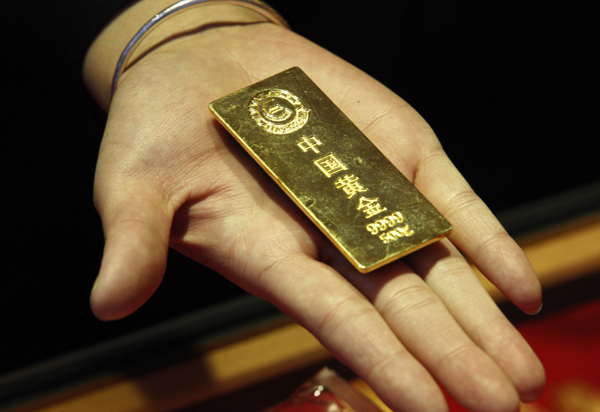
Although the Beijing municipal commission on education said on May 1 that three out of every 10 fresh graduates in Beijing had signed employment contracts, many fresh graduates are still reluctant or scared to explore the market to get a job. Many of the people born in the late 1980s or early 1990s pin their hopes on the "golden rice-bowl" by trying desperately to get a job in government departments, State-owned enterprises (SOEs) or other public institutions.
Bianzhi (State administrative service for which wages and welfare are paid from public funds) remains popular. And it is not uncommon to see people with a master's or doctoral degree and even overseas returnees pursuing the post of a community worker or chengguan (local urban management officer).
"You go to private companies only if you don't have connections," says a graduate student, surnamed Xiao, from Tianjin. According to her, the so-called employment rate does not reflect the real situation. "Once I get a position in an SOE, I will terminate my current contract".
While the number of candidates far exceeds the number of jobs available, sometimes pin die (using family connections or family wealth) becomes the best way to get a job despite the widespread call for employment equality. More than one-fifth of the fresh graduates who responded to a recent survey conducted by Beijing News said they have used some form of connection in the hope of securing a job.
Despite the low salary, the related benefits - higher social status, better welfare benefits, stability and no fear of being laid off - of working in government departments, State-owned enterprises and institutions remain attractive for fresh graduates.
"I have to choose between getting a Beijing hukou (housing registration) and a high-paying job. You cannot have your cake and eat it too", says a telecom engineering student from Beijing University of Posts and Telecommunications. She expresses her preference for getting a Beijing hukou, though. "I may earn less but it'll be easier for me to find a boyfriend if I work in a large SOE instead of a private enterprise as a technology expert".
After studying for nearly 20 years under China's rigid education system, some graduates moan that they lose the motivation and vigor to jump into the market, and instead search for a shelter in the workforce. Besides, in colleges, students are exposed to excessive theoretical knowledge, most of which don't conform to the rules of the market where a person's proficiency in problem solving, communication and innovation are highly valued.
"Ideas of innovation do pop up in laboratories, but thinking of the inadequate intellectual rights protection, lack of capital and all the uncertainties in the economy, few people would like to take the risk", says the telecom engineering student.
According to Chinese College Graduates' Employment Report 2012, prepared by Beijing-based education research company MyCOS, the problem of underemployment of college graduates was most serious in government departments and scientific research institutes six months after the students graduated in 2011, with about 20 percent being underemployed. The report also says that underemployment in these sectors results from the voluntary choice of graduates.
Although an individual has the right to choose his/her career and the type of work he/she wants to do, the irresistible urge of graduates to get a stable job, preferably in a government department, widens the dissymmetry between employers and jobseekers. It also distorts the flow of talents, leading to labor surplus in government departments and labor scarcity in the private sector, which complicate the already grave situation for the workforce.
The government has been trying its best to improve employment conditions for graduates by, among other things, providing financial and policy support for startups, creating more jobs in the services and private sectors, guiding graduates toward small and medium-sized companies and banning discriminatory requirements for jobs.
But the mindset of graduates to get a job in government departments or SOEs to ensure stability cannot be changed until long-term efforts are made to change the nature of the job market, and reform the hukou policy and the education system.
The author is a reporter with China Daily.
Email: dongfangyu@chinadaily.com.cn.
 HK's new cruise terminal receives luxury liner
 Future points to carbon trading
 Seafood businesses flounder amid spending cut
 Equities slump amid slow-growth estimates
 Auto show opens with much fanfare in Xi'an
 Sunnylands summit fuels Chinese tourism interest
 'Palace on wheels' on sale for $3.13m in Dubai
 Fortune smiles on Chengdu as forum concludes
Copyright 1995 - . All rights reserved. The content (including but not limited to text, photo, multimedia information, etc) published in this site belongs to China Daily Information Co (CDIC). Without written authorization from CDIC, such content shall not be republished or used in any form. Note: Browsers with 1024*768 or higher resolution are suggested for this site.
License for publishing multimedia online 0108263 Registration Number: 20100000002731