Comments
  Print
Print  Mail
Mail  Large Medium Small
|
 |
|
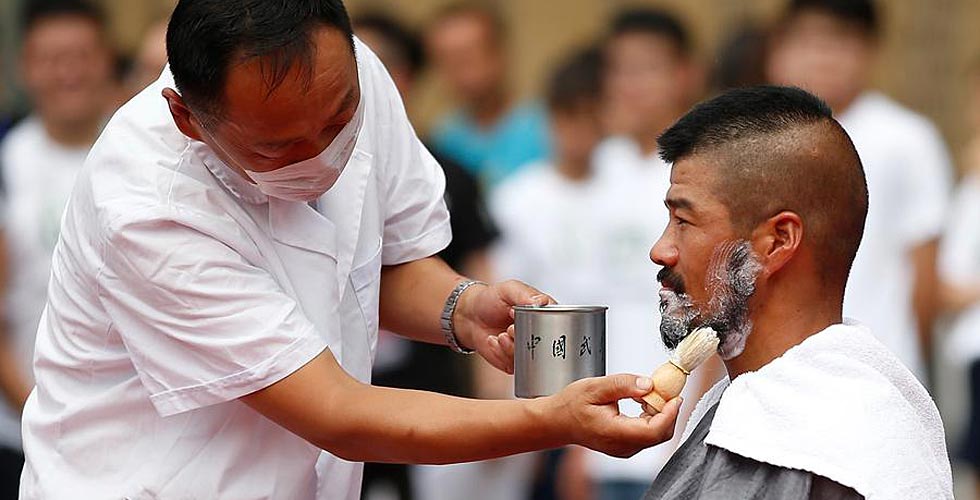
Xu Shanda, former vice-minister of the State Administration of Taxation.?[Photo/China Daily] |
State revenue now accounts for 35 to 40 percent of nation's GDP: former official
China should no longer expand its government income, which already takes a relatively large share of GDP, but should optimize its fiscal structure to tackle disparities, a former senior tax official said.
Xu Shanda, former vice-minister of the State Administration of Taxation, said on Thursday that the percentage of China's government revenue as a share of the country's GDP is between 35 and 40 percent.
Although the official figure is 31 percent, according to the government's budget report for this year, Xu said the actual figure should be much higher if taking into account State-owned financial institutions and revenue at the local level.
Government revenue comprises tax, operational income and the return on State-owned assets.
"This level (35 to 40 percent) is on a par with developed economies such as the United States, where it is between 36 to 38 percent, though it is still lower than high-welfare countries in northern Europe, where it is above 45 percent," Xu said.
However, Xu said, the structure of China's government spending is far from reasonable. One example is the proportion of expenditure on the social welfare system, which is only half of the US' level of 36 percent.
"A large proportion is re-invested in State-owned enterprises," he said.
He cited data showing that 20 trillion yuan ($3.21 trillion) of State-owned assets have only turned in less than 80 billion yuan in 2011, of which only 5 billion yuan was injected into the social security fund.
Xu made the statements at a forum sponsored by Caijing magazine in Beijing.
It's not the first time that the high tax burden in China has been put under the spotlight. Experts have called for lifting the personal-income tax threshold to 10,000 yuan a month, after it was raised from 2,000 yuan to 3,500 yuan in September 2011.
But Xu said the tax reform should not only focus on the personal income tax — which only accounts for less than 7 percent of tax income in China — compared with 70 percent in the US tax system.
"In the Chinese system, indirect tax and corporate income tax together account for more than 80 percent of revenue, and a fair amount is paid by the higher-income group, such as business owners," Xu said.
"A good tax system should be able to take care of the lower-income group, and at the same time, encourage rich people to stay in the country, because economic development relies on their investment, management skills and expertise," he said. At the moment, 90 percent of companies account for 10 percent of tax revenue, thus a small reduction of tax rates by 2 to 3 percentage points may benefit a wide range of businesses, Xu said.
China is facing decelerating growth of government income.
Government revenue in the first 10 months increased 11.2 percent, 16.9 percentage points lower than in the same period last year, data from the Ministry of Finance showed.
Sun Liping, a professor of sociology at Tsinghua University, said that local tax officials have to deal with increasing challenges to achieve their tax collection targets, which may be as high as 20 percent, amid slower economic growth.
Xu said that local authorities should be given more financial resources, so as to ease their financial strain.
Qin Xiao, council chairman of the Boyuan Foundation, a Hong Kong-registered think tank, said that in addition to tax reform measures such as replacing business tax with value-added tax and lowering tariffs, more items should be explored, such as an environmental tax.
Contact the writer at weitian@chinadaily.com.cn
 Man beats machine in facial recognition
 Angelababy and other celebrities jump into private equity
 Top 10 places with fast internet speed
 Top 8 hotels favored by young Chinese luxury travelers
 Paintings on paddy fields in Shenyang, NE China
 Top 10 Chinese universities with generous online shoppers
 'The most beautiful bookstore' in Shanghai
 Sailing into future: Tianjin Binhai New Area

Copyright 1995 - . All rights reserved. The content (including but not limited to text, photo, multimedia information, etc) published in this site belongs to China Daily Information Co (CDIC). Without written authorization from CDIC, such content shall not be republished or used in any form. Note: Browsers with 1024*768 or higher resolution are suggested for this site.
License for publishing multimedia online 0108263 Registration Number: 20100000002731