Comments()
  Print
Print  Mail
Mail  Large Medium Small
The 18th National Congress of the Communist Party of China is being held at a time when China is facing some critical economic challenges. Foremost among them is the balance that needs to be struck between economic growth and sustainable development.
The concerns over environment, and the priority to be given to its preservation, were reflected in CPC General Secretary Hu Jintao's opening address to the 18th CPC Congress, where he put as much emphasis on ecological civilization and sustainable development as economic, political, cultural and social civilizations.
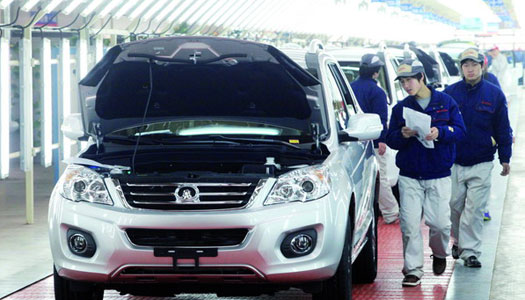
The environment has paid a high price for China's high economic growth. There are two aspects to the environmental damage. The first is the increase in air and water pollution. The second is the increase in carbon emissions. These increases are the result of rapid industrialization, energy-intensive economic growth, urbanization, increasing affluence and demand for energy- and carbon-intensive products (such as automobiles and air-conditioners).
Rapid industrialization from a low base always increases pollution because initially industries do not have access to less-polluting and energy-saving technologies. Several core manufacturing industries such as cement, paper, chemicals, plastic, leather, rubber and steel are highly polluting.
The literature on the relationship between economic growth and pollution, popularly expressed through the "Environmental Kuznets Curve", suggests the increase in per capita income to be associated with the increase in pollution in a country until it reaches a certain threshold of income. Once a country crosses that threshold, its pollution starts decreasing, because consciousness increases about environmental protection among consumers, and producers are able to increasingly adopt cleaner but more expensive technologies. This explains why middle-income countries are more polluted than the richest and poorest countries.
The research on the relationship between per capita income and environmental sustainability for China indicates a correlation between income and environmental degradation. Given the association, greenhouse gas (GHG) emissions from burning fossil fuel and wastewater discharges are expected to reduce over time as regions and provinces cross their income thresholds.
The research shows a higher income threshold for GHG emissions than water discharges implying GHG emissions will take longer to reduce than wastewater discharges. This could be due to the continuing reliance of households on fossil fuels like coal for direct energy needs like heating. Alternative heating options using less carbon-intensive fuels are more expensive making it difficult for households to make the switch until their incomes increase substantively over time.
The research also shows that GHG emissions and discharges are first expected to reduce in the coastal provinces of Guangdong and Jiangsu, and coastal cities of Shanghai and Tianjin, and Beijing. But hinterland provinces in Central and West China might take less time and a lower per capita income threshold to start reducing emissions as they begin adopting cleaner technologies faster because of technology diffusion from the coastal regions.
One of the problems in tackling environmental pollution is that its adverse effects are not immediately visible to people. Air and water pollution create major public health hazards like increase in bronchial and respiratory disorders and water-borne diseases and infections. But people realize this only over a period of time, during which pollution and contamination keep increasing, making the problems more serious.
Developing public awareness on climate change is even more difficult. Change in weather patterns leading to irregular rainy seasons and shorter crop cycles, or shrinking water volumes in major rivers because of glacial depression - all caused by global warming - are manifested only over several years and are difficult to comprehend. This is where authorities have to play an important role by first raising people's awareness and then making policies for protecting the environment an immediate priority.
For a large and still developing country like China, adopting policies for protecting the environment has implications for economic growth. Reducing pollution implies shifting to cleaner technologies, which are expensive and increase the cost of production thereby affecting competitiveness of producers, particularly exporters.
For consumers and households, protecting the environment means adopting less-polluting lifestyles through conscious efforts for not polluting surroundings and using less carbon- and energy-intensive appliances. The latter are more expensive and occasionally inconvenient. Solar water heaters, for example, are less energy-intensive, but often ineffective on cloudy days forcing people to fall back on gas or electric water heaters. For both producers and consumers, shifting to less-polluting practices implies higher costs and lower economic surplus.
The balance between high growth and a stable environment cannot be achieved entirely through the market. The State has an important role to play by introducing the right policies. There is need for fiscal intervention both through a pollution (or carbon) tax and environment subsidies. Taxes will discourage polluting practices of both consumers and producers. Subsidies will facilitate greater use of clean technologies.
In addition to these, it is essential to increase public awareness by dedicated efforts at provincial and municipal levels.
The author is head (partnership & programme) and visiting senior research fellow at the Institute of South Asian Studies in Singapore's National University.
 Kiwi cows arrive in Ningxia
 Harbin Int'l Ice and Snow Festival kicks off
 Overseas yuan gets nod in mainland PE market
 World's largest spokeless Ferris wheel under construction
 Blazing a trail in the workplace
 Antique car investment set to boom in China
 Super sports car makers to ignite passions on the mainland
 Wanda Group ventures onto the global stage
Copyright 1995 - 2010 . All rights reserved. The content (including but not limited to text, photo, multimedia information, etc) published in this site belongs to China Daily Information Co (CDIC). Without written authorization from CDIC, such content shall not be republished or used in any form. Note: Browsers with 1024*768 or higher resolution are suggested for this site.
License for publishing multimedia online 0108263 Registration Number: 20100000002731