Comments()
  Print
Print  Mail
Mail  Large Medium Small
Chinese choose fermented grape beverage from France in ever larger numbers
Scan the label with your mobile phone camera and press "OK" and you will get all the information you need - the brand, the chateau or the winemaker - about the bottle of wine in your hand.
This is a smartphone application named "Smart Bordeaux", developed and translated into more than 12 languages by the Bordeaux Wine Council (Conseil Interprofessionnel du Vin de Bordeaux, or CIVB in French), a French group that represents more than 10,000 Bordeaux wine producers and vine growers.
|
 |
|
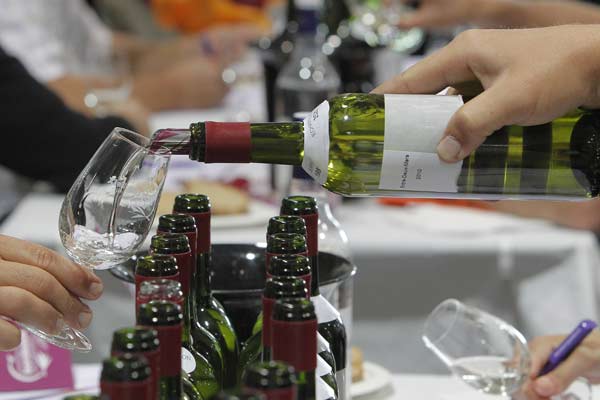
China now is the world's largest Bordeaux wine importer in terms of both volume and value, far ahead of its nearest followers. Chinese people are starting to get used to the drink and are trying to understand more about the culture behind it. Provided to China Daily |
More than 55,000 users across the world have downloaded this application since its launch in September, according to the council. Judged by downloads, China turned out to be the second largest user, behind France itself.
Encouraged, CIVB interprets the data as a sign that the Chinese people are starting to get used to the drink and are trying to understand more about the culture behind it.
 Sales of Bordeaux wine confirm this opinion. During the 12-month period from June 2011 to July 2012, Bordeaux wine exports surged to a historical high of 2.29 billion euros ($2.9 billion), according to CIVB.
China is the world's largest Bordeaux wine importer in terms of both volume and value, far ahead of its nearest followers. During the period, China's imports reached 63 million liters, more than twice the volume of Germany, which ranked second globally.
Meanwhile, China's import value stood at 649 million euros, 55 percent higher than the United Kingdom, which came second in value, CIVB data showed.
In the meantime, despite the impact caused by the economic slowdown on the retail market, China's imports of Bordeaux wine registered much stronger growth than traditional markets such as Germany and the UK.
The import volume to the Chinese mainland surged by 55 percent during the period from a year earlier, while value growth reached 38 percent year-on-year, CIVB said.
"China has evolved into a mature wine market," said Thomas Jullien, CIVB Asia manager.
Jullien's observation was partly based on a survey recently conducted by the council, covering wine buyers in five Chinese cities including Beijing, Shanghai and Guangzhou. According to the survey, CIVB found that Chinese wine buyers now attach less importance to price and brand than before and more to quality and production region.
Another improvement of the industry in the country is the mature supply chain. Thanks to the rapid development of transportation, storage and other facilities, built from scratch within the last decade, Bordeaux wine now can be delivered to even third- and fourth-tier cities, Jullien said.
The market order also improved. During the first few years when imported wine entered the country, traders could easily sell a bottle of Bordeaux for more than double its price in the market.
"The period of chaos and fat profits is gone," said Liu Liming, who has eight years of experience in the wine business and is now North China general manager at the Wine Art Co, a Chinese wine trader. "You might still be able to trick some people over one bottle nowadays, but once you get a bad reputation, you will never sell another, no matter at what price," he added.
Others in the business concurred. Wang Mingjie, beverage director at the East Wine Cellar Co, a wine trader that also runs a high-end restaurant in Beijing, said: "The buyers are now very shrewd. They stick to their own preferences and make decisions accordingly."
And wine sellers such as Wang and Liu are likely to face savvier customers in the years to come. According to a recent report by Rabobank, wine drinkers in China today are mainly aged between 20 and 39 and earn more than 4,000 yuan ($630) a month in a skilled profession.
"Grape wines are more likely to attract either younger, better educated, wealthier and/or female drinkers than baijiu (China's traditional spirit) or beer... with the potential to form a strong and dynamic consumer base in years to come," the report said.
CIVB's Jullien also noticed this emerging wine generation and is trying to attract its attention. France has been by far the domineering leader among foreign wine suppliers in the Chinese market.
In 2011, French wine export volumes to China surged to more than three-and-a-half times that of Australia, its nearest runner-up, according to the Rabobank report. Most of the wine came from the Bordeaux region.
During the same year, bottled wine imports into China jumped by 65 percent from the previous year to 241 million liters, the strongest growth since the global financial recession in 2007-08, according to the report.
A significant increase was seen in the country's wine supply over the past seven years. It surged from fewer than 400 million liters in 2004 to 1.4 billion liters in 2011, according to the report.
China's strong growth, huge potential and the ability to devour a large amount of premium wine attracted newcomers such as Argentina and Brazil. This has led to intense competition among wine suppliers.
To further consolidate its position in the Chinese market, CIVB plans to roll out a digital commercial campaign in the country, targeting the young generation of wine lovers by means of e-commerce, such as micro blogs and social network sites. The Bordeaux mobile application running on portable gadgets is an example.
It also set out to further promote its wines to third- and even fourth-tier Chinese cities.
Jullien said he is "completely confident" about the continued future development of China's wine market. And it, perhaps, would just begin with a touch on the screen.
zhousiyu@chinadaily.com.cn
 HNA in talks with European carrier on possible acquisition
 Allure of luxury cars fading
 Super rice breaks world record
 Xmas decorations hit the market
 Conan themed convenience store opens in Shanghai
 Lights on cars and models in Guangzhou
 Solar greenhouse boosts modern agriculture
 Crew ready for Harbin-Dalian high-speed rail
Copyright 1995 - 2010 . All rights reserved. The content (including but not limited to text, photo, multimedia information, etc) published in this site belongs to China Daily Information Co (CDIC). Without written authorization from CDIC, such content shall not be republished or used in any form. Note: Browsers with 1024*768 or higher resolution are suggested for this site.
License for publishing multimedia online 0108263 Registration Number: 20100000002731