|
 |
|
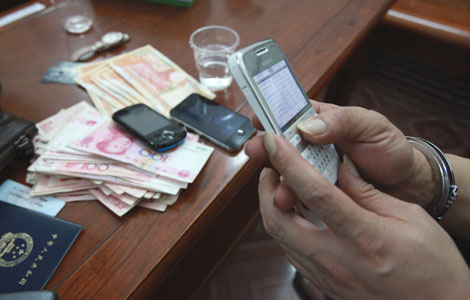
With smartphones, PCs and special technology, doctors can access a computer system at any time and anywhere in order to undertake basic reporting and submit information to county-level clinicians. In October, Qualcomm Inc launched a project called Mobile Vision in Hengshui, Hebei province, to provide effective and convenient treatment for children who have the disorder amblyopia, also known as lazy eye.?[Photo/China Daily] |
Mobile phones are not just devices to make calls. They have already played an active role in combating social challenges, such as healthcare, education and environment inefficiencies by providing solutions to allocate recourses and spread knowledge in underserved communities.
Qualcomm Inc, the world's leading mobile phone chipset maker, launched a project called Mobile Vision in Hengshui, Hebei province, in October 2011. It is hoped the project will provide effective and convenient treatment for children who have the disorder amblyopia, also known as lazy eye.
According to the National Eye Institute at the United States National Institutes of Health, amblyopia is the most common cause of vision impairment in childhood. If detected early, amblyopia is treatable. If not, it can cause lifelong disability.
In China, there are about 12 million children suffering from amblyopia. Children in rural areas in particular suffer from lack of treatment.
Many clinicians in rural areas do not possess sufficient knowledge on how to properly diagnose and care for children with the disorder. Meanwhile, financial hardship prevents children in remote areas from traveling to urban areas for therapy.
"Amblyopia has seriously affected children's development and their everyday lives," said Chen Xiaoxia, general secretary of the China Children and Teenagers' Fund. One of the fund's focuses is on children with amblyopia, especially those in impoverished areas, she added.
Collaborating with the Fund and Xi'an Kingtone Information Technology Co Ltd, the Mobile Vision project handed out 3G-enabled smartphones, laptop computers, PCs and mobile broadband connectivity to eye care professionals in towns and villages.
With these tools and technologies, doctors can access the system anytime and anywhere in order to undertake basic reporting and submit information to county-level clinicians.
In addition, county health workers can electronically review patients' health records for screening and then refer children needing further treatment to city-level public health centers. City-level health workers can also access the system to obtain directions on how to treat and cure patients.
"Wireless technology and applications enable the rapid spread of knowledge about amblyopia and other common eye diseases, which can improve local clinicians' capabilities of screening and treatment and provide better, more timely care to children with this condition," Chen said.
Li Kefang, director of the eye department at the Second People's Hospital of Hengshui City, said: "The system helped us quickly get access to records and share experiences among doctors."
Since the project started, about 50 township-level clinics in Hengshui have used the system in their daily medical practices and an additional 71 clinics are registered to roll out the system in the coming months. Of the 1,144 eye exams collected to date, 684 resulted in a diagnosis of amblyopia.
Wang Xiang, president of Qualcomm China, said the Mobile Vision project serves approximately 400,000 children and teenagers up to the age of 14. "The mobile health industry is growing rapidly and demonstrates promising prospects around the world. It is an effective way to provide healthcare services to underdeveloped regions through wireless technology."
shenjingting@chinadaily.com.cn

Copyright 1995 - . All rights reserved. The content (including but not limited to text, photo, multimedia information, etc) published in this site belongs to China Daily Information Co (CDIC). Without written authorization from CDIC, such content shall not be republished or used in any form. Note: Browsers with 1024*768 or higher resolution are suggested for this site.
License for publishing multimedia online 0108263 Registration Number: 130349