Opinion
New paradigm for new energy vehicles
By Tim Dunne (China Daily)
Updated: 2010-08-30 16:05
 |
Large Medium Small |
 |
|
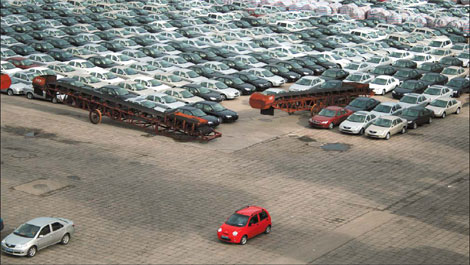
Report says the government wants 10 percent of the nearly 200 million light vehicles on the road in 2020 to be powered by so-called alternative energy. [Photo/China Daily] |
 |
|
|

If realized, the goal would mean 10 percent of the nearly 200 million light vehicles forecast to be owned and operated in China would be powered by so-called alternative energy.
In early August, a Shanghai newspaper reported that the Chinese government plans to invest 100 billion yuan between 2011 and 2020 to support development, production and sale of battery-electric and plug-in hybrid electric vehicles.
The plan calls for the government to provide substantial financial support to three to five domestic automakers, as well as two to three domestic makers of batteries and electric motors.
More money would also be allocated for government subsidies to consumers who buy conventional hybrids and vehicles powered by engines under 1.6 liters of displacement.
The aim of the plan, according to the report, is to have 5 million battery vehicles and plug-in hybrids and 15 million conventional hybrids on China's roads by 2020. If the report is accurate - no source was cited for the information - the news is significant for several reasons.
First, China's plan would be the largest and most comprehensive government-directed strategy of its kind among the world's largest auto producing nations. No other country would come close to China in terms of the size of investment, and targets to create a new energy vehicle industry.
Second, to achieve its 2020 targets, China would have to record average annual sales of 500,000 battery vehicles and plug-in hybrids along with 1.5 million conventional hybrids between 2011 and 2020.
Considering that the nation expects to sell only a few hundred battery vehicles and plug-in hybrids, and a few thousand conventional hybrids in 2010, this is a formidable task.
The question is whether China can achieve its formidable aspirations.
Key challenge
One key challenge to creating an industry and market for new energy vehicles in China is consumer objections to buying these greener vehicles. Highlighting the attributes that appeal to Chinese consumers is a key way to inspire and educate prospective buyers.
Based on JD Power studies of Chinese consumers, the top three reasons that consumers reject new energy vehicles are concerns about driving range, questions about nascent technology, and the likelihood of high retail prices.
The first two concerns can be alleviated by targeted public messages - the typical daily commute of most urban Chinese citizens is within the range of most new energy vehicles and worries about the maturity of technology are unnecessary because the technology is quite dependable today.
|
||||


To overcome the obstacle, automakers are going to have to demonstrate to consumers the long-term cost savings offered by new energy vehicles over the ownership life of the vehicle.
JD Power research found that consumers who say they "probably or definitely would consider" buying a new energy vehicle expect to realize at least a 31-40 percent reduction in fuel costs.
Whether this type of savings can be achieved in real-world conditions is unknown until large numbers of such vehicles are on the road.