|
|
 |
 Raymond Zhou:
By jingo, they're mad!  Op Rana:
Consumerism and politics of waste   Ravi S. Narasimhan:
Lessons from SARS have to be applied  Alexis Hooi:
Beyond the death and destruction  Brewing profits
By Li Fangfang (China Daily)
Updated: 2008-10-20 07:29
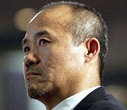
 Miguel Patricio, president of International brewer InBev Asia Pacific, plans to display statues of Deng Xiaoping in his office in downtown Shanghai. "Deng should be the most respected person in this world's fastest growing economy," says Patricio. "The prosperous and modern city outside this window should be credited to Deng's decision to begin the economic reform and opening-up policy in the late 1970s." Although the Portuguese native paid his first visit to China late last year and took over the helm from this January, he has made Deng his idol since he got to know about China's changes during his middle school years. "I should show more respect to Deng, because he created such a good economic environment for InBev to grow in this great brewing market." The Leuven, Belgium-based beer maker was one of the first international companies to engage the China market just after it opened the doors to the world. In the early 1980s, Belgium Artois Engineering - from which InBev eventually originated - set up business in China by helping Zhujiang Brewery with technology transfer, says Patricio. At that time, the Chinese market was just opening up to only a few with domestic breweries leading the pack. In late 90's, Interbrew, a Belgium brewery that came as a result of a merger between Artois Engineering and another Belgium beer group, Piedboeuf, entered China when it bought Jinling brewery in Nanjing. Interbrew later became InBev after a merger with the Brazil-based AmBev in 2004. "Throughout the 90s, the Chinese market was very fragmented with many small local players and small local brands. Some of the global brewers entered China market to promote global brands, but most of them failed or existed the market," says Patricio. InBev's current global rival Denmark-based Carlsberg, one of the top five brewers in the world, entered China in 1978. It invested $80 million to establish a joint venture in Shanghai with Tsingtao Brewery in 1997, producing its own beer in an effort to get a large share of China's high-end beer market. However, two years later, Carlsberg's market share in China was only 1.82 percent. Carlsberg encountered a loss of 170 million yuan and had to sell its 75 percent of share in the venture to Tsingtao Brewery by 150 million yuan in 2000. Interbrew also changed its strategy in China. "We realized that we have to be local and closer to the customer, pay more attention to the preponderant and potential regional brands other than building a national brand in such a big and sophisticated market." Later in 2002, Interbrew spent 160 million yuan on a 24 percent of stake in Zhujiang Brewery - one of the Chinese industry leaders, in Guangdong province, and in 2003, it acquired a 70 percent of share in KK brewery in Zhejiang province. And by purchasing Lion Group brewery interests in 2004, "which gave us scale of operation, we became the foreign shareholder of Lion's 12 breweries in China," says Patricio. In 2005, Interbrew acquired Dangyang Snow Leopard Brewery in Yichang, Hubei province to set up its wholly owned enterprise. Its 5.8-billion-yuan 100 percent purchase of Sedrin Brewery in Fujian province in 2006 was recorded in China's brewing industry as the biggest takeover by revenue. "It doubled our size in China," says Patricio. InBev has invested more than 1.2 billion euros in China over the past two decades. "This investment indeed signifies InBev's commitment to China. We are very optimistic about the business opportunities in China. We are making further investment in technical renovation and introducing global best practices to the day-to-day management of our breweries in China," says Patricio. Today, InBev China runs or jointly runs 33 breweries across eight provinces - Fujian, Guangdong, Hubei, Hunan, Jiangsu, Jiangxi, Zhejiang and Hebei - and employs almost 22,000 people. It has been active in the beer market in southeast China while the northern market is firmly controlled by Beijing-based China Resources Snow Breweries, China's No 1 brewery with annual production capacity of 6.9 million kl. This July, US brewer Anheuser-Busch accepted a $52 billion takeover bid from InBev, creating the world's largest beer maker AB-InBev that will produce a quarter of the world's beer. "We are excited about the opportunities and prospects brought by the InBev-AB merger, around the world and in China," says Patricio. After the deal, InBev will obtain AB's 27 percent stake in China's Tsingtao, the leading Chinese premium brewer, as well as ownership of the Harbin Brewery Group's 13 breweries. "We respect and honor the strategic partnership forged between AB and Tsingtao. More importantly, we respect Tsingtao as China's national brand and international brand and have every intention to build a creative and productive partnership with Tsingtao for future," says Patricio. "By doing so, we hope to create more opportunities for the Chinese beer market and bring more choice to the Chinese consumers in the future." In addition, AB-InBev will own AB's Budweiser, which is a growing brand in China and Corona Extra, which is the No 5 brand globally. AB-InBev's China business will definitely be enhanced by AB's strength in northeastern China. "China will always be our key strategic market in the world because it's the world's largest and fastest growing beer market by volume," says Patricio. "For example, volume will increase 62 percent in next 10 years in China. In comparison, US volume growth is at 5.8 percent," he adds. China's beer drinking per capita was 26.4 liters in 2006. In comparison, the Czech Republic, which ranks No 1 worldwide, was 160 liters per capita in 2006. "As China's economy develops, more and more consumers will drink beer. And the per capita consumption will hopefully increase as well," says Patricio. "All these provide a very positive environment for beer manufacturers, including AB-InBev, to develop in China in the next decade." 
|
主站蜘蛛池模板: 久久久久无码精品国产app| 中文字幕乱码一区二区免费| 乱女乱妇熟女熟妇综合网| 污污网站18禁在线永久免费观看 | 性色欲情网站iwww九文堂| 91系列在线观看| 中文字幕乱码十国产乱码| 精品无码黑人又粗又大又长| 色综合久久中文综合久久激情| 少妇午夜啪爽嗷嗷叫视频| 欧美激情一区二区三区高清视频| 亚洲成人免费一级av| 国产美女免费永久无遮挡 | 日韩中文免费一区二区| 精品一区二区三区四区五区| 久久精品蜜芽亚洲国产AV| 亚洲日韩看片成人无码| 中文字幕日韩有码av| 人妻在卧室被老板疯狂进入国产| 亚洲综合精品香蕉久久网| 亚洲精品不卡av在线播放| 丁香婷婷综合激情五月色| 国产在线视频导航| 熟女一区| 免费人成视频在线视频电影| 神马午夜久久精品人妻| 欧美黑人XXXX性高清版| 免费国产综合色在线精品| 久久这里有精品国产电影网| 最近的中文字幕免费完整版| 人妻少妇精品视频专区| 国产成人精品视频不卡| 强奷乱码欧妇女中文字幕熟女| 一本久道综合色婷婷五月| 99久久精品午夜一区二区| 在线欧美精品一区二区三区| 石原莉奈日韩一区二区三区| 最近免费中文字幕mv在线视频3| 性欧美三级在线观看| 亚洲成人av综合一区| 97se亚洲综合自在线|