China's sharing economy could drive global growth
BEIJING - Last week, Chinese bike-sharing giant Mobike announced the launch of its service in London, while its rival Ofo made similar moves in Thailand and Malaysia and on Wednesday said it would enter Japan, the latest in a series of overseas markets by the duo since the start of this year.
China's sharing economy is booming. Not only is it growing rapidly across the country, but it continues to cast an increasingly larger influence on the global economy by spreading its innovations around the world.
Expanding overseas markets?
In March, Ofo and Mobike landed in Singapore, their first overseas market. In less than half a year, Mobike's orange bikes have spread to Manchester and Salford in Britain, Fukuoka and Sapporo in Japan, Milan and Florence in Italy, among others. Meanwhile, Ofo's yellow bikes are exploring new overseas markets and are expected to land on the shores of 20 countries and regions by the end of 2017.
"This shows that not only China has a need for bike-sharing, it's something the whole world could do together," Chris Martin, Mobike's vice-president and head for overseas expansion, told Xinhua last week.
Martin noted that a combination of creativity, science and technology, as well as design is what makes Mobike attractive in overseas markets.
From Asia to Europe, the Chinese operator has made changes to its plan, taking specific regulations and customers' preferences into account. For instance, the bikes in London are all equipped with a forehead light.
In the meantime, China's leading ride-sharing firm Didi Chuxing has nailed down cooperation in Southeast Asia. In late July, the area's leading on-demand transportation and mobile payments platform Grab announced Didi and Japan's SoftBank Group Corp will invest up to?$2 billion in the company.
Didi's founder and CEO Cheng Wei said by deepening strategic partnership, Didi and Grab reaffirm their shared commitment to innovating localized solutions to global urban development challenges from the world's fastest growing marketplaces.
Actually, Didi has invested in the world's five major transportation platforms, according to Cheng, who also noted that the Chinese firm hopes to export its achievements and experience in product innovation and technology development to overseas markets.
On the technical front, Mobike has already successfully impressed overseas users. The bikes, with their airless tires and dockless, cashless approach are efficient, convenient and "fun to ride," as Helen Pidd from the Guardian shared in her review after riding in Manchester early July.
The "orange and silver" wind, referring to the colors of the bike, has came as exciting news for local governments, which hope to improve their urban environments by encouraging greener transportation, and are actively seeking Mobike's help in developing smart cities.
Rafael Cuesta, head of innovation at Transport for Greater Manchester, told Xinhua that Manchester's needs and Mobike's bike-sharing innovation were a good fit.
Plans like those running in London and Paris, which use on-street docking stations, are often expensive and time-consuming for installment and maintenance.
"So I think the advantage is that they (Mobike) are very customer-focused and are bringing solutions that at a European level did not exist before," Cuesta said.
One of the innovations about which excites Cuesta and attracted Manchester to the Mobike proposal was the depth and quality of data which it collects from its bikes, which will help local governments plan future cycling infrastructure and traffic layout in the long run.
In addition, the overseas expansion of companies such as Didi and Mobike would also drive the global application and popularization of relative Chinese business models developed under a mature mobile payment environment, said Gu Dasong, an expert on sharing transportation from Nanjing-based Southeast University.
Unleashing enormous potential
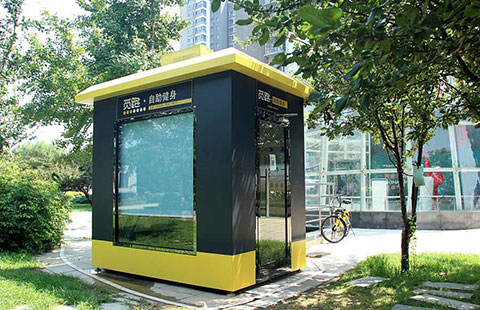
China's sharing economy now covers a wide range, from the shared use of bikes, vehicles, umbrellas, to living spaces and working spaces, and even knowledge, skills and labor.
A recent report from the State Information Center showed that about 600 million Chinese were involved in sharing of some kind in 2016, which is almost half the country's population.
The trading volume of the country's sharing economy more than doubled year on year to 3.45 trillion yuan (some $510 billion) last year, the report said.
Fast growing consumer groups in China have not only supported the overseas expansion of Chinese companies in the sharing industry, but also promoted the local growth of foreign firms, which consider China's enormous domestic market "a gold mine".
"China has become the fastest growing market in the whole world for Airbnb," said Ge Hong, the home-sharing company's vice president, noting that nearly 1.6 million Chinese tourists used Airbnb in overseas trips in 2016, up 142 percent from previous year.
With advanced internet technology, especially the wide use of mobile payment, with over 700 million netizens, and favorable policies, which have pulled in capital investment from various channels, China's sharing economy could easily realize explosive growth, said Chu Dajian, a professor from Shanghai-based Tongji University.
An opinion piece from Bloomberg published in May argued that Chinese consumers' embrace of mobile payment is key in the future development of sharing economy. China's demographic profile and changing nature of consumption are two other major factors.
Basing on the "welcoming climate" in China, the author Adam Minter concluded that many of the world's innovations in sharing businesses may start coming out of China rather than Silicon Valley.
Such innovations have already been emerging one after another. There is Fenda, a knowledge-sharing application created in 2015, which allows users to pay to hear answers of user-generated questions from industry experts. It raised $25 million in its A+ financing round by China's internet titan Tencent late last year.
China's development demands constant innovation and creative solutions, with higher technical requirements than other places in the world, Didi's Cheng said, noting that China's models are being copied by startups in other countries.
Cheng admitted that they also face numerous challenges going international, since not many Chinese internet companies have successful experience on that regard, especially for online-to-offline businesses. "We are also exploring," the 34-year-old CEO said.
The report from State Information Center estimated that sharing economy will account for 10 percent of China's GDP by 2020, and 20 percent by 2025, with an annual growth rate of 40 percent in the next five years.
Zhang Xinhong, a research director on sharing economy from the center, believes that the sharing economy - worldwide or in China - is far from reaching its ceiling and remains either at the start-up stage or is shifting to the rapid growth stage.
Zhang predicted that the manufacturing, agriculture, education and pension fields would have large market scale and development potential, which would be at the forefront of the next wave in the sharing economy.