Editor's note: This year's economic expansion is widely expected to be the slowest in many years, and the central leadership envisions a "new normal" for the pace GDP growth and its structure going forward. What will unfold in 2015 - sustained, rapid expansion or an orderly transition to slower growth? China Daily asked a group of economists and analysts on their expectations for the economy in 2015.
|
 |
|
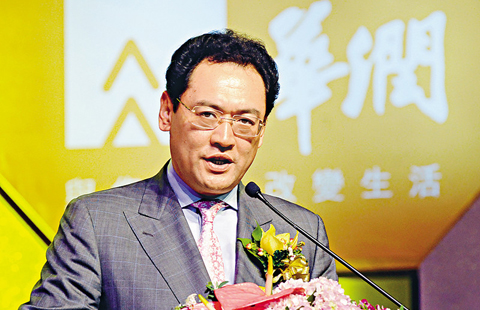
JEREMY STEVENS, ECONOMIST IN BEIJING AT THE STANDARD BANK OF SOUTH AFRICA LTD |
What is the most likely outcome for China's economy next year-sustained, rapid expansion or an orderly transition to slower growth?
Expectations-both onshore and off shore are still too wedded to what happens to the GDP growth rate. The singular focus is unhealthy and at odds with what is really going on. China has been making the case of "quality over quantity" and widening the metrics against which progress should be measured. On this score, the soft landing that so many speak of has not yet materialized. At best, China's economic "stabilization" was over stated and confined to narrow areas. Economic growth has basically fallen for four years, and next year GDP growth will slip below 7 percent. To be frank, 5 to 6 percent growth is around the corner. This is simply a reality, but it is not all that important. The days are over when simply mobilizing mispriced resources (land, labor and/or capital) was enough to generate rapid headline growth. Even growth of 6 percent over the next five years will require constructive and smart reforms.
What is the most important indicator that observers should use when judging whether a transition has taken place? How can China achieve the goal implied by that indicator?
The economy is entering a new phase of development. Economic potential has slowed, the economic model is changing and new risks have emerged. This is a highly complicated story. Each data point has its own relevance and increases visibility in important ways. And that is why the National Bureau of Statistics, for instance, will begin to publish a group of 40 core economic indicators, including debt-to-fiscal revenue ratios and services-to-GDP ratios.
What is the biggest concern for the Chinese economy in 2015? How can China address that concern?
China must embark on policy engineered deleveraging and restructuring. Outstanding credit is near two-and-a-half times bigger than the overall economy. A distinguishing feature of the recent rise in leverage is that it is highly concentrated among corporate borrowers. Corporate debt is high in comparison with similar countries. And the pace of growth is alarming-faster than any other country and pushing China into zones that caused troubles in the United States, Japan and else where in Asia in recent decades. Lacking real price signals, companies are making decisions in the dark and becoming more reliant on credit. It is impossible to see such a huge rise in leverage with out an asset quality problem in the financial sector. More and more debt seems to involve short-term loans, which are being used as refinancing by companies, and more of the money coming from nontraditional sources. This is why China's ability to buy growth with credit is falling. The People's Bank of China will have to do the majority of the policy balancing act in 2015.The pressure to keep real interest rates down and ensure liquidity in the financial system will be critical. But China cannot allow leverage to rise further, so credit growth will slow.
What is the most resilient part of China's economy? How can China best utilize its strengths in this area?
The resilience of structural drivers such as rising domestic demand, rapid industrialization and urbanization and fast-improving living standards, remain intact. Each year, China will explain a proportionately larger share of global fluctuations, including global aggregate demand, financial markets, its propagating multilateral institutions and even the ideology that underpins them. We have seen a surge in internationally competitive and global-minded multinationals in China. They have low-cost structures, appealing products and ambitious leaders. The innovations of Alibaba Group Holding Ltd, Tencent Holdings Ltd, Lenovo Group Ltd, Xiaomi Corp, Huawei Technologies CoLtd, ZTE Corp and so many others are astounding, and we expect more to come.

Copyright 1995 - . All rights reserved. The content (including but not limited to text, photo, multimedia information, etc) published in this site belongs to China Daily Information Co (CDIC). Without written authorization from CDIC, such content shall not be republished or used in any form. Note: Browsers with 1024*768 or higher resolution are suggested for this site.
License for publishing multimedia online 0108263 Registration Number: 20100000002731