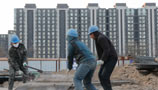
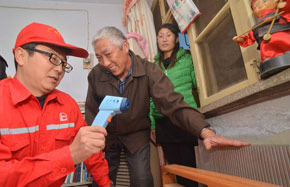
"Since China launched the reform and opening-up policy at the end of the 1970s, the national labor force has become much more mobile. The main flow trend is from undeveloped inland areas to developed coastal areas. The huge disparity in the levels of economic development from region to region has resulted in major differences in the levels of medical insurance cover and welfare," said Bai Chong'en, vice-president of Tsinghua University's school of economics and management, at the China Development Forum 2013 held in Beijing in March.
"At present, medical insurance falls within the scope of each city, but the situation differs from each province and region and that has limited the transfer of reimbursement for medical fees from place to place and hindered the flow of labor resources," said Bai.
Under the State Council's 12th Five-Year Plan for Social Security (2011-2015), the relevant government departments are obliged to formulate ways of ensuring that medical payments can be reimbursed no matter where a patient receives treatment, whether it's the place where they hold household registration or not.
"It's not the first time the central government has made this stipulation, but so far the effects have not been obvious," said Bai.
Reforming the hukou
Liu used Shenmu county in Shaanxi province as an example of forward thinking. Shenmu isn't the richest county in China, but it provides free medical treatment for its residents in an attempt to solve two major problems facing the health system; poor access and high fees.
"It will be a good test of whether the government is really service-oriented. The program is vital to ensure that people enjoy better and higher medical insurance," she said.
Speeding up reform of the house registration system and removing the limitations imposed by the relationship between hukou and welfare is vital to solving the challenges arising from the urbanization process, including medical insurance, said Dai.
However, reform of the household registration system will not be achieved over a short period and Liu Minghui called on the government to conduct a survey of migrant workers to ascertain ages, jobs and terms of employment. Those in stable work and who have lived in towns for many years should enjoy the same medical insurance benefits as urban workers. The others can be listed in the urban residents' medical insurance system.
Many migrant workers change their jobs and locations frequently and so it's essential that the authorities establish a sound and simple system of medical insurance transfer between their hometowns and villages and their places of work, she added.
Wu Ming, vice-president of Peking University's school of public health, said, "Although the country has enacted several laws and regulations relating to the medical security of migrant workers, they still need to be further improved and more detailed."
Research conducted by the school shows that migrant workers visit hospital far less frequently than urban residents; 11 percent of them don't bother with treatment if they fall sick, while 65 percent choose to treat themselves with oral medicines and eating foods they believe promote good health. Only 24 percent visit a doctor. That means the risk of disease has become a major factor in the falling living standards of migrant workers.
"The lack of medical security not only affects the physical and mental health of migrant workers, but hampers the pace of urbanization as well. It has also become an increasing cause of social unrest," said Wu Ming.
The aim of developing the medical security system for migrant workers is not only to solve the dilemma that many face, but to establish a system that will benefit everybody, no matter whether they are urban or rural residents, added Wu.
"We need to raise basic medical insurance as a whole, from the current city level to a national level. In the meantime, we have to accelerate the pace at which we merge the different types of medical insurance into a fully national system," said Wu.
Contact the writer at hena@chinadaily.com.cn.
Jiang Xueqing contributed to this story.


Copyright 1995 - . All rights reserved. The content (including but not limited to text, photo, multimedia information, etc) published in this site belongs to China Daily Information Co (CDIC). Without written authorization from CDIC, such content shall not be republished or used in any form. Note: Browsers with 1024*768 or higher resolution are suggested for this site.
License for publishing multimedia online 0108263 Registration Number: 130349