Chinese investment in Australian real estate crucial to economy: Experts


SYDNEY - Foreign investment in real estate has long been a politically and financially contentious issue in Australia, with bipartisan support for foreign investment from both sides of the political aisle to allow overseas investment in real estate.
However, erroneous misconceptions remain as to the actual impact that foreign, and in particular Chinese investment has in Australia.
Despite substantive evidence to the contrary, such as the findings of an Australian Treasury report late last year, a definitive intercultural relations breakdown persists among the populace, with many keen to point the finger at Chinese and other foreign nationals for the price growth in the major Sydney and Melbourne housing markets.
While at the same time, Chinese nationals are being targeted by Australian policymakers in order to increase Australia's housing stock, with the same Treasury report clearly stressing "foreign investment is being channeled into increasing the property supply as intended," with "Chinese" demand singled out as being critical.
With the positives of foreign investment on clear display, it is of paramount importance that the public is better educated as to not only the benefits of wide scale foreign investment into the real estate sector, but also the other factors in play that are causing Australia's current housing supply and affordability crisis.
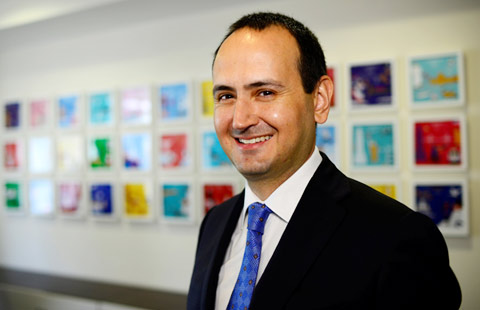
David Rodgers, senior lecturer in Architecture, Design and Planning at the University of Sydney, told Xinhua that the impact of Chinese investment on real estate is "minimal," and too much emphasis is being placed on looking for "easy answers to complex problems" in the real estate market.
"I think an easy answer people have come up with about the housing affordability problem is to say, well, it's all the Chinese capital," Rodgers said.
"The housing affordability problem is a very complex problem, and the ways that you might address it can be quite confronting to people."
Recent reports in The Australian newspaper on Jan 30 suggested that billions of dollars in "dodgy" Chinese investment money was making its way to Australian shores, and said the government agency Austrac investigated A$1 billion of "suspicious" transactions involving real estate investment from China.
The story drove a narrative ensconced in a perceived threat to Australian housing affordability from China, yet admitted in the third to last paragraph "These so-called 'suspicious matter reports' are not definitive evidence of wrongdoing, but rather indications wrongdoing may have occurred."
Stories such as these add fuel to the fears regarding foreign investment that are held by the public yet comprise such a small amount of the value of total real estate, in either new dwellings which foreign investors can actually buy or established dwellings which they are barred from investing in regardless.
Foreign direct investment into Australia is never going to be infallible. There will always be instances whereby regulatory guidelines are not correctly followed, or instances where the Foreign Investment Review Board (FIRB) is required to step in and make a determination that for whatever legislative reason, approval should be denied.
Gavin Norris, head of Australia for Juwai.com, one of the largest real estate websites in China, told Xinhua that over 2, 000 investigations have been done in relation to real estate investments, with 61 forced sales, equating to roughly a three percent wrongdoing rate.
"That, in light of the small figure, when you look at it as the total investment of foreign capital into Australia's real estate, it's an even smaller sum," Norris said.
"Of all those forced sales which accounted for roughly A$140 million, when you look at it in the terms of the A$343 billion in foreign purchases in 2010, its four hundredths of one percent."
"It's a quite miniscule problem I think."
James Laurenceson, deputy director of the Australia China Relations Institute, told Xinhua that not enough stories are being shared of the benefits of foreign investment, with Chinese companies such as Greenland and Dalian Wanda building new residential developments across the country, and employing thousands of Australians in the process.
"These companies employ thousands of Australian workers putting up these apartments, these aren't Chinese workers putting up these apartments, they have jobs that they wouldn't have had without this kind of investment," Laurenceson said.
"And think of all the Australian families who now have a place to live, because these apartments were built thanks to foreign investment."
The reality of foreign investment in the real estate market in Australia is that the injected capital serves to allay the legislative and economic conditions that have caused the housing affordability crisis in the first place.
These factors at play are the negative gearing laws, increased investment into the market by super funds and real estate trusts, both of which are at the domestic level, and according to Laurenceson, easy access to finance.
"In Australia we have record low interest rates, so now property speculators can borrow even more than ever before," Laurenceson said.
"That's the really big change over the last few years,"
Professor Hans Hendrischke from the University of Sydney Business School agreed and told Xinhua that although the part that interest rates play in affordability is significant, the government has to do more to rectify the core issues of supply and affordability which will rightly shift the discussion away from foreign investment.
"What the government is doing is regulating and providing barriers to local and foreign investors to prevent overheating of the market," Hendrischke said.
"The government is trying to be seen as doing something to increase affordability, but I don't think minor measures on the fringe do much to the whole economic elements that drive the real estate market."
Foreign direct investment will never be eradicated in Australia. It is far too crucial to the growth of the country as a whole. But Rodgers suggested that some measures could be introduced in order to improve the societal impact of investment coming in from overseas.
"What we need is a very nuanced discussion about who these foreign investors are, and what they are doing with their capital," Rodgers said.
"It might be that we need a taxation regime put on foreign capital, that is then put into a fund for affordable housing, but that will reduce the appeal of Australian property to foreign investors,"
"It's a complex situation, and how you get that capital to produce good social outcomes is a challenge."
However, the reality still remains that foreign investment in real estate, particularly from China, is not the big, bad wolf as elements of society in Australia have been conditioned to believe. Figures at every juncture clearly demonstrate that fact.
Rather, an overwhelming consensus of politicians, economists and experts agree that foreign investment in real estate is required in order to not only achieve economic growth and increase housing supply, but establish partnership with China, and Asia toward a more fluid global marketplace.
With the world and Australia heading in a globalized direction, Rodgers looked forward to a time where the lines between local and foreign are blurred.
"Australians going to Asia, people from Beijing coming to Sydney, people in Australia going to work in Singapore, this mobility will challenge our ideas about what it is to be local and foreign," Rodgers said.
"In the future, I don't think current analyses are fully going to capture the complexity of where the globalisation of real estate is going."