Emerging markets are likely to see large amounts of money leaving, given changes in the global economic climate. Since last year, developed countries and emerging market economies have had to face a reversal of the economic climate that followed the worldwide financial crisis.
Especially in the wake of the United States' retreat from quantitative easing and the appreciation of the dollar, emerging market economies have been subject to serious net capital outflows - more serious, in fact, than during the crisis.
The net capital outflow in the 15 largest emerging economies amounted to $600 billion during the three quarters before the end of March, according to estimates by NN Investment Partners. The net capital outflow was only $545 billion during the three quarters before the end of March 2009, which were also the worst months of the financial crisis. This shows that the market's confidence in some of the largest developing countries is very weak.
The US has followed a loose monetary policy for many years since the crisis, which has facilitated the large capital waves rushing into the emerging market. From July of 2009 to the end of last June, the net capital inflow added up to $2.2 trillion in these 15 emerging economies. However, the current capital outflow has reversed this trend to some extent.
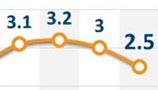
This situation is playing out against the background that economic growth is slowing in emerging economies. From our point of view, the fundamental cause of capital outflow is the slowing economies in these emerging markets. It is estimated by Capital Economics that the average GDP growth rate of the whole emerging markets will drop from 4.1 percent in January to 3.9 percent in February. It is the second time the rate has gone below 4 percent since the Argentine crisis of 2001 and 2002.
Capital outflow may hinder the development of emerging markets, and what's worse, their foreign exchange reserves have shrunk sharply since last December. In March, the overall foreign exchange reserves of emerging economies decreased by the quite large amount of $374.4 billion.
It is noteworthy that China is likely to suffer most from this capital outflow. Last year, China had a double surplus in trade and capital. The situation has not improved this year as the national and international economic and financial environments continue to be complicated.
Economic development faces more pressure, and the renminbi exchange rate has undergone obvious two-way fluctuation. Given this, the cross-border capital flow becomes more unstable in China, resulting in higher potential for capital outflows.

Copyright 1995 - . All rights reserved. The content (including but not limited to text, photo, multimedia information, etc) published in this site belongs to China Daily Information Co (CDIC). Without written authorization from CDIC, such content shall not be republished or used in any form. Note: Browsers with 1024*768 or higher resolution are suggested for this site.
License for publishing multimedia online 0108263 Registration Number: 130349