The second stage transforms Chinese companies from followers to world class, because rising labor costs and competition demand a new strategy, pushing for customer-focused innovation, Yip says.
Often these innovations are incremental, such as enlarging a hotel lobby so Chinese leaders' big entourages have enough space to stand, or giving car back seats more leg room because Chinese leaders tend to sit in the back.
The third stage is the process of innovation abroad, which Chinese companies have to do as they venture into new markets, such as Haier's invention of the third refrigerator compartment and small refrigerators for university halls of residence.
The last stage is to achieve truly global innovation, particularly through the method of acquisition for brand and knowledge. Examples include Lenovo Group Ltd buying Motorola Mobility, Dongfeng Motor Co buying part of Peugeot-Citroen and Geely Automobile Holdings Ltd buying Volvo.
These acquisitions allow Chinese companies to set up overseas R&D centers or take over existing R&D centers as a part of their acquisitions, and use the R&D resources to understand overseas customers and markets.
Despite growing Chinese investment in innovation, challenges remain that restrict major improvements in Chinese innovation and need to be overcome, Yip says.
"Some German car companies feel confident it will be hard for Chinese companies to catch up, because Chinese engineers did not grow up with fathers and grandfathers who took them to the auto repair garage," he says.
The solution to such shortages of talent is to bring overseas-educated people back to China and find ways to retain them, and Yip says the Chinese government has a good program aimed at doing that.
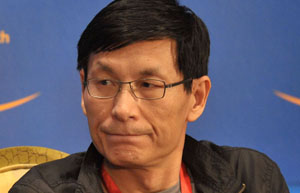
Yip, who grew up in Hong Kong, Burma (now Myanmar), and the United Kingdom, has a global education background, having studied at Cambridge University and later Harvard Business School.
He has worked extensively in industry and academia, and in 2011 he retired as dean of Rotterdam School of Management at Erasmus University. He was then invited to lead the new CEIBS Centre on China Innovation.
The center was built up with funding support from four multinational companies that all wanted to understand innovation in the Chinese market, AkzoNobel, DSM, Philips and Shell. They were later joined by other companies, including Beijing Benz Automotive Co, Bosch and Gome Electrical Appliances.
"We helped them improve and sped up their innovation processes, from a management perspective," Yip says.
Such techniques include reducing the number of referrals back to headquarters by giving autonomy to innovation managers and scientists.
Yip says many multinational corporations are increasingly shifting their R&D facilities to China. Initially they set up small units in China to localize and adapt products, but then reverse innovation takes place whereby technologies developed in China are then applied to other international markets.
Later, the accumulation of research expertise in China could mean the China R&D unit is given a regional or global mandate for some projects. Finally, as the China R&D unit becomes very efficient, some headquarters activities will be replaced completely by the R&D units in China.
Yip says this process, combined with constant innovation by Chinese companies, is making the country increasingly innovative.
China's innovation path is about 10 years behind that of South Korea and 20 years behind that of Japan, but will eventually emulate them, he says. But China also has the potential to be a world-leading innovator in infrastructure, such as high-speed rail and airports, because of the amount of infrastructure being rapidly built in China.
Yip says he is confident that innovation will change the image of Chinese brands in global markets in the future, so instead of being associated with low costs they will gradually become synonymous with quality and innovation.

Copyright 1995 - . All rights reserved. The content (including but not limited to text, photo, multimedia information, etc) published in this site belongs to China Daily Information Co (CDIC). Without written authorization from CDIC, such content shall not be republished or used in any form. Note: Browsers with 1024*768 or higher resolution are suggested for this site.
License for publishing multimedia online 0108263 Registration Number: 130349