The announcement last week of a deal between China and the US on climate may be a breakthrough development for international climate negotiations in Paris in late 2015. But the fact that China has signaled willingness to set an absolute cap on its carbon emissions may allow President Obama to argue domestically that the international conditions for action have been fulfilled. This in turn may enable him to advance a US target, which could catalyze an ambitious global deal to keep climate change within manageable boundaries.
There is, however, one major remaining sticking point in addressing climate, and that is money. Seen through the lens of the international negotiations, the money needed to finance carbon mitigation and climate adaptation is due from wealthy countries as a matter of historic responsibility. The deal made in Copenhagen in 2009 was for $100 billion a year by 2020. The small print of this deal has been the topic of much wrangling since that miserably cold Danish winter. Developing countries call for it to be fulfilled with public money from richer countries; developed countries call for a mix of private and public capital alongside funds from better-off developing countries, highlighting the co-benefits of jobs, improved health, and better cities from climate related investments.
Money is indeed a keystone to both making a deal and making it work at the scale and short time that the science dictates. And there is no doubt that wealthier countries should foot a greater part of the bill, especially in supporting the costs of adaptation by poorer developing countries such as small island states. The commitments to the Green Climate Fund, particularly the $2.5 billion committed by the US at the G20 in Australia, are important symbolic gestures. But that said, the $100 billion is a distraction. First, it is both too big and too small. It is too big for OECD countries struggling to manage public debt and sluggish growth in the face of pressures for austerity. It is too small compared to the $5 trillion a year needed for infrastructure investment to keep the global economy on the road, to enable developing countries to realize their development ambitions, and to drive forward the low carbon, climate resilient transition.
Second, climate is not an isolated phenomenon, it is an integral part of the broader transition to sustainable development. The UN Intergovernmental Committee of Experts on Sustainable Development Financing has highlighted the need to finance infrastructure, healthcare and education, access to energy and gender equality, as well as global public goods such as biodiversity and climate change mitigation to meet post-2015 development goals. UNCTAD estimate a $2.5 trillion annual investment gap in developing countries for financing for such development. The gap in credit available for SMEs, the lifeblood of every economy and the main provider of jobs, has been estimated to be up to $2.5 trillion in developing countries and around $3.5 trillion globally.
Third, the main source of finance in most developing countries is local, both private and public. South Africa's successful move into renewables has been largely financed locally, with domestic banks and other financial institutions providing over 80 percent of capital and domestic energy consumers picking up the bill for the enabling feed-in tariff. Clean-energy investment originating from non-OECD countries soared from $4.9 billion in 2004 to $72.6 billion in 2012, accounting for almost half of the global total, with China as a dominant player investing $233 billion in renewable energy since 2004. Smaller, poorer developing countries depend more heavily on external finance, both concessionary but also private inward investment. Even here, however, a growing portion of these flows is South-South.
Getting finance to flow to where it is needed for sustainable development requires not just political commitment, but a determination to align the broader financial system, including capital markets, banks and insurance, with social and environmental risks and opportunities. Today's financial system is not aligned. Natural resource and carbon-intensive investments continue to rise despite warnings that the value of these investments will decline in the face of technology, policy, catastrophic weather events and citizens' choices. For example, the carbon intensity of the New York Stock Exchange increased by 37 percent over the past two years. Clean technology investment has increased over the last decade, yet today less than 0.01 percent of annual global investment is channeled specifically into green infrastructure as an asset class. Green bond issuance may reach an unprecedented $40 billion this year, yet credit rating agencies are only now beginning to consider the risk posed by climate to sovereign and corporate debt.
China's developing financial and capital markets offer a unique opportunity for embedding climate and broader environmental considerations into financial policies, regulations and standards from the outset, rather having to retrofit them later as is the case in the OECD. The Peoples Bank of China has recognized this, and is co-Convening a Green Finance Working Group with the United Nations Environment Program's "Inquiry into the Design of a Sustainable Financial System", a two year, international initiative to explore options to align financial systems to sustainable development. The members of the working group, including government ministries, financial regulators, financial institutions and stock exchanges, and research institutes, will hold a high-level symposium on Nov 18?at Renmin University in Beijing to focus on a set of proposals for action developed over the last months. Proposals include measures to align credit ratings to environmental risks, advance green bonds, introduce environmental indexes, benchmarks and disclosure requirements into China's capital markets, and build on the green credit guidelines developed by the China Banking Regulatory Commission.
The UNEP Inquiry has provided the international inputs to this work, sharing experience of best practice, including from Bangladesh, Brazil, Europe, South Africa, and the US. Similar exercises are in progress in other countries and regions. In the UK, the Bank of England is progressing a prudential review of climate-related risks in the insurance sector, Bangladesh's central bank is providing green refinancing windows at preferential rates and South Africa's pension law encourages trustees to consider social and environmental aspects of investments. Standards and Poor's Credit Rating Agency has taken steps to integrate climate risk into sovereign credit ratings, and there is an international initiative to establish standards for "integrated reporting" by companies.
The initiative by China's central bank and the UNEP Inquiry is one of a growing number of green finance initiatives in China. The Finance Institute of the Development Research Center of the State Council has been exploring options for green finance policies and regulations over the last two years, working with the International Institute of Sustainable Development and the UNEP Inquiry. Several new green finance research platforms have been established, including policy debate progressed by the Eco-Forum Global, and some led by the Ministry of Environmental Protection, including a new task force established under the auspices of the China Council for International Cooperation on Environment and Development. Several centers have been established at leading universities, such as the Research Center for Climate and Energy Finance, Institute of Finance and Economics, Central University of Finance and Economics, and the newly established Eco-Finance Center to be launched soon at Renmin University.
Making any climate deal work in practice depends on having a financial system that is able to respond and allocate capital towards sustainable development. China is rightly considering its options. What it is recognizing, as are others around the world, is that improved alignment will not just offer better environmental outcomes, but more effective and efficient financial and capital markets that support the long term needs of healthy economies.
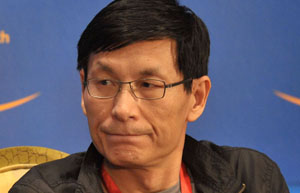
Dr Simon Zadek is a visiting scholar at Tsinghua School of Economics and Management, and a co-director of the UNEP Inquiry into Design Options for a Sustainable Financial System. The views do not necessarily reflect those of China Daily Online.
 |
 |
| Water Cube reopens to public after APEC | Top 9 popular goods Alibaba's buyers purchase overseas |

Copyright 1995 - . All rights reserved. The content (including but not limited to text, photo, multimedia information, etc) published in this site belongs to China Daily Information Co (CDIC). Without written authorization from CDIC, such content shall not be republished or used in any form. Note: Browsers with 1024*768 or higher resolution are suggested for this site.
License for publishing multimedia online 0108263 Registration Number: 130349