HAIKOU - Forget about handsome discounts and promotional giveaways, lower property prices are no longer tempting enough to lure prudent buyers to a housing market mired in a downward spiral. But some Chinese cities have found new bait to whet the appetite - easier access to hukou.
DILEMMA
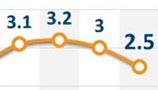
China's property sector continued to cool in May, as new home prices in half of a sample of 70 major cities showed month-on-month drops, contrasted with eight in April. Only 15 cities saw month-on-month increases, substantially down from 44 in April, according to official data on Wednesday.
The data highlights the dilemma many cities are facing. They are anxious to stimulate the slowing property market, a main pillar of local growth, while under central government pressure to refrain from removing property curbs imposed since 2010 to contain soaring prices.
Concerns about the slowdown's impact on growth, land sale revenue and social stability have caused some local governments to take action. Some cities such as Nanjing and Tianjin started to ease the qualification criteria for home purchases.
Other cities like Tongling announced fiscal subsidies, whereas the Home Provident Fund offered support for first home buyers in Yangzhou. Northeast China's Shenyang attempted to remove its home purchase restriction policy but it was called off within 24 hours.
However, the overall impact of these measures has been limited, according to Zhu Haibin, chief China economist with J.P. Morgan.
HOUSE FOR HUKOU
While easing property curbs is running out of charm, some cities are taking a different route to capitalize on the ongoing urbanization drive to woo city dwellers who are potential home buyers.
Last week, central China's Wuhan city eased its household curbs to allow older college graduates working in the city to settle locally, a move expected to attract 100,000 graduates, hopefully boosting property purchases.
Previously, south China's Haikou city allowed five family members to register their household locally if one purchases a house with a space of above 120 square meters, while neighboring Nanning city, Guangdong province and east China's Wuxi all lowered the threshold for similar house purchases that grant buyers local hukou.
Hukou, or permanent residential permit, ties subsidized social services including health, housing, education or pensions to one's legal residence and is much coveted in first- and second-tier cities. Many migrant workers without local hukou face complicated home buying requirements such as minimum working time in the city.
"Removal of property curbs will face huge public opposition, while a "house-for-hukou" policy not only echoes the public demand for freer settlement, but also brings potential home buyers to a city," said Zhang Dawei, chief analyst at real estate agent Centaline Property.
The policy is also in line with the government's plan of having "differentiated regulation" towards the housing market and may contribute to the improvement of city governance, Zhang added.
NOT SILVER BULLET
The "house-for-hukou" policy proved to be quite effective in 2008 when cities including Chengdu and Tianjin offered preferential policies to boost the then ailing property market dented by the international financial crisis.
However, the downturn now is more of a result of oversupply and shrinking demand due to previous intensive house-buying, a tight credit environment, as well as expectations that prices will fall, said Ni Pengfei, a senior researcher on urbanization and property with Chinese Academy of Social Sciences.
Meanwhile, the reform may further aggravate regional property market divergence, noted Li Guozheng, marketing director of central China with China Index Academy, a property market research institute.
Li explained that household preferential policies around the Pearl and Yangtze river deltas may draw more people to migrate from central and west China, further depressing property prices in third- and fourth-tier cities.
An urbanization plan was unveiled in March including hukou reforms to gradually grant 100 million migrant workers permanent urban hukou permits by 2020, which many believe will lead to long-term home-buying demand.
"Hukou reform is just a natural part of urbanization, not a regular property market adjustment tool, and its influence is limited in the long term and should be conducted gradually in line with a city's infrastructure and social services development," Li said. "The way out lies in property developers' timely and coordinated strategy adjustment towards market changes instead of administrative tools."

Copyright 1995 - . All rights reserved. The content (including but not limited to text, photo, multimedia information, etc) published in this site belongs to China Daily Information Co (CDIC). Without written authorization from CDIC, such content shall not be republished or used in any form. Note: Browsers with 1024*768 or higher resolution are suggested for this site.
License for publishing multimedia online 0108263 Registration Number: 20100000002731