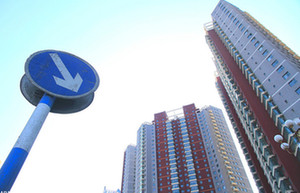
The surge began when the government made the property sector a pillar industry in 2003. After 2008, the credit boom, a government response to the global economic crisis, brought more investment and yet higher prices.
Despite the similarities, there are differences that will keep China free from bust American style: favorable demographic change, home upgrades, households' strong balance sheets, limited investment alternatives, strong income growth, and urbanization, according to Barclays at least. Beyond that, the Chinese government closely monitors and sometimes intervenes in the housing market.
Residential mortgage as a share of GDP, is an interesting way of quantifying the respective Chinese and US bubbles. Residential mortgages in China were less than 20 percent of GDP in 2012, while in the US in 2006, mortgages accounted for more than 80 percent of GDP, according to the Federal Reserve Bank of St. Louis.
Japan, land of the rising house price
When Japan's real estate industry collapsed in 1991, the result was a financial crisis and decades of recession. Triggered by the appreciation of the yen and excess expansion in the housing sector, the case is frequently compared with China.
Economic conditions including housing demand and exchange rate changes in China bear no similarities to Japan 30 years ago. China's real estate market is unlikely to follow the same track.
Japan's demand for new homes had already started to shrink when the bubble burst: The process of urbanization, a major driver of asset prices, was approaching its end.
Japan's urbanization rate had remained at around 75 percent since 1975. China is just gathering steam for its urbanization drive with rate of 53.7 percent in 2013. That rate, lower than most developed nations, indicates a genuine need to house 15 million newly arrived urbanites each year. Urbanization in China will continue, for sure, with the rate to reach 60 percent by the end of 2020: strong housing demand.
Japan's real estate bubble could also be attributed to the sharp appreciation of the yen, which had appreciated by over five percent annually since 1985, hitting a record high of 79 yen equal to one US dollar in 1995 from 235 against US dollars ten years before. Hot money poured in and asset prices soared. In six major Japanese cities, the price of commercial land rose by over 300 percent in the 1985-1991 period; false prosperity accelerating the burst of the bubble.
Turning point of Chinese property market
Do you think China will see a collapse in the property market?
Is China's housing market bottom in sight?
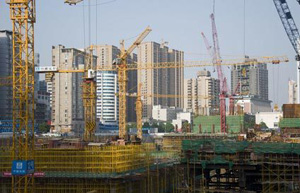
Building a stable housing market
|
 |
 |
|
China is not in danger of US-style housing crunch: US expert |
China's real estate market: collapse or managed slowdown? |

Copyright 1995 - . All rights reserved. The content (including but not limited to text, photo, multimedia information, etc) published in this site belongs to China Daily Information Co (CDIC). Without written authorization from CDIC, such content shall not be republished or used in any form. Note: Browsers with 1024*768 or higher resolution are suggested for this site.
License for publishing multimedia online 0108263 Registration Number: 20100000002731