Behind the slowdown of the growth rate is the necessary shift from an outdated model to a new sustainable one
Once again, all eyes are on emerging markets. Long the darlings of the global growth sweepstakes, they are being battered in early 2014. Perceptions of resilience have given way to fears of vulnerability.
The US Federal Reserve's tapering of its unprecedented liquidity injections has been an obvious and important trigger. Emerging economies that are overly dependent on global capital flows-particularly India, Indonesia, Brazil, South Africa, and Turkey-are finding it tougher to finance economic growth. But handwringing over China looms equally large. Long-standing concerns about the Chinese economy's dreaded "hard landing" have intensified.
In the throes of crisis, generalization is the norm; in the end, however, it pays to differentiate. Unlike the deficit-prone emerging economies that are now in trouble-whose imbalances are strikingly reminiscent of those in the Asian economies that were hit by the late-1990's financial crisis-China runs a current-account surplus. As a result, there is no risk of portfolio outflows resulting from the Fed's tapering of its monthly asset purchases. And, of course, China's outsize backstop of $3.8 trillion in foreign-exchange reserves provides ample insurance in the event of intensified financial contagion.
Yes, China's economy is now slowing; but the significance of this is not well understood. The downturn has nothing to do with problems in other emerging economies; in fact, it is a welcome development. It is neither desirable nor feasible for China to return to the trajectory of 10 percent annual growth that it achieved in the three decades after 1980.
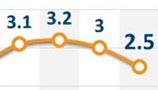
Yet a superficial fixation on China's headline GDP growth persists, so that a 25 percent deceleration, to a 7 to 8 percent annual rate, is perceived as somehow heralding the end of the modern world's greatest development story. This knee-jerk reaction presumes that China's current slowdown is but a prelude to more growth disappointments to come-a presumption that reflects widespread and longstanding fears of a broad array of disaster scenarios, ranging from social unrest and environmental catastrophes to housing bubbles and shadow-banking blowups.
While these concerns should not be dismissed out of hand, none of them is the source of the current slowdown. Instead, lower growth rates are the natural result of the long-awaited rebalancing of the Chinese economy.
In other words, what we are witnessing is the effect of a major shift from hyper-growth led by exports and investment (thanks to a vibrant manufacturing sector) to a model that is much more reliant on the slower but steadier growth dynamic of consumer spending and services. Indeed, in 2013, the Chinese services became the Chinese economy's largest sector, surpassing the combined share of the manufacturing and construction sectors.
The problem, as I argue in my new book, Unbalanced: The Codependency of America and China, is not with China, but with the world-and the United States, in particular-which is not prepared for the slower growth that China's successful rebalancing implies.
The codependency construct is rooted in the psychopathology of human relationships whereby two partners, whether out of need or convenience, draw unhealthy support from each other. Ultimately, codependency leads to a loss of identity, serious frictions, and often a nasty breakup-unless one or both of the partners becomes more self-reliant and strikes out on his or her own.
The economic analogue of codependency applies especially well to the US and China. China's export-led growth miracle would not have started in the 1980's without the American consumer. And China relied heavily on the US dollar to anchor its undervalued currency, allowing it to boost its export competitiveness.

Copyright 1995 - . All rights reserved. The content (including but not limited to text, photo, multimedia information, etc) published in this site belongs to China Daily Information Co (CDIC). Without written authorization from CDIC, such content shall not be republished or used in any form. Note: Browsers with 1024*768 or higher resolution are suggested for this site.
License for publishing multimedia online 0108263 Registration Number: 20100000002731