Comments
  Print
Print  Mail
Mail  Large Medium Small
|
 |
|
Exhibitors from Vietnam prepare for the opening of the China-ASEAN Expo held in September in Nanning, Guangxi Zhuang autonomous region. HUO YAN/CHINA DAILY |
The WTO estimates that Asia's trade with the rest of the world will top $5.5 trillion by 2020, up from $3 trillion in 2009. Intra-Asia trade, on the other hand, could jump to almost $11 trillion from $3.7 trillion. Regional trade is expected to grow by more than 10 percent per year, compared with 6 percent for trade between Asia and other parts of the world.
"We are seeing a tendency of regionalism and bilateralism, which is why we are not seeing the spirit of a multilateral trade system striving as much as we would want it to," said Gita Wirjawan, Indonesia's trade minister, during a CEO Summit held on the sidelines of the Asia-Pacific Economic Cooperation (APEC) forum in Bali earlier this month.
This push toward greater regional free trade is very visible in Asia and stands in stark contrast with the re-emergence of global protectionism in the last half-decade. The slow progress of the Doha Round, underway since 2001, is an example.
In 2009, the year after the global financial crisis, global trade dropped by 12.5 percent according to the Organization for Economic Cooperation and Development (OECD).
The drop put pressure on countries to adopt protectionist measures, despite the potentially negative impact on national and global economies. Most of this drop was because of a lack of demand, according to the OECD, but countries were quick to put up new barriers to trade such as tariffs and restrictions to protect jobs.
The United States created the Recovery and Reinvestment Act of 2009, which required companies to buy domestic rather than foreign products. Similar campaigns were launched in countries including Indonesia and Australia.
India and Indonesia were among the nations that put in place new import licensing systems, according to a report by the United Nations Conference on Trade and Development.
Many countries, including Malaysia and Indonesia, boosted standards and certification requirements to limit imports. Thailand made it harder to get product certificates from its standards regulator in May 2009. In the second half of 2008, the WTO reported 120 anti-dumping investigations, 35 more than in the first half.
All these measures, while not tariffs, create barriers to trade.
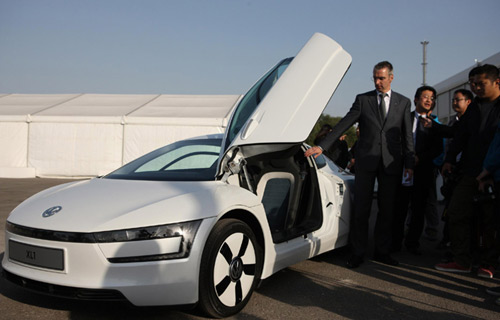 World's first 1-liter car debuts in Beijing
 Paper-made furniture lights up art show
 Robots kick off football match in Hefei
 Aerobatic team prepare for Aviation Convention
 China Suzhou Electronic Manufacturer Exposition kicks off
 'Squid beauty' and her profitable BBQ store
 A day in the life of a car model
 Vintage cars gather in downtown Beijing
Copyright 1995 - . All rights reserved. The content (including but not limited to text, photo, multimedia information, etc) published in this site belongs to China Daily Information Co (CDIC). Without written authorization from CDIC, such content shall not be republished or used in any form. Note: Browsers with 1024*768 or higher resolution are suggested for this site.
License for publishing multimedia online 0108263 Registration Number: 20100000002731