Comments
  Print
Print  Mail
Mail  Large Medium Small
Fear-mongering is at the root of many ill-informed views about nation, author says
The China seen through Western lenses is not reality but rather a handy screen to project Western dreams and nightmares, says Ben Chu, author of the recent book Chinese Whispers: Why Everything You've Heard About China is Wrong. Chu, 34, economics editor of British newspaper The Independent, says that inaccurate projection is damaging to China and hinders it from communicating smoothly with the West on its road to internationalization.
"As China has taken its place on the world stage, with its economic growth, we've been talking and writing a lot more about China in the West, about what it means for the West and what it means for the rest of the world.
"There seem to be a lot of erroneous ideas thrown around in the debate, a lot of fear-mongering. I wanted to correct that. Because I knew it was inaccurate and a lot of it was unhelpful."
Born in Manchester to a Chinese father and British mother, Chu says he has always wondered what being Chinese means.
After graduating from Oxford in 2000 he joined The Independent, and was a leader writer. "I had to write a lot about China, about what the paper's view of China was, so that has been the catalyst of wanting to write about China."
In Chinese Whispers, Chu questions commonly held views about China, including that it has the world's finest education system, that Chinese live to work and that China will rule the world. He explains how he believes each misperception is formed and gives his interpretation of the truth.
China has done amazingly well with economic growth, education and productivity — and many other things — but still has not caught up with many Western standards, popular belief to the contrary notwithstanding, he says.
China's rapid economic growth is generally accepted as a given, but what the West often fails to see is the magnitude of the challenge China faces in achieving a structural shift toward sustainable growth.
Despite rapid growth in the country's GDP, Westerners often do not twig that its per capita income is still less than a fifth that of the US and a quarter that of Europe. So fears that China wants to buy up the world are unfounded, Chu says.
"Imagine you had an unfortunate neighbor who managed to turn his life around and pull himself out of poverty," he says in the book. "Does that harm your own standard of living?"
The West's misconception of China hinders progress on agreements on global issues such as climate change because the West fails to see China is still developing economically and perhaps cannot afford to take action that is too radical in cleaning up the environment, he says.
"People just look at China and say, ‘Chinese people are rich', but that's not true. Now, policymakers, writers and commentators have to keep that at the forefront of their minds. Because if you don't recognize that, you'd be misled about what is feasible and what is morally right."
On an issue such as climate change it may well be morally right "that China be given more leeway to catch up", rather than demanding that it take a big share of responsibility based on absolute GDP figures, he says. Another unhelpful misconception about China is the assumption that its investment in Africa is a form of neocolonialism.
That assumption is the result of the West having once colonized Africa, so "they project their own bad behavior on China", when China only wants to build purely commercial relationships with Africa.
"China's own behavior in Africa is by no means perfect. They're not saints, but it's nowhere near as bad as it is characterized in the West.
"Chinese firms are investing in infrastructure and they are buying natural resources on long-term contracts because they need the energy at home. What is the problem?"
At the other end of the spectrum, some Western tourists and business people see China as better than it is, and such misperception can also be unhelpful for mutual understanding, Chu says.
"They come away with the perception that all of China is like Shanghai, Guangzhou and the center of Beijing. That's inaccurate. They'll think, ‘Chinese have caught up with us, so why can't they do more of this or that?' and ‘Why are there still social problems?'
"China is not totally good or totally bad. Like any other developing countries, it has growth, migration to the city, housing, schooling, pollution, but these are not solely Chinese problems."
Exacerbating this miscommunication are efforts by Western politicians to paint an exaggerated picture of China to suit their own agendas, Chu says.
Notable examples he cites are Mitt Romney, the Republican candidate in last year's US presidential election, who castigated China for undervaluing its currency, and Kwasi Kwarteng, a Conservative Party politician in Britain who has said his compatriots have a "diminished work ethic" compared with the Chinese.
"They project China as a great threat, not particularly because they want to educate their own population about China, but get through their own agendas at home. But they misrepresent China when they project China as something to be feared."
Chu believes "human contact" over time is the key to breaking down such communication barriers. He says as more Chinese people come to the West to study and live, they represent a more everyday image of China that helps Westerners to understand China differently.
"It will really help when they come to know someone personally. The Chinese people project a normal image and over time that will help to break down the stereotypes."
He says such human interaction may be more powerful than efforts by the Chinese government, because Westerners may become skeptical if they are told by a foreign government: "We're nice people and we're not everything you've been told."
At the same time, Chu believes the Chinese government is right in welcoming foreigners to visit China because they will help take a more accurate view back to their friends and colleagues.
Chu's recognition that China's economy has grown significantly is partly because of firsthand experience of seeing the lives of his Guangzhou relatives improve dramatically.
Visiting them when he was 5 in 1984, Chu remembers being puzzled that there was no bed in their cramped apartment. He later learnt from his cousin that the family would pull out wooden boards from an alcove and assemble their beds.
But six years later, Chu's great uncle's house made way for a new office block and the family used their savings to buy a new apartment, four times larger and with a pleasant balcony. Not only did the new apartment have permanent beds, but also a bathroom.
"There's no doubt that China's growth has been spectacular, and it may well be the next biggest economy. But my point in the book is not to deny it has grown, but to say, ‘What are the implications for the West?'"
The fear that China will "rule" the world is certainly unfounded because the world where one economy can dominate no longer exists, he says, so China will not demonstrate its power in the way Britain did in the 19th century, or the US did after World War II.
Instead he sees China playing a bigger and more constructive role in multinational organizations such as the International Monetary Fund and the United Nations, and he believes this type of engagement will help China to emerge as a responsible superpower.
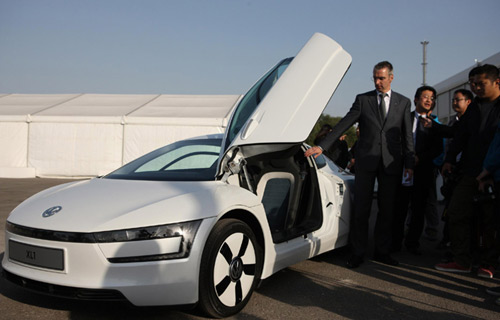 World's first 1-liter car debuts in Beijing
 Paper-made furniture lights up art show
 Robots kick off football match in Hefei
 Aerobatic team prepare for Aviation Convention
 China Suzhou Electronic Manufacturer Exposition kicks off
 'Squid beauty' and her profitable BBQ store
 A day in the life of a car model
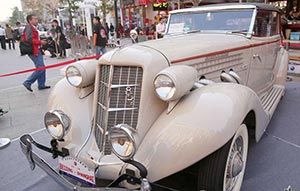 Vintage cars gather in downtown Beijing
Copyright 1995 - . All rights reserved. The content (including but not limited to text, photo, multimedia information, etc) published in this site belongs to China Daily Information Co (CDIC). Without written authorization from CDIC, such content shall not be republished or used in any form. Note: Browsers with 1024*768 or higher resolution are suggested for this site.
License for publishing multimedia online 0108263 Registration Number: 20100000002731