Making the right choices


 |
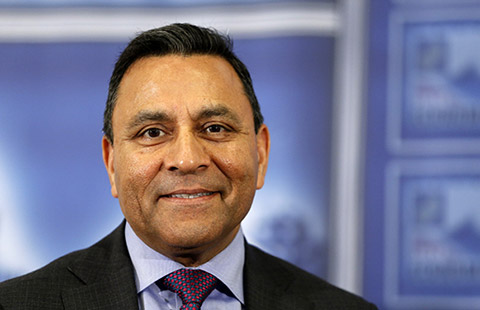
Chinese mainland should strengthen its investment in vocational education to tackle the challenge of skills mismatch in its urbanization process, says Charles Cao Quin, vice-principal of Warwickshire College.
"If China wants to become a true global superpower internationally, it has to improve the skill levels of its mass labor market so that it matches up to international standards. This transition will create the basis of a knowledge economy for China," he says.
According to Cao, China's urbanization process has created a demand for skilled technicians and service providers, which are roles often filled by vocational education graduates. Since additional investment has been channeled into universities, China now has a surplus of university graduates who cannot find jobs, he says.
Over the past few years, Cao has been leading the British vocational education provider, Warwickshire College's, expansion into China, along with the college's principal and chief executive Mariane Cavalli.
This experience has put him in an ideal position to observe the differences between the two vocational education systems.
He says the most important difference is the amount of recognition and respect vocational qualification holders receive. Vocational education graduates are highly respected for skills in the United Kingdom, whereas in China they are placed a notch below university graduates.
"Some occupations, an example being the civil service, will not consider students with vocational education qualifications at all. Such social pressure increases the perception that vocational qualifications are less valuable," he says.
Furthermore, there are no higher education options for vocational education graduates to even attain a university degree in China. In comparison, graduates with vocational education qualifications in the UK, including the Higher National Certificate, the more advanced Higher National Diploma, and more recently the Foundation Degree, can complete one or more years of extra study and move up to a recognized bachelor's degree, he says.
Cao says that a perception change toward vocational education can be brought about through investment. He says that in the UK, vocational education constitutes a significant portion of the Department of Education's budget, so students on apprenticeship programs at British companies often have their training funded partly by the government.
At the same time, British businesses have also invested heavily in training their apprentices, both as a corporate social responsibility measure and as a strategy to improve productivity, he says.
In comparison, Chinese businesses still lack awareness of the importance of investing in workers' skills. At the same time, perhaps they also lack a sense of corporate social responsibility, in "thinking about their society, beyond their company", Cao says.
Vocational training is not just teaching skills to students, but something that also involves professional ethics, Cao says. "It instills in workers a dedication and sense of responsibility for their jobs, which are qualities that many Chinese workers lack."
He says one example is China's service industry. Workers in many hotels, airports and other public venues that frequently host international guests still lack conversational English language skills and an understanding of international practices.
"When you ask for a coffee in some Chinese hotels, even in big cities, you're given a cup of instant coffee. And when you ask for milk, they either say they do not have milk, or provide you with a glass of hot milk, or milk powder. This should not be the impression that a country on its way to becoming a global power gives to its international guests," Cao says.
Yet another example is childcare. "In countries such as the UK, physical punishment is absolutely not allowed in child care, but there are still a few Chinese caretakers that still practice it because they believe it to be acceptable," he says.