'New-style' urban plans to protect rights of migrants


The State Council, or China's cabinet, has called for a middle to long-term plan to promote new-style urbanization, enabling more migrant workers and their families to settle in cities.
The government will accelerate hukou, or household registration system, reform, and protect rights of rural citizens, officials said at a regular meeting of the council on Monday.
Drafting of the first national plan for promoting urbanization was completed before the two legislative sessions in March, and advice is being sought from ministries, local governments and experts.
The plan could be launched in the middle of the year, with supporting measures announced in the second half of the year, according to experts involved in the drafting.
Compilation of the plan was led by the National Development and Reform Commission, with the help of more than 10 ministries, including the Ministry of Housing and Urban-Rural Development and the Ministry of Human Resources and Social Security.
Last year, a research group led by Xu Xianping, vice-minister of the commission began looking at how to absorb migrant workers to urban areas in Shanghai, Jiangsu, Zhejiang, Anhui and Guangdong.
China has about 250 million migrant workers, most of them born in the late 1970s or 1980s, with little or no farming experience. Most of them have no plans to return to rural life.
Though many migrant workers have lived in cities for years, they have yet to be registered as urban citizens, or don't have hukou, which bars them and their children from receiving social welfare services such as medical care, pensions and compulsory education.
"The unequal and unfair treatment in using public services, caused by the household registration system, should no longer be tolerated," said Feng Kui, researcher at the China Center for Urban Development under the NDRC.
Economists said the demand unleashed by accelerated urbanization will be enormous, and the transfer of migrant workers to cities will boost internal demand and investment.
Urban citizens consume as much as three times the amount of rural citizens. Migrant families tend to save, rather than spend, due to the insufficient social welfare coverage.
A sticking point is that local governments have not been solving the migrant workers' hukou issue, with some local officials thinking the central government should invest more.
Gao Guoli, deputy director of the Research Institute of Territorial Development and Regional Economics under the NDRC, said it is important to find proper ways to share the costs.
Many people believe a cost-sharing system among migrant workers, their native areas, companies and cities should be established, with the central government playing a role in strategic planning and coordination, he said.
Local governments are encouraged to explore their own approaches to solving the problem.
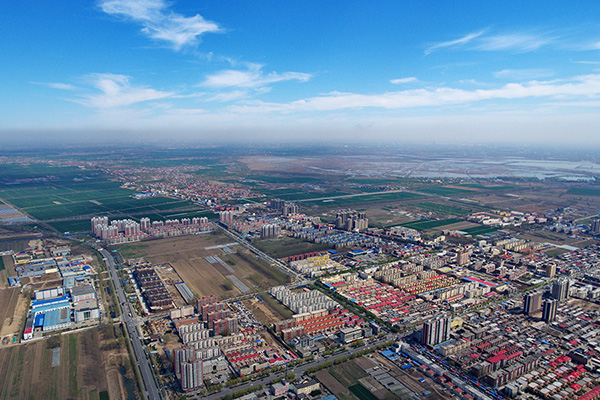
China's urbanization rate passed 50 percent in 2011, with urban residents accounting for 51.27 percent of the population that year, up 1.32 percentage points from 2010.
Hou Yongzhi, head of the development of strategy and regional economy at the Development Research Center, the State Council's policy think tank, said China must explore its own way to promote urbanization.
"Even if one day China's urbanization rate reaches 75 percent, it will still have about 25 percent of people in rural areas, the equivalent of about 400 million people, more than the total population of the United States. So the structure of China's urbanization will be different," he said.
The nation will explore new-style urbanization, and more city clusters will emerge. Besides traditional clusters such as Beijing-Tianjin-Hebei, the Yangtze River Delta and Pearl River Delta, more will be established in central and western regions.