HK entrepreneur tells how to do business in ASEAN countries


HONG KONG -- As economic activities in the US and Europe remain in the doldrums, more and more businesses and investors are shifting their focus to Asia.
Southeast Asia, a region with multi-faceted economies, diverse culture and huge population, is also a region that has been drawing increasing attention in recent years, particularly given its largely untapped market potential and cheap labor costs.
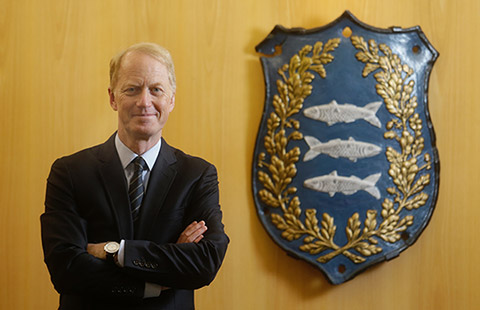
Hong Kong businessman Jonathan Choi, who has decades of experience in doing business in Southeast Asian countries including Vietnam, Cambodia, Myanmar, Indonesia, Singapore and Thailand, shared his experiences and lessons learnt in doing business there in a recent interview with Xinhua.
Make friends first
Choi's initial involvement with Southeast Asian countries dated back to the 1970s, when his company Sunwah Group established subsidiaries in Vietnam to process and export frozen and dried marine food products. He then ventured into other countries, accumulating over 30 years of business experience in Myanmar and 20 years in Cambodia. He said it is always important to get familiarized with the country and build local connections before expanding the size of business.
"We must remember when investing in these countries, we're foreigners," he said, adding that language, culture, the way of doing business, and mentality are all important factors to consider when investing in ASEAN countries.
He also stressed the importance of social responsibility when doing business overseas. "If you have been there for a long time, being friendly with them, showing your responsibility and care to the local people, you would have a better return and better cooperation with the local community and government," he said.
Choi's usual strategy of expanding business abroad is to start with the most familiar industry, in his case, sea food processing and trading. After getting fully accustomed to the business environment, he then dabbled into other types of business such as property and finance.
He cited business in Vietnam as a successful example of diversifying operations. With decades of experience on sea food processing and trading, he embarked on new business projects in real estate, becoming one of the largest property developers in the country.
Ten years ago, he seized an opportunity to venture into the financial sector and founded VinaCapital, thereby establishing his conglomerate's asset management business in Vietnam. VinaCapital has three listed funds in the AIM market of the London Stock Exchange.
Leaping at the opportunity is also crucial for business expansion. Prior to Myanmar's opening-up to foreign investors, Choi stayed for sea food businesses only in the country. "Now the time has come," he said. "I'm now looking into property and financial business."
Unstable business environment and unexpected political and social changes are some of the biggest difficulties during the years of his business operations in Southeast Asia. "Things may just happen suddenly," Choi said, recalling some unrest in Indonesia, Vietnam and Cambodia which caused him to shut down factories and draw back investment.
When unrest broke out in Cambodia in 1997, Choi had to leave the plants idle for five years. Yet, he did not move out completely. "When everything recovered, we resumed the production and had a really good business," he said.
"Confidence in the country is very important. You should have a long-term strategy, so you work together and grow together with the country and the people."
Numerous business opportunities
Economic links between Hong Kong and the ASEAN countries are historically strong, and ASEAN now is Hong Kong's second largest trade partner after the Chinese mainland, with $94.1 billion trade value in 2012. The average trade growth between Hong Kong and ASEAN for the past 10 years is around 7 percent, with a particular big increase of 10 percent last year.