Fundamental reforms needed


With the government preparing its work reports for the National People's Congress next week, what are the biggest macroeconomic and structural reform challenges China faces in the year ahead?
On the macroeconomic front, China has entered 2013 with solid growth momentum, in no small part because of the policy stimulus of last year, but now, three challenges call for containing the expansion of financial leverage.
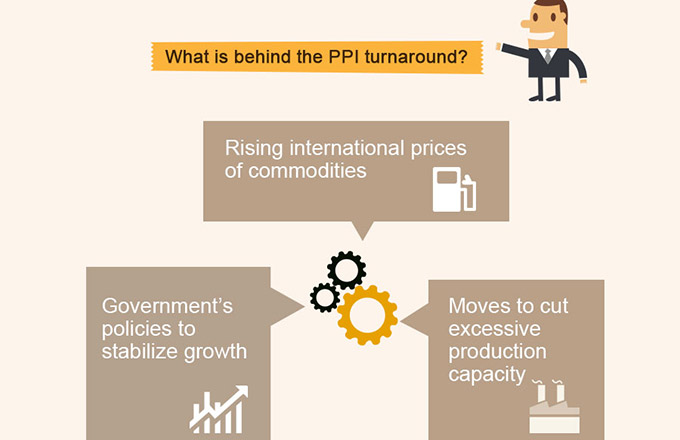
First, inflation is on the rise, largely on the back of higher food prices. This time the food price cycle may not be as pronounced as previous ones, since the global raw commodity price setting is more benign and prices of manufactured goods face only modest upward pressure. Nonetheless, policymakers are right to be sensitive to higher inflation.
Second, reining in house prices remains a key objective of the government. Following renewed enthusiasm for housing since mid-2012, the State Council reaffirmed its tight policy stance toward real estate this month. However, prices are likely to continue to increase, given the underlying pressure from urbanization and rising incomes, as well as from easy financial conditions and the absence of material taxation of housing.
Third, in the last 12 months we have seen another rapid expansion in shadow banking, the less supervised and less regulated part of the financial system that includes wealth management products channeled to lending by "non-bank" entities. One concern is that the shadow banking system tends to lend more to higher risk firms and local government vehicles that have difficulty getting access to normal bank lending. In addition to concerns about supervision and risk management, non-bank financing is now expanding so rapidly that overall leverage is rising at an unsustainable pace. Macroeconomic and financial stability call for a slower expansion of financial leverage and more comprehensive supervision.
Turning to structural issues, China has so far done well in sustaining rapid growth, fueled by the large-scale capital deepening, which contributed just over 5 percentage points to GDP growth between 1995 and 2012, and rapid pure productivity growth, which contributed about 3 percentage points. The good productivity performance was in no small part because of a sequence of structural reforms that unleashed productivity increases and reallocated labor and capital.
Going forward, the positive growth trend faces some headwinds. Labor accumulation is declining because of demographics. In addition, even though China needs more capital accumulation, with lower employment growth the pace of capital accumulation will need to come down to ensure acceptable rates of return. Meanwhile, productivity growth is under pressure from lower productivity gains in export-oriented manufacturing.
Thus, China needs further structural reforms to sustain productivity growth and get more growth out of the domestic economy. One important reform area will be channeling resources to new and growing sectors, products and services. There has been gradual progress on the pricing of industrial inputs and on financial sector reforms that raise the role of the interest rates and increase competition and access. Key outstanding challenges are setting a level playing field for State-owned enterprises and other companies, removing entry barriers to several service sectors, separating regulators from regulated entities, delineating more clearly the roles of the State and the market, increasing State-owned enterprises' dividends and channeling them into the overall fiscal envelope.
A second area of reform will be to foster more balanced urbanization, with migrants being able to take their families with them and live and consume in cities like urban residents, in order to foster more service-oriented and consumption based growth.
Crucial outstanding reforms include liberalizing the hukou, the household registration system, reforming intergovernmental fiscal relations and the performance evaluation system of government officials so local governments have the means and incentives to fund public services and build affordable housing for migrants, and pursuing rural land reform to increase the mobility of migrants from rural areas, facilitate land consolidation and mechanization, and boost rural residents' per capita incomes.
Looking ahead, the outstanding reforms needed are complicated and difficult, with vested interests seeming to hold up progress in leveling the playing field, clearly delineating the roles of the State and the market, charging significant dividends from SOEs, reforming inter-governmental fiscal relations and rural land reform. However, trying to sustain growth without tackling these fundamental issues would leave China with an unbalanced economic and social structure, so they will have to be done.
The timing matters; the sooner reforms are implemented to adjust the allocation of resources; the sooner the old, inefficient allocation patterns will end. Also, the longer it takes to implement institutional reforms to more sharply delineate the roles of the State and the market the harder it may become.
The author is an economist with The Royal Bank of Scotland.