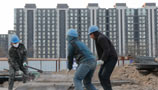
BEIJING - Liu Mengmeng has been working as a piler operator in a glass factory in East China's Shandong province for two years since graduation from a technical school, but she can hardly make ends meet.
The private firm pays 1,700 yuan ($271) each month to migrant workers like her. In comparison, at nearby Yankuang Group Co., a state-owned coal mine, employees are provided with generous job benefits in addition to a 5,000-yuan monthly salary.
It is such contrasts that have made income inequality a top public complaint in China, the world's fastest-growing economy in the past three decades fueled by rapid industrialization and urbanization.
After repeated delays to an income distribution reform plan that has been under government consideration since 2004, people are expecting more radical efforts in this regard from the new Communist Party of China (CPC) leadership elected last November.
"I hope that the leadership can adopt a higher viewpoint when outlining the reform, and it can cap high incomes in monopolized sectors," said Wu Li from a Beijing-based private PC company.
Wu currently earns 8,000 yuan a month, up from 6,000 yuan in 2010, but she still feels stressed because the rent for an apartment she shares with her roommate increased by 1,500 yuan in the period.
"I hope that the country can push harder on the reform, and solve the twin-track pension system," said Lu Meixiang, a worker in a textile plant in Shandong. The 47-year-old woman is upset about the big disparity in pensions between retirees from companies and government-affiliated institutions.
Prosperity brought by China's reform and opening up since the late 1970s has animated state-dominated industries and eastern regions. The Hukou registration system, which classifies residents into farmers and non-farmers, also helped enlarge the wealth gap.
Official data show that China's Gini coefficient, a widely used measure of economic inequality, has stayed between 0.47 and 0.49 during the past decade, well above the 0.4 warning level set by the United Nations.
Income gaps can reach multiples in the thousands in extreme cases. In 2007, some managers of state-owned enterprises earned 4,553 times more than migrant workers, according to a 2011 report from the Ministry of Human Resources and Social Security.
The government has resorted to measures such as raising minimum wages and livelihood allowances to alleviate the pressure on low-income groups and expand the middle class, but the efforts have been impaired by surging consumer prices and skyrocketing housing prices.
Related stories:
Income gap between the sexes widening
Urban-rural income gap narrowing: ministry
Govt aims to close income gap with wage hike


Copyright 1995 - . All rights reserved. The content (including but not limited to text, photo, multimedia information, etc) published in this site belongs to China Daily Information Co (CDIC). Without written authorization from CDIC, such content shall not be republished or used in any form. Note: Browsers with 1024*768 or higher resolution are suggested for this site.
License for publishing multimedia online 0108263 Registration Number: 130349