Comments
  Print
Print  Mail
Mail  Large Medium Small
A second set of reforms is supposed to support more migration to cities, with migrants being able to take their families with them and live and consume like urban residents, in order to foster more labor-intensive, service-oriented and consumer based growth. The reforms include further increasing the role of the government in healthcare, education and social security, liberalizing the hukou (house registration) system, reforming the intergovernmental fiscal relations and the performance evaluation system of government officials to give local governments the means and incentives to fund public services and build affordable housing for migrants, and pursuing land reform to increase the mobility of migrants from rural areas by facilitating land consolidation and mechanization, and boosting rural residents' incomes.
So far, progress on the reform agenda has been mixed. While there has been progress in financial reform and raising the government's role in healthcare, education and social security, there has been little progress in key areas such as leveling the playing field for SOEs and other companies, and reforming the intergovernmental system - areas where political economy issues hold the key.
The impact of the new leaders on the reform process should not be overestimated. China has moved to collective leadership and policymaking has become increasingly institutionalized and consensus-based. Also, traditions call for continuity and stability in policy orientation during and after a transition while the 12th Five Year Plan (2011-15) provides further continuity.
Nonetheless, the leadership transition may have some impact on the orientation and emphasis of reforms. The introduction of the objective of building a xiaokang (moderately well-off) society and greater emphasis on improving the quality of life and making public services accessible to all under the leadership of President Hu Jintao and Premier Wen Jiabao fitted well with what seem to be their views.
Turning to the current challenges, while economic restructuring and rebalancing has been on the agenda for about eight years, it has taken time to form a comprehensive understanding and approach on how the different challenges and reforms are linked together. There has been some progress in this regard, as indicated for instance by writings and speeches on economic reform by Vice-Premier Li Keqiang.
In an article in the CPC's Qiushi magazine, Li notes that (i) boosting domestic demand is the most important part of economic restructuring; (ii) urbanization is the key for boosting domestic demand and improving rural development and living standards; (iii) urbanization needs to be guided by sound policies, ensuring that migrants are included and gradually get equal rights to basic urban public services like social security, healthcare and education; and (iv) the services sector has a key role to play in boosting domestic demand and readjusting the industrial structure.
He also said the government should "deepen the institutional reform of income distribution". Speeches later this year by Li and other leaders focused on how specific policies such as social housing construction, expanding medical insurance and encouraging more urbanization are important levers for boosting domestic demand and as such an important part of the overall reform.
Looking at the starting positions and challenges, people expecting a rapid implementation of outstanding reforms are likely to be disappointed. Nonetheless, the new leadership may possibly outline a more ambitious and comprehensive approach to economic restructuring and rebalancing.
The author is chief China economist at the Royal Bank of Scotland in Hong Kong.
 Top 10 cities in economic competitiveness
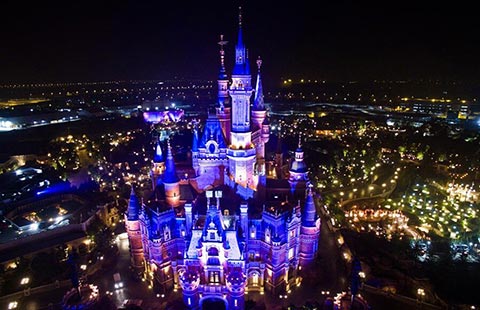 Lighting view of Shanghai Disney Resort
 World's highest, longest glass-bottomed bridge takes shape in Hunan
 Top 10 listed property companies
 Robot-themed café debuts in Shanghai
 Science and technology experience items attract crowds in Beijing
 Nine new rules coming into effect from June 1
 Wanda opens theme park to rival Disney

Copyright 1995 - . All rights reserved. The content (including but not limited to text, photo, multimedia information, etc) published in this site belongs to China Daily Information Co (CDIC). Without written authorization from CDIC, such content shall not be republished or used in any form. Note: Browsers with 1024*768 or higher resolution are suggested for this site.
License for publishing multimedia online 0108263 Registration Number: 20100000002731