Comments
  Print
Print  Mail
Mail  Large Medium Small
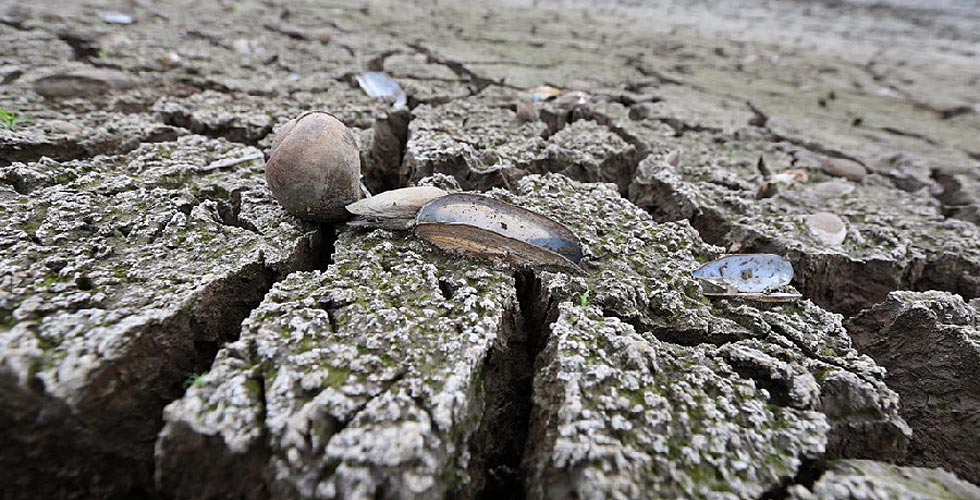
Regional growth measures raise fears over toll on environment
Local government growth programs are causing increasing concern over their environmental impact, officials from central government agencies warned.
In a bid to boost GDP, provincial and municipal governments have recently rolled out at least 17 trillion yuan ($2.7 trillion) in stimulus programs, including giving the green light to environmentally damaging operations, economists warned.
Li Zuojun, an economist at the Institute of Resources and Environmental Policies with the State Council Development Research Center, said he was worried that achievements in energy saving and emission cuts in the more developed eastern provinces may be overshadowed by the building of heavily polluting industries in inland areas.
Those stimulus programs could bring about "a new wave of expansion" in the kind of industries that China does not really want and would pay a dear price for in the future, said an official from the National Development and Reform Commission, who wished not to be named.
From an environmental perspective, capital investment on such a massive scale may further strain the already fragile ecological conditions in central and western areas, the NDRC official said. Those areas, rich in resources but poor in environmental protection, are often destinations for industrial relocation plans from the more developed cities along the eastern coast.
The official said he believes some government guidance is necessary in all capital investment programs.
In the first eight months of the year, China actually did "a relatively good job" in environmental protection, the official said, summing up the data he collected.
The environmental cause benefited from the economy's slowdown since the beginning of the year, he noted, as production in steel, cement and non-ferrous metals have either been placed under strict quotas or closed entirely as a result of falling demand.
August used to be a peak time for electricity use, but this year only saw an increase of 3.6 percent year-on-year in August, down from an increase of 4.5 percent in July, according to the National Energy Administration.
The Ningxia Hui autonomous region and Yulin city in Shaanxi province recently offered preferential electricity prices to energy-guzzling industries, according to media reports.
However, after the economy's growth fell to a three-year low in the second quarter, the government changed gears and boosted approval procedures for new investment projects.
This opened the floodgate for various projects which soon added up to 17 trillion yuan, according to Wu Jinglian, a veteran economist and government economic policy adviser.
Wu has been openly critical of the heavy reliance on government investment for economic growth, saying its negative outcome would inevitably harm the economy's long-term health.
China's measure of energy intensity - energy use for each unit of GDP growth - went down 2.01 percent in 2011, missing the government target by 1.2 percentage points.
In a region-by-region breakdown, energy intensity in Beijing and Tianjin went down 6.94 percent and 4.28 percent respectively in 2011. It went up as much as 9.44 percent in Qinghai province, 6.96 percent in the Xinjiang Uygur autonomous region, and 4.6 percent in the Ningxia Hui autonomous region.
Economic fluctuations can influence the environment in China, said Ma Zhong, dean of the Renmin University school of environment and natural resources.
China managed to fulfill its environmental targets during its 9th Five-Year Plan (1996-2000) and 11th Five-Year Plan (2006-10), thanks in part to the 1998 Asian financial crisis and the 2008 global financial crisis, Ma noted.
The use of desulphurization systems in China's coal-fired power plants increased from lower than 10 percent before 2000 to higher than 85 percent in less than 10 years, he said.
From 2011 to 2015, China's plan is to slash its energy intensity by 16 percent and carbon emission intensity by 17 percent, compared with 2010.
The current slowdown should be seen as a good opportunity for the economy to discard its growth model, and for local officials to change their way of thinking to learn to adopt a long-range view, Ma said.
Contact the writer at lanlan@chinadaily.com.cn
 Top 10 Chinese internet companies
 Fun time for children at international toy expo in Beijing
 Huawei launches new smartphone P9 in Vietnam
 Top 10 box office movies on China market in H1
 Woman resigned from high salary job to make notebooks
 Hurun publishes Global Chinese Big Philanthropy Report 2016
 Top 10 new economy issues in China
 Wetland helps preserve ecology of Dianchi Lake

 Sports star Ivanovic, Schweinsteiger holds wedding in Venice
 Relive the glories and defeats in France-Germany rivalry
Copyright 1995 - . All rights reserved. The content (including but not limited to text, photo, multimedia information, etc) published in this site belongs to China Daily Information Co (CDIC). Without written authorization from CDIC, such content shall not be republished or used in any form. Note: Browsers with 1024*768 or higher resolution are suggested for this site.
License for publishing multimedia online 0108263 Registration Number: 20100000002731