Policy will go into effect at times when particulate matter far exceeds limit
Beijing will take a certain percentage of official vehicles off the road during times of extreme pollution to lower exhaust emissions and reduce air contamination, the city government said.
Government organizations and public institutions are being asked to reduce the number of official vehicles on the road by 30 percent when the daily intensity of PM 2.5 - particulate matter smaller than 2.5 micrometers in diameter - exceeds 500 micrograms per cubic meter, according to an emergency plan against heavy pollution that was released by the government on Friday.
"It is of great importance as the winter sees a lot of heavy pollution days, and the elderly and children are especially vulnerable," said Ma Jun, director of the Institute of Public and Environmental Affairs.
In addition, industries related to metallurgy, construction materials and chemicals must reduce production and cut emissions by 30 percent during pollution emergencies.
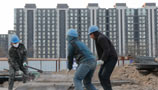
Earthwork construction at building sites will also be suspended, according to the emergency plan.
According to the Beijing Municipal Environmental Protection Bureau, the city's air pollution rankings are "extreme pollution", "severe pollution" and "serious pollution", according to the air quality index.
Extreme pollution is an air quality index of 500, and the daily average intensity for PM 2.5 exceeds 500 micrograms per cubic meter.
The daily average intensity for PM 2.5 drops to 300 to 500 micrograms per cubic meter for severe pollution, and 201 to 300 for serious pollution, it said.
When the daily average intensity of PM 2.5 gets between 500 to 300 micrograms per cubic meter, building demolition and construction should be suspended, and the industries related to metallurgy, construction materials and chemicals have to cut their emissions by 15 percent, it said.
No mandatory emission reduction measures will be taken when the intensity is below 300 micrograms per cubic meter. However, enterprises and companies that are likely to raise dust or cause pollution are being asked to control their emissions through means such as watering down construction sites.
The city will also release various alerts and warning messages on the effects of pollution on health, in accordance with the seriousness of the air pollution, the bureau said.
Students from middle and primary schools in the capital are asked to stay indoors and cancel outdoor activities, such as soccer games, when the city is seriously polluted so as to reduce the chances of getting ill, said Yu Jianhua, head of the atmospheric environment management office of Beijing Municipal Environmental Protection Bureau.
"The particulate matter will lead to pneumonia, asthma and other diseases of the respiratory system, and PM 2.5 with a smaller diameter is especially dangerous" he said. "The elderly, children and people with poor heart-lung function must stay indoors when the air is seriously polluted."
Wang Yu, a 27-year-old Beijing resident, said he believes the emergency plan was formed with good intentions but it still depends on implementation.
"Only with punitive measures can institutions really carry out the policy and really reduce emissions," he said.
The bureau said an air quality monitoring network covering the whole city has been set up to monitor and evaluate the intensity of pollutants, including PM 2.5 and carbon monoxide, as well as other pollutants.
Daily reports on air quality and alerts, as well as precautionary health tips, will be provided to the public through the bureau's official website and micro blog on Sina Weibo, a popular Twitter-like website.
As the number of vehicles in Beijing is now more than 5 million, automobiles are definitely one of the major sources of PM 2.5 in the city, Yu said.
"Having the cars off the road and reducing the consumption of coal could ease the extreme pollution and reduce the intense pollutants," he said.
Automotive vehicles are the second biggest source of contamination in the capital, and contribute 22.2 percent of the city's pollution, followed by coal consumption, which contributes 16.7 percent of the city's fine particulate matter pollutants, according to the city's analysis of the sources of contamination.
Almost a quarter, or 24.5 percent, of the PM 2.5 pollutants are from neighboring provinces, the chief culprits in the pollution, the analysis said.
According to the city's emission reduction plan, the annual concentration of major pollutants in the air will be reduced by 15 percent as of 2015 compared with 2010, while the figure is expected to witness a sharp drop of 30 percent in 2020.
"Hopefully, the capital will reach the new standard required for the country's air quality as soon as possible," said Yu.
The Ministry of Environmental Protection announced earlier this month its plan to further reduce the emission and pollutant intensity by reducing the intensity of PM 2.5 by 5 percent by 2015 from 2010 levels in 13 major areas, which cover 14 percent of the country and 117 cities that contribute 71 percent of the nation's GDP and have 48 percent of its population.
The Beijing-Tianjin-Hebei region, as well as the Yangtze River Delta region and the Pearl River Delta region, all of which are China's most prosperous areas, are asked to have the PM 2.5 intensity cut by at least 6 percent, it said.
The level of PM 10 and sulfur dioxide will be cut by 10 percent, while nitrogen dioxide will be reduced by 7 percent, it said.
Beijing started releasing PM 2.5 data this year, and the city plans to cut down the major pollutant indexes as well, having PM 2.5 drop to 60 micrograms per cubic meter in 2015, from the current intensity of 70 to 80 micrograms.
The city is carrying out a 250-square-km afforestation project, mostly in bordering areas and near the city's Sixth Ring Road. It is meant to act as a protective screen and shield the city from sand and dust from neighboring cities.
About 95 percent of the trees that have been planted are growing well, according to the Beijing Municipal Landscape and Forestry Bureau.
zhengxin@chinadaily.com.cn


Copyright 1995 - . All rights reserved. The content (including but not limited to text, photo, multimedia information, etc) published in this site belongs to China Daily Information Co (CDIC). Without written authorization from CDIC, such content shall not be republished or used in any form. Note: Browsers with 1024*768 or higher resolution are suggested for this site.
License for publishing multimedia online 0108263 Registration Number: 130349