Officials and experts on Wednesday urged resolute action to help the country's 250 million migrants gain access to public services and welfare in cities and create a fairer environment for them.
China employs what is known as the hukou system, which refers to a permanent residence permit that entitles one to access public services, such as education, but only in the place where the hukou is.

This system has led to disparities between urban and rural residents in terms of access to public facilities and services, said Li Tie, director-general of the China Center for Urban Development under the National Development and Reform Commission, the country's top economic planner, during a panel discussion at the World Economic Forum's Annual Meeting of the New Champions 2012?in Tianjin.
Since the country introduced the reform and opening-up policy in 1978, the country has invested heavily into urban development. And as increasing numbers of people are moving from rural areas to work in cities, they seek an equal share of urban resources that city dwellers enjoy. But these demands are blocked by the hukou system, he said.
A hukou gives one the right to access to a package of public facilities and services, such as education, subsidized housing, employment and social security as well as other welfare.
For example, in Beijing, people without a local hukou are not allowed to buy apartments or to register cars unless they have paid personal income tax or paid into social security accounts in the city for five consecutive years.
"We should gradually break such barriers brought by the hukou system and grant the right of free migration to every rural resident and allow them to enjoy the same public services just as urban residents do," said Li, "But it's very hard because it would affect the government's fiscal expenditure, urban residents' interests and the country's farmland policies."
Li said meeting the demands of the two groups is the most difficult part because "it's very hard for urban residents, who have a big say in both media and policymaking, to permit rural residents, who are in a much weaker position in that regard, to enjoy the right to live with them and share the same public services as they have."
Tang Min, an economist with the China Social Entrepreneur Foundation, said it is urgent to take action to provide a fairer environment for migrants and make it easier for them to gain access to public services in cities because this group could become a threat to social stability if the problem remains unsettled for long.
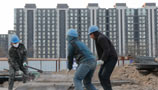
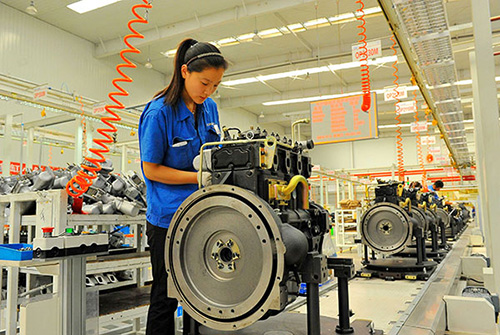
In China, migrant workers make up the majority of the floating population, who leave countryside and mainly take manual work in cities.
"To address the issue, it's not about money because I've noticed that many cities have proposed multi-trillion-yuan investment plans over the next few years," he said, "It's all about determination."
Tang said local governments should realize that it's the problem that must not be avoided, and it is an overarching trend to make migrants into urban residents.
"We've calculated that the cost for transforming every migrant into a city dweller would be 100,000 yuan to 200,000 yuan ($15,800 to $31,600)," he said, "So if we first make migrants who have stayed in cities for more than 10 years, each year it would cost 300 billion yuan to 500 billion yuan."
Because such a plan would lead to a boom in the permanent population of cities, Tang suggests the central government make some land polices to allow cities to increase in size.
Tang suggests that one city in every province could be selected to be a pilot.
"Of course, migrants could decide on their own whether they want to acquire a local urban hukou or not," he added.
chenxin1@chinadaily.com.cn

Copyright 1995 - . All rights reserved. The content (including but not limited to text, photo, multimedia information, etc) published in this site belongs to China Daily Information Co (CDIC). Without written authorization from CDIC, such content shall not be republished or used in any form. Note: Browsers with 1024*768 or higher resolution are suggested for this site.
License for publishing multimedia online 0108263 Registration Number: 130349