Comments()
  Print
Print  Mail
Mail  Large Medium Small
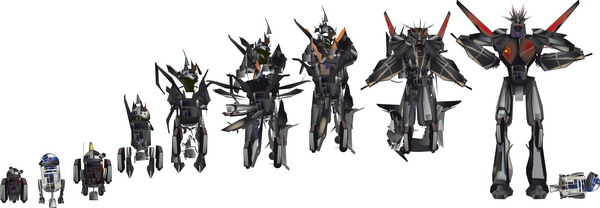
The initial copycat culture of shanzhai products has morphed from pure piracy to value-adding creativity. Han Bingbin reports in Beijing.
Editor's note: As China moves up the manufacturing value chain from "made-in-China" to "designed-in-China", the phenomenon of shanzhai products has become part of the English lexicon. The word literally means "mountain fortress" and originally referred to bandits operating outside official control. It has been associated with counterfeit goods, such as cell phones or copies of brand name handbags. But as the country develops, the term has expanded further to mean micro-innovation - an expansion of existing technologies and design concepts or marketing that deliver genuinely original products.
The opening-up and reform of the economy in the 1980s also opened the floodgates to shanzhai, which was initially the imitation of branded goods. At first, shanzhai products were mainly articles of daily use, such as sports apparel, shavers and humidifiers. But at the turn of the millennium, when the country's IT industry boomed, so too did the copying of digital products from the West, such as cell phones and MP3 players. By 2010, according to an iSuppli report, China was producing more than 200 million cell phone clones a year, which had the effect of forcing foreign firms to reduce the sale price of their phones in the mainland market to compete.
While foreign companies and even governments complain of intellectual property rights infringement, many Chinese consumers point out the originals are overpriced, and they cannot afford them.
As such, there is a sentiment that these "pirate" manufacturers are on the side of justice, providing goods the poor and the disenfranchised would otherwise not be able to own.
From its humble beginnings, this shanzhai spirit has evolved into a cultural phenomenon. The grassroots population, for instance, makes fun of elitist culture by parodying it.
To show their disdain for State broadcaster CCTV's annual Spring Festival Gala, a shanzhai version with weird and wonderful acts was shown online and competed with the original.
Even so, society's tolerance toward the phenomenon worries some.
"If we allow this copycat culture to grow, Chinese culture can hardly foster a spirit of original creation, and China's manufacturing industry will lose its edge for innovation," Shanghai-based culture critic Zhu Dake says.
"It could become a vicious circle."
He refers to Japan and South Korea, which were both previously known for copying advanced concepts and technologies from the West.
However, Zhu says, it didn't take them long to shake off this culture to become among the world's superpowers in innovation, with well-respected brands like Sony and Samsung.
"But 33 years after China's reform and opening-up, I still haven't seen any sign of us becoming more innovative," Zhu concludes.
Sociologist Ai Jun disagrees. He says the shanzhai phenomenon signals a "revolution and progress in terms of thinking".
By imitating, he says, many businessmen and manufacturers have learned to produce goods independently and are now refining the original idea by adding more advanced and customer-friendly functions, and are moving up the value chain to produce genuinely original products.
Copying is a "necessary stage", Ai says, for startup entrepreneurs, who have to confront the challenge of other countries blocking the transfer of technologies to China.
At home, Ai keeps one of the first group of domestically made humidifiers. They were created in the 1980s by He Lumin, whom Ai calls the "Shanzhai King".
He was initially inspired by Japanese humidifiers, after which he started adding new technologies adapted to local needs.
Now the 59-year-old - also known as the "Father of China's Air Purification Industry" - is chairman of a tech company that owns 70 percent of the core technologies in the global air purification industry.
"Of course, there are those who copy to make quick money," Ai says.
"But many farsighted entrepreneurs take shanzhai as a strategy to accumulate capital and become an innovative company."
The Internet industry has a plethora of similar examples.
Many leading domestic websites for online searches, e-commerce and social networking services initially resembled their foreign counterparts in one way or another.
Tencent's instant messaging service QQ is viewed as a copy of ICQ, while YouTube, Facebook and Twitter respectively inspired Youku, Renren and Sina Weibo.
If a country is five years ahead, the newcomer should, of course, learn from them, the former head of Google China, Kai-Fu Lee, is quoted as saying.
Now in charge of a $115-million tech venture capital fund called Innovation Works, he says: "These companies have tailored their products to the tastes of Chinese users."
These tailor-made, small and incremental improvements are what many IT insiders describe as "micro innovations".
"Their innovative approach is based on local characteristics," Tencent chairman and CEO Pony Ma said at an industry forum in October 2011.
"They have enabled many domestic Internet companies to overshadow their international counterparts in China."
Sina Weibo, for example, is a simulation of the Twitter platform, but it has improved it considerably and in such a way that it is "a much more powerful platform in terms of functionality", says French technology investor and entrepreneur Franck Nazikian.
He believes the copy/paste Chinese business model is a thing of the past, and China is right on track to becoming a superpower in tech innovation.
In order to spur the growth of young Chinese entrepreneurs, he founded CHINICT eight years ago. Every year, the forum gathers international tech stars in Beijing to talk about their experiences to inspire their Chinese peers.
The latest example of tech innovation, Nazikian says, is Tencent.
The country's largest Internet company in China by sales started a new voice messaging application a year ago called Weixin. With more than 100 million active domestic users, he says, the company is now exporting this concept all around the world under the name WeChat.
"People would argue that Tencent hasn't created the concept of voice messaging. That's true. But nobody is creating anything," he says.
"The nature of this industry is to copy each other, whether it is in China or the United States."
Nazikian cites Skype, seen by some as one of the most disruptive tech companies of the past decade.
He says Skype didn't create the concept of voice over IP at all, as Yahoo messenger and MSN were already using it. But by providing better quality and a more aggressive marketing-focused strategy, Skype took over the voice over IP market.
"There is nothing like disruptive technology, meaning creating something totally from scratch," Nazikian says. "And everybody is improving someone else's innovation."
Ai, the sociologist, says Chinese entrepreneurs have mastered the language of technology and are now positioned to turn from imitation to innovation.
Another Chinese company that is transforming from shanzhai manufacturer to a market leader is the sports apparel brand Adivon, which was originally an adidas copycat.
The company's brand manager Liu Feng says that by reversing the "elite athlete" image of many international sports brands, Adivon has marketed itself as an "ordinary hero" and has won over converts nationwide, and especially in the overlooked fourth-tier cities and the countryside.
The company has become a famous brand in its birthplace of Fujian province. Its annual online sales alone have reportedly reached 30 million yuan ($4.71 million).
To promote its image, the brand has sponsored international sports contests and charity events. It will even sponsor three African countries for the upcoming London Olympics.
"We have always believed innovation is the key to the whole process of our development," Liu says.
"In the 21st century, if you don't change, you will be eliminated from the market."
Contact the writer at hanbingbin@chinadaily.com.cn.
Chen Limin and Qin Zhongwei contributed to the story.

 Michelle Obama addresses at Democratic National Convention
 Slides of Yanbian: place, people and prosperity
 Washington to remain focused on Asia-Pacific
 RQFII target blue chips amid bear market
 Australian recall for top two exporters
 China fears new car restrictions
Copyright 1995 - 2010 . All rights reserved. The content (including but not limited to text, photo, multimedia information, etc) published in this site belongs to China Daily Information Co (CDIC). Without written authorization from CDIC, such content shall not be republished or used in any form. Note: Browsers with 1024*768 or higher resolution are suggested for this site.
License for publishing multimedia online 0108263 Registration Number: 20100000002731