Chinese companies should change their business model in order to boost benefits of cooperation in Africa
In April, I led a Bank of China delegation to South Africa, Zambia and Tanzania, where we held meetings with many senior officials from our host countries' government departments as well as the executives of both local and Chinese companies. We were impressed by the new enthusiasm evinced by investors in the rest of the world for the huge potential in Africa.
Right now, few people doubt the African continent will be the next big and rewarding market, despite some ongoing risks and instability.
|
|
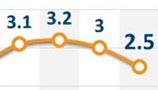
The overall African economy has just had its best decade on record maintaining a relatively rapid growth rate and reaching a total GDP of $1.5 trillion. As the ripples from the global financial crisis continue to affect the world, Africa has expanded its economy by an average rate of 4.7 percent a year from 2008 through 2011, and is expected to grow above 5 percent this year.
In the midst of tight trade finance, fluctuations in global commodity prices and weak external demand, Africa's foreign trade has returned to its pre-crisis peak levels, increasing 13.8 percent to $875 billion in 2011. Meanwhile, capital inflows are also back to their peak, valued at around $65 billion last year.
In addition, economic restructuring in this continent has been improving, with multiple driving forces. For example, the mining industry accounts for only one-fourth of GDP. Even with consumption rising, and productivity increasing, the rate of inflation has fallen dramatically, and foreign debt and fiscal deficits have decreased.
In all, 26 African countries have established free trade agreements to boost trade with the rest of the world and most have made regulatory reforms to make it easier for domestic companies to start up and operate.
According to reports from the International Monetary Fund and the World Bank, seven out of the top 10 fastest growing economies in the world in the next five years will be African. Being akin to China 30 years ago and India 20 years ago, it is time for Africa to start flourishing.
Africa will increasingly be a vital region for the world. With global resources becoming scarcer, it is estimated that Africa owns about 30 percent of global mineral resources and produces more than 60 metals and minerals products, such as gold, platinum, copper, nickel, diamonds, aluminum and uranium, all of which are significant to the 21st century's global economy.
Admittedly, the aggregate African economy is less than 2 percent of the global GDP. Most African countries have a massive supply of cheap labor and huge markets, but they are still underdeveloped and face many political and economic problems.
Based on past experiences, it is necessary for Africa to further improve its development strategies and align them with the unique nature of the continent, focusing on harnessing the rich natural resources without becoming dependent on resource exports for growth.
Regional integration should be strengthened, including raising Africa's political voice, improving collective negotiations to achieve more favorable conditions to access international markets and fair prices for resources. The infrastructure, such as roads and rail transportation, should also be developed, so as to facilitate the movements of the factors of production.
Investment in human capital will be critical for Africa to increase wealth for its young population. Hence, to enhance human resource development is a must, so that a sufficiently skilled workforce can be developed to meet the needs of different sectors.
Unfortunately, the developed nations have never realized their promises made for Africa. As early as 1970, the rich industrial countries committed to devoting 0.7 percent of their gross national income to aid Africa, but for 42 years now, for most, it remains an unrealized promise, only Sweden, Norway, Denmark, the Netherlands and Luxembourg have met the target.
In the 1990s, the United Nations' New Agenda for the Development of Africa failed to receive the promised financial assistance. In 2001, the African Union launched its New Partnership for African Development, and in 2002, the G8 leaders agreed to adopt a bold and clear-sighted vision for Africa and pledge more financial assistance.
Yet despite these promises, aid to Africa has fallen since the mid-1990s in nominal and real terms, in particular, in the aftermath of the global financial crisis.
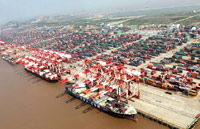
The Chinese mainland has become the largest trade partner to Africa, and Africa has been its second largest overseas construction market and the fourth largest foreign direct investment destination. Last year, the total trade between them reached $160 billion, an increase of 28 percent, and the Chinese mainland now accounts for 18 percent of Africa's total trade, up from 10 percent just three years ago.
So far, there are more than 2,000 Chinese mainland firms, State-owned or privately held, operating in Africa. They have played an important role and will continue to contribute to China-Africa cooperation, re-enforcing the mutual benefits.
Of course, this does not mean that there is no room for improvement. Chinese firms going to Africa should reshape their business models, that is, from the model that imports raw materials back to China as manufacturing inputs, which are eventually exported to the rest of the world, to one that acquires resources, produces and sells products locally. The new model means further increasing GDP and improving employment in African countries. In this way, we may reduce China's GDP, but can enlarge overseas assets and benefits.
Chinese financial services lag well behind enterprises going abroad. The Bank of China will continue to set up more branches and representative offices, China Desks on local banks and working groups to improve the network in Africa and deliver comprehensive financial services to our customers.
Political instability and corruption are still regarded as the biggest deterrent to investment and business operations in Africa. In this particularly complex environment, firms and banks must engage as much market analysis and due diligence as possible, and must not take a one-size-fits-all approach.
For those who are prepared to take the necessary steps and make intelligent investment decisions, Africa has great potential and will be a fascinating market.

Copyright 1995 - . All rights reserved. The content (including but not limited to text, photo, multimedia information, etc) published in this site belongs to China Daily Information Co (CDIC). Without written authorization from CDIC, such content shall not be republished or used in any form. Note: Browsers with 1024*768 or higher resolution are suggested for this site.
License for publishing multimedia online 0108263 Registration Number: 130349