The phrase guojin mintui, or "the State advances while the private sector retreats", has been used by some scholars when talking about China's economy.
I have no idea how they have reached this conclusion.
From 1998 to 2010, the number of State-owned and State-controlled industrial enterprises fell from 64,700 to 20,300 and their proportion in the total number of industrial enterprises declined from 39.2 to 4.5 percent. In direct contrast, the number of private industrial enterprises that have reached the size for inclusion in the official statistics has risen from 10,700 to 272,300.
The same period also saw the total production of State-owned and State-controlled industrial enterprises falling from 49.6 to 26.6 percent of the industrial enterprises included in the statistics. Actually, the private sector's total production exceeded that of the State-owned and State-controlled economy in 2009.
In addition, 37.5 million people worked in State-owned or State-controlled enterprises in 1998, while 1.6 million people worked in the private sector. In 2010, 18.9 million people worked in State-owned or State-controlled enterprises, while 33.1 million worked in the private sector.
Meanwhile, the tax burden has headed in the other direction; State-owned and State-controlled enterprises paid 71.7 percent of industrial economy included in the statistics, while the non-State sector paid only 14.6 percent in 2010. That trend will continue with the new tax reforms introduced in January.
In my opinion, those who insist on guojin mintui by turning a blind eye to the data are trapped in a zero-sum-game mentality: they regard State-owned and non-State owned economies as merely competitors.
Yet defining the role of these two players has also been a question for the government. There was a time when the State dominated the economy, but since reform and opening-up in 1978, the government has gradually introduced more favorable policies for the private sector. Especially after Deng Xiaoping delivered guiding speeches during his tour to the southern provinces in 1992, private enterprises have experienced smooth growth.
Today State-owned and private enterprises are playing coordinated, not contradictory, roles in China's economy. State-owned economies, many of which are resource, capital, or technology intensive, should concentrate on competing in the global arena, and take the leading role in key industries. Private enterprises, which rely more on labor, should help create employment and stimulate regional development, and join the international market if possible.
Competition, as well as coordination, of State-owned and non-State-owned sectors is an indispensable prerequisite of China's remarkable economic growth. This is how China was able to break the US' monopoly in manufacturing.
Currently the world's third largest consumption market, China is expected to exceed the European Union in the coming years and the United States in the future. Both State-owned and non-State-owned sectors will play key roles in this.
In the coming years, to cope with the intensifying international competition, we need to let both State-owned and non-State-owned enterprises further exploit their respective advantages.
State-owned enterprises should continue their leading roles in key industries like oil and gas exploitation, nuclear energy production, tap water supply and coal mining. All these industries are of strategic importance or provide a public service; the State's controlling shares help ensure basic supply for people's daily lives and product quality. Yet private businesses can still enter these sectors as long as they meet with capital and production requirements.
At the same time, State-owned enterprises need to better interact with non-State-owned companies to promote the joint development of all, instead of squeezing them with monopolies. Today China has 69 enterprises, both State-owned and not, in the global top 500, and we expect the number to grow with the overall development of national economy.
Both State-owned and non-State-owned companies are indispensable parts of China's economy, and the only way for China to advance is to walk on both legs.
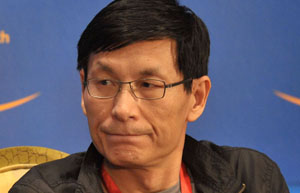
The author is director of the Center for China Studies at Tsinghua University.

Copyright 1995 - . All rights reserved. The content (including but not limited to text, photo, multimedia information, etc) published in this site belongs to China Daily Information Co (CDIC). Without written authorization from CDIC, such content shall not be republished or used in any form. Note: Browsers with 1024*768 or higher resolution are suggested for this site.
License for publishing multimedia online 0108263 Registration Number: 130349