|
|
|
 |
|
|
|||||||||
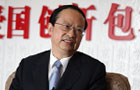
HANGZHOU -- Chinese beverage magnate Zong Qinghou sees his latest laureate as the richest person in the Chinese mainland as nothing to brag about.
Despite having $10.5 billion in personal assets as calculated by the Hurun China Rich List 2011, Zong said his soft drink company, Wahaha, the source of his wealth, had a hard time operating in 2011.
Encroached by rising material costs, Wahaha reported no increase in profit gains from a year before despite a significant jump to 68 billion yuan ($10.7 billion) in sales revenue, a fall-back from its profit margin level in 2009.
"The only good news is that the fame now places Wahaha in better positions to compete and spares me from constant overseas trips to secure suppliers and distributors," Zong said.
Wahaha is not the only operator finding conditions tough in China's private sector, and other company bosses may not feel as sanguine as Zong. Last year, many small- and medium-sized enterprises (SMEs) experienced choppy financial situations due to rising production costs and waning external demand, a plight further exacerbated by their difficulties in fund raising.
That explains why the recent statement by the central government has cheered the hearts of many. In his report delivered at the opening of this year's parliamentary session, Premier Wen Jiabao said China would lessen tax burdens on small and micro-sized businesses and increase credit support to them.
Small financial organizations will be given impetus to provide more funds to small private businesses, while reforms are promised for state-owned banks that had traditionally favored large enterprises.
China is anticipating slower economic expansion this year, with its GDP growth rate set at 7.5 percent, and the development of the real economy has been highlighted as a must if steady growth is to be maintained.
Financial woes
The package of measures promised in the report is targeted at one prominent complaint by China's small and micro-enterprises -- the lack of funds.
Industry observers said, despite much heat in China's private investment in recent years, large amounts of money have flowed to speculation activities that stirred up the real estate market and fanned up prices of consumer goods, while leaving many of the country's manufacturers strapped for cash.
"Capitals are profit-driven in nature. The exodus of private investments from the real economy was mainly due to China's worsened climate for business," said Cheng Huifang, professor at Zhejiang University of Technology.
China's small- and micro-sized enterprises, many of which are export-oriented, have been plagued by tenuous profit margins resulting from yuan appreciation, rising labor and material costs and fiercer competition for the dwindling orders from the Western world.
Moreover, entrepreneurs have found it harder to secure funds in needy times as China tightened credit conditions to curb inflation. A recent report by the All-China Federation of Industry and Commerce said 90 percent of China's SMEs failed to get loans from banks.
"I always ran into the question 'do you have factories for collateral or large enterprises to avouch for you?'" said Zhang Junjun, who runs a small company exporting commodities from east Zhejiang province and recorded 8 million yuan in export values last year.
Zhang said the unavailability of bank loans had forced him to scrape together the sum through individual lendings, and the constant liquidity crunch had forced him to turn down orders worth 5 million yuan.
Like Zhang, many small and micro-enterprises, lacking the collateral needed to secure bank loans, were forced to the private lending market, which remains unregulated and notorious for its sky-high interest rates.
In a high-profile unfolding of the crisis, more than 90 private company bosses in Wenzhou, an eastern economic hub, have reportedly disappeared, committed suicide or declared bankruptcy after failing to repay what they had pooled from the city's informal lending market.
Policy support
However, many believe the chilly winter in Wenzhou is coming to an end, and a warm spring may soon fall on the country's private sector after the package of stimulating policies comes into effect.
Huang Mengfu, vice-chairman of the National Committee of the Chinese People's Political Consultative Conference, has called for establishing more small and medium-sized financial institutions to provide services for private companies.
China will also direct private capital into the development of real economy by easing restrictions on market access in traditionally monopolized areas including railways, public utilities, energy and telecommunications, according to recent official statements.
The business sector has attached great hope to the government's promise of help, but some have expressed concern about the policies' implementation.
"The government report has put forward detailed boosting measures, which is very inspiring, but what we expect to learn more about is whether they could be fully enforced," said Qiu Jibao, board chairman of Feiyue Group, a sewing machine producer based in Zhejiang.
Qiu said the government had rolled out similar policies before, which did not achieve the expected effects due to poor enforcement.
Some analysts said, apart from strengthening government supports in finance and taxation, China should also accelerate upgrading its industries to truly improve the competitiveness of SMEs and their survival chances in hard times.
"The problem is that many Chinese enterprises still competed in the low-price and low-quality level, and their competition has been blind and filled with foul plays," said Yang Tianfu, board chairman of Xinxing Cathay International Group.