Economy
Trade surplus set to decline below $100 billion in 2011
By Chen Jia (China Daily)
Updated: 2011-01-21 14:54
 |
Large Medium Small |
Think tank urges the use of imports as an economic restructuring tool
BEIJING - China's trade surplus will decline to less than $100 billion, and imports will grow at nearly twice the rate of exports in 2011, Wei Jianguo, secretary-general of the government think tank, the China Center for International Economic Exchanges (CCIEE), told China Daily in an exclusive interview.
Wei urged the government to utilize imports as a major tool for economic restructuring in the 12th Five-Year Plan (2011-2015). "Imported products will help to boost domestic demand in China," he said.
"The government should increase raw material imports, especially soybeans, oil, steel and copper," said Wei. Imports of consumer goods, such as wine, cosmetics, and jewelry, also need to be increased, he said.
China's imports in 2010 increased by 38.7 percent year-on-year to $1.39 trillion, and the value of exports was about $1.58 trillion, resulting in a surplus of $183.1 billion, said Yao Jian, spokesman for the Ministry of Commerce on Tuesday.
|
 |
|
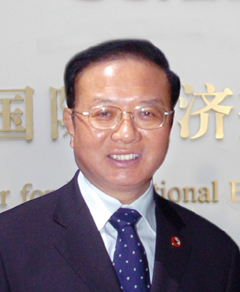
Wei Jianguo, secretary-general of CCIEE, a government think tank. |
The import value of raw materials, including crude oil, steel and iron ore, has grown by 42.1 percent, and the surging price of international commodities has produced a rise in the value of 38.1 percentage points, according to the Ministry of Commerce.
The growth rate of imports and exports recovered at a rapid pace in 2010. Compared with 2008, there was a 10.3 percent increase for exports and 23.2 percent for imports. The trade surplus has declined by 38.6 percent since 2008, according to the Ministry of Commerce report.
With concerns about the appreciation of the yuan and uncertainty over the government's foreign trade policy, many Chinese export companies rushed to deliver goods overseas, a move that has lifted export volumes since September, said Wei. The United States' easing monetary policy also boosted product orders during the Christmas holidays.


He predicted that exports to the US and European countries may decrease continually, while the emerging market countries will import more products from China.
Many export-oriented processing companies in the provinces of Guangdong, Fujian, Zhejiang and Jiangsu will face increasing difficulties this year, because of soaring raw material prices and increased labor costs, Wei said.
He suggested accelerating the development of technology-intensive trades in services, such as offshore software outsourcing and business-process outsourcing, which will reduce energy consumption and raise the employment rate for university graduates.
In 2010, the economy expanded 10.3 percent, the fastest pace in three years, according a report by the statistics bureau on Thursday. Local governments, including Shenzhen in Guangdong province and Shijiazhuang in Hebei province, plan to reduce their GDP and focus on economic restructuring this year, senior officials said at a CCIEE forum.
"It is difficult to reform if an economy grows too quickly, and it may be appropriate to maintain a 9 percent rate of GDP growth in China this year," said Wei.
| 分享按鈕 |