Economy
Canada seeks to beef up its industry
By Mark Hughes (China Daily)
Updated: 2010-07-05 11:22
 |
Large Medium Small |
|
 |
|
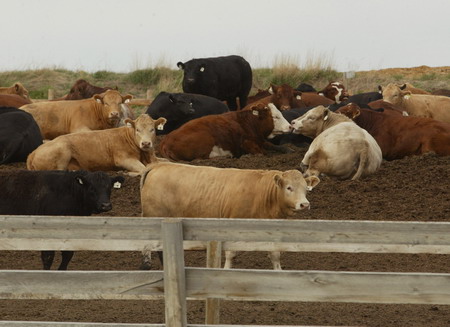
Beef cattle graze west of High River, Alberta, Canada. China agreed late last month to resume beef imports from Canada, seven years after banning the meat following concerns about bovine spongiform encephalopathy, otherwise known as mad cow disease. [Agencies] |
As first stage of import ban is lifted, Ottawa looks for big gains from its herds of Angus, Hereford, Simmental and Charolais cattle
BEIJING - The guest of honor was dressed meticulously, a handsome sight and the focus of rapt attention from the assembled dignitaries, businessmen and journalists in the luxurious trappings of a private room in Beijing's Park Hyatt hotel.
|
 |
|
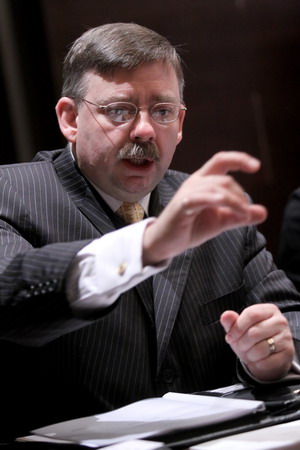
Ted Haney, president of the Canada Beef Export Federation, said now he plans a marketing blizzard while continuing efforts to lift the ban on Canadian beef in South Korea - "another very important market place". |
The Chinese capital had not witnessed an event like this before. In fact, the guest had been banned from the country for the past seven years amid dark mutterings of disease and distrust.
But on this occasion there was great fanfare and an open-armed welcome.
Yes, beef from Canada is back on the menu in China and its return was being afforded the gastronomic equivalent of a state visit by foreign royalty.
Standing as equerry to the succulent sirloin, the spare ribs and the tender chucks was Ted Haney, president of the Canada Beef Export Federation. For him it was the culmination of many years of negotiation and diplomacy, long and arduous meetings and endless phone calls spent hammering out the fine details.
However, those expecting to witness the happy glow of victory on his moustachioed and bespectacled face would be disappointed. To borrow from the British wartime leader Winston Churchill, he knows this is not the end. It is not even the beginning of the end. But it is, perhaps, the end of the beginning.
Back in 2003 a cow in Canada was discovered to have bovine spongiform encephalopathy (BSE), otherwise known as mad cow disease, a fatal neurodegenerative, or brain-wasting ailment that, according to many scientists, can be transmitted to human beings who eat the brain or spinal cord of infected animals. In humans the disease is known as new variant Creutzfeldt-Jakob disease (vCJD). In the United Kingdom, the country worst affected by the disease, it had claimed the lives of 166 people by October 2009.
|
||||


Scientists discovered BSE developed in cattle that had been fed meat meal and bone meal made from infected animals as a protein source. It wasn't until July 2007 that the Canadian Food Inspection Agency, the federal regulator responsible for monitoring the safety of Canadian cattle, put into place a ban on cattle tissues capable of transmitting BSE from all animal feeds, pet foods and fertilizers. This followed a 1997 ban on feeding ruminant meat and bone meal to other ruminant animals.